
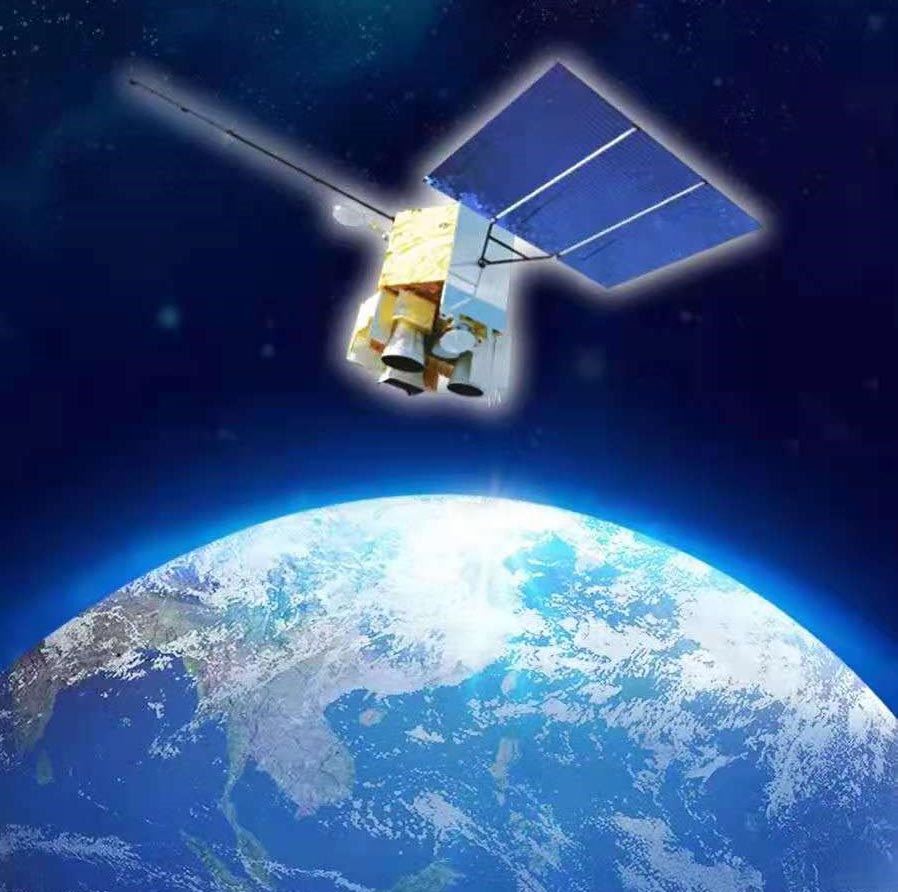
A new forecasting method using simulated data from GEO infrared sounders improved weather model accuracy, especially for storms, by reducing forecast error by 5%.
Since the era of meteorological satellites began in the 1950s, continuous remote sensing instrument improvements have elevated Earth science and have significantly increased available atmospheric observations. Likewise, scientists have made considerable advancements in understanding Earth’s atmosphere, climate, and environment. Furthering growth of atmospheric science within the last 20 years, satellite-based infrared (IR) sounders onboard low Earth orbiting (LEO) satellites have provided high spectral (or hyperspectral) IR radiances. These sounders can determine small differences in reflected IR wavelengths, which help identify different targets of the atmosphere. These data have significantly improved global numerical weather prediction (NWP) modeling and forecasting.
Despite global coverage, each LEO sounder provides observations only twice per day for a given location. However, the hyperspectral IR sounders from geostationary Earth orbiting (GEO) satellites can provide higher resolution 4-D temperature (including time), moisture, and dynamic motion information needed to initialize or start a model simulation. To accurately reflect atmospheric changes throughout an entire 24-hour period, LEO satellites can provide more frequent data updates for NWP models to use.
Boosting Weather Model Accuracy with Assimilation
Scientists are developing data assimilation methods for NWP models that will increase the quality of initialization data from satellites. The Observing System Simulation Experiment (OSSE) is designed to use data assimilation to investigate the potential impact of future atmospheric observing systems. Traditional OSSE processes require significant effort to compute, simulate, and calibrate information, then assimilate the data to produce a forecast. Therefore, model meteorologists are working to make this process more efficient.
“We studied the added-value from a GEO-hyperspectral IR sounder using the hybrid OSSE method,” said Prof. Jun Li, a distinguished scientist with the University of Wisconsin-Madison Cooperative Institute for Meteorological Satellite Studies.
Compared to the traditional OSSE, in a hybrid OSSE, most of the data are real observations, except for observations from new sensors, which are simulated frequently through small grid, high resolution global atmospheric analysis or reanalysis. A detailed proposal of hybrid OSSE applications is included in a new paper published in Advances in Atmospheric Sciences, which is also part of a special issue on Fengyun Meteorological Satellites: Data, Application and Assessment.
Before they assessed the impact of the new method, Prof. Li and his team had to validate simulated radiances from the new GEO hyperspectral IR sensor to verify that simulating new sensor data would work in the hybrid OSSE system. They used two local severe storm cases from 2018 and 2019 in the Great Plains and Midwestern United States to evaluate the value-added impacts from the GEO hyperspectral IR data.
Improved Forecasting Outcomes
“We are glad to find improved atmospheric temperature, moisture, and precipitation forecasts, along with some improvements in the wind forecasts,” commented Prof. Li regarding the research results.
Overall, the team’s impact study presents added value, resulting in a 5% Root Mean Square Error (RMSE) reduction when GEO hyperspectral IR data are used in lieu of LEO data. This indicates potential applications of a GEO hyperspectral IR sounder that may improve local severe storm forecasts.
Reference: “Added-value of GEO-hyperspectral Infrared Radiances for Local Severe Storm Forecasts Using the Hybrid OSSE Method” by Pei Wang, Zhenglong Li, Jun Li and Timothy J. Schmit, 1 June 2021, Advances in Atmospheric Sciences.
DOI: 10.1007/s00376-021-0443-1
Never miss a breakthrough: Join the SciTechDaily newsletter.
Follow us on Google and Google News.