
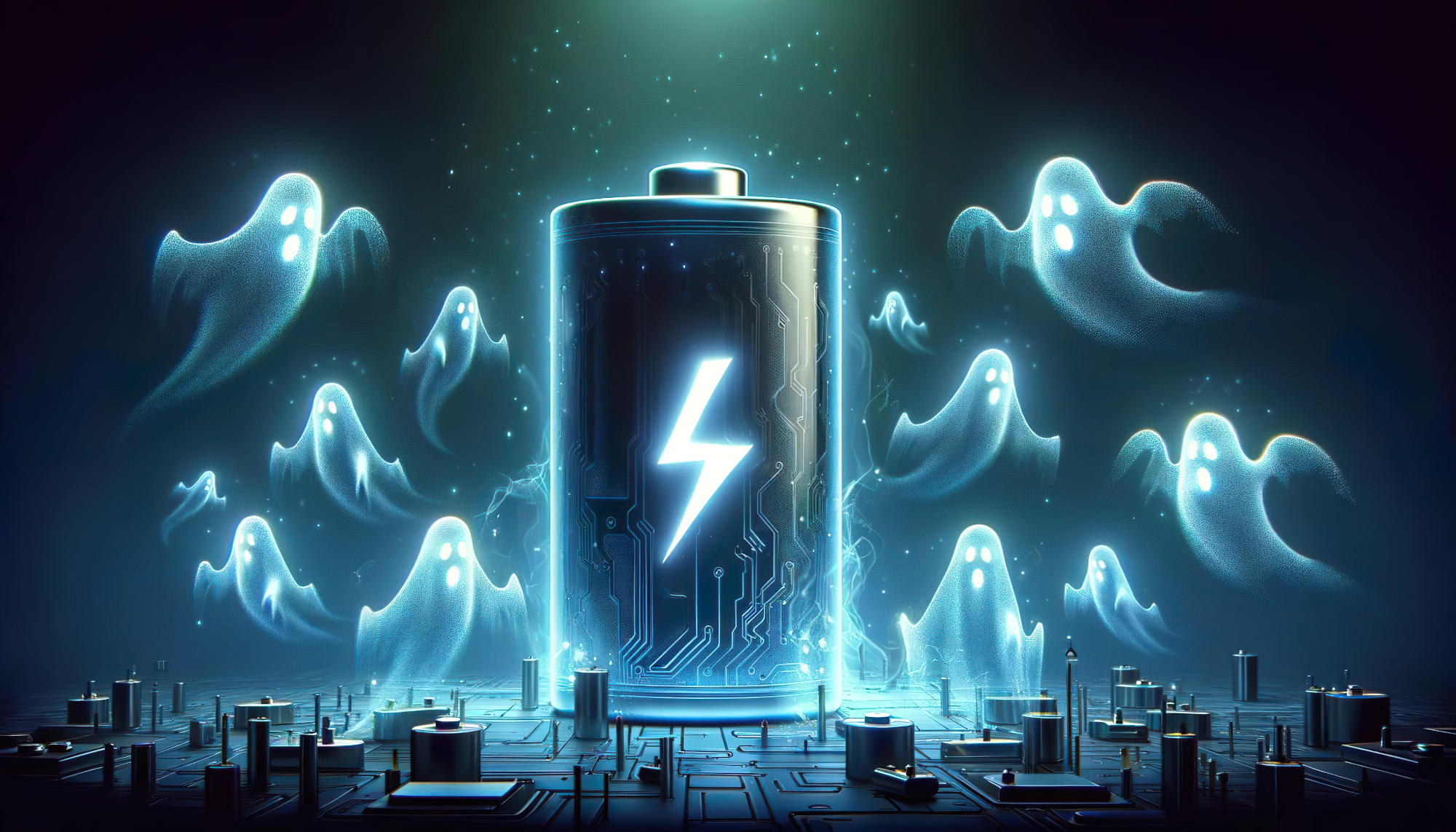
Researchers at Argonne have conducted a comprehensive study of soft shorts, a phenomenon that is an early step toward permanent failure in a battery.
An Argonne team developing materials for solid-state batteries took an unexpected detour to investigate tiny short-circuits known as soft-shorts. Their insights will benefit battery researchers around the world.
Researchers at the U.S. Department of Energy’s (DOE) Argonne National Laboratory have shed important new light on what the early signs of battery failure look like. Their study — which relates to a condition called soft-shorts — provides the research community with valuable knowledge and methods to design better electric vehicle (EV) batteries.
The Argonne team’s research focused on all-solid batteries with anodes (negative electrodes) made of lithium metal. Many view such devices as the “holy grail” of battery technologies. Why? Because lithium metal can store a large amount of charge in a small space. That means it can enable much longer electric vehicle driving ranges than traditional lithium-ion batteries made with graphite anodes.
However, lithium metal presents operational challenges because it can be highly reactive with the liquid electrolytes in traditional batteries. Electrolytes are materials that move charged particles known as ions between a battery’s two electrodes, converting stored energy into electricity.
As a normally functioning battery discharges, ions flow from the anode through the electrolyte to the cathode (positive electrode). At the same time, electrons flow from the anode to an external device — like a phone or EV motor — and then return to the cathode. The electron flow is what powers the device. When a battery is charging, these flows are reversed.
The use of lithium metal tends to disrupt this process. During charging, lithium filaments can grow off the anode and penetrate the electrolyte. If these growths become large enough and extend all the way to the cathode, they create a permanent “wire” between the electrodes. Eventually, all the electrons in the battery flow through this wire from one electrode to the other without exiting the battery to power a device. This process also stops the flow of ions between the electrodes.
“This is called an internal short-circuit,” said Michael Counihan, an Argonne postdoctoral appointee and the lead researcher on the team. “The battery has failed, and the electrons are no longer powering your device.
Putting lithium metal anodes in solid-state batteries — in other words, batteries with solid electrolytes — can potentially reduce filament-related challenges while still retaining lithium’s benefits.
An unexpected detour into soft-shorts
The Argonne team was developing a new solid electrolyte for EV batteries and noticed an unusual behavior.
“When we operated our batteries in the lab, we observed very small, very brief voltage fluctuations,” said Counihan. “We decided to take a deeper look.”
The researchers repeatedly charged and discharged their batteries for hundreds of hours, measuring various electrical parameters like voltage. The team determined that the batteries were experiencing soft-shorts, which are tiny, temporary short-circuits.
With a soft-short, lithium filaments grow from the anode to the cathode. But the amount of growth is smaller than in a permanent short-circuit. While some electrons stay inside the battery, others might flow to an external device. Ion flow between the electrodes might continue. All these flows can vary widely.
The team worked with Argonne computational experts to develop models that predict the amount of ion and electron flows during soft-shorts. The models account for factors such as the size of the lithium filaments and the electrolyte’s properties.
Batteries with soft-shorts can continue operating for hours, days, or even weeks. But as the Argonne team discovered, the filaments generally grow in number over time and ultimately lead to battery failure.
“Soft-shorts are the first step off the cliff to permanent battery failure,” said Counihan.
Dynamic behavior
The team’s further examination revealed that soft-shorts have very dynamic behavior. They often form, disappear, and reform in just microseconds or milliseconds.
“This is an important takeaway for battery researchers,” said Counihan. “With typical battery testing in the lab, researchers may only measure voltage every minute or so. During that time, you could have missed the formation and death of thousands of soft-shorts. They’re like little ghosts that are destroying your battery without you knowing it.”
The most common reason why soft-shorts disappear: heat. When electrons flow through the lithium filaments, heat is generated — similar to the heating that can occur in household appliance wires. The heat can quickly melt the filaments, particularly if the surrounding electrolyte is thermally insulating.
Soft-shorts can dissolve when filaments react with certain electrolytes. Some of the solid electrolytes under investigation by the Argonne team can cut small filaments before they reach the cathode and cause an internal short circuit.
Helping the research community
During its extensive examination of soft-shorts, the Argonne team developed and demonstrated several new methods for detecting and analyzing the phenomenon. For example, one method quantifies how much soft-shorts contribute to a battery’s resistance to current flow. Because different battery components can contribute to this resistance, isolating the contribution from soft-shorts can help researchers better assess the health of their batteries.
The study, recently published in the journal Joule, includes a list of nearly 20 detection and analysis techniques. About a third of these methods come from the team’s recent research. The study’s authors gathered the other methods from informal, unpublished knowledge in the research community.
“We realized that there are no papers in the literature that use more than two of these techniques,” said Counihan. “To make the list more useful for researchers, we included information on each method’s advantages and disadvantages. Since soft-shorts are so dynamic, it’s good for researchers to have many tools available to better understand the impacts of soft-shorts.”
The team wanted to provide researchers around the world with insights on soft-shorts to inform their work. For instance, the techniques in the paper can help advance the design of hard solid electrolytes that stem the growth of lithium filaments.
“When researchers understand the dynamics of the soft-shorts in their batteries, they are better equipped to refine their materials to avoid these failure pathways,” said Counihan.
Reference: “The phantom menace of dynamic soft-shorts in solid-state battery research” by Michael J. Counihan, Kanchan S. Chavan, Pallab Barai, Devon J. Powers, Yuepeng Zhang, Venkat Srinivasan and Sanja Tepavcevic, 6 December 2023, Joule.
DOI: 10.1016/j.joule.2023.11.007
The team made its solid battery electrolytes at Argonne’s Materials Engineering Research Facility and evaluated the materials at Argonne’s Center for Nanoscale Materials, a DOE Office of Science user facility. Besides Counihan, the study’s other authors were Kanchan Chavan, Pallab Barai, Devon Powers, Yuepeng Zhang, Venkat Srinivasan and Sanja Tepavcevic. The study was funded by the Vehicle Technologies Office of DOE’s Office of Energy Efficiency and Renewable Energy.
Never miss a breakthrough: Join the SciTechDaily newsletter.
Follow us on Google and Google News.