
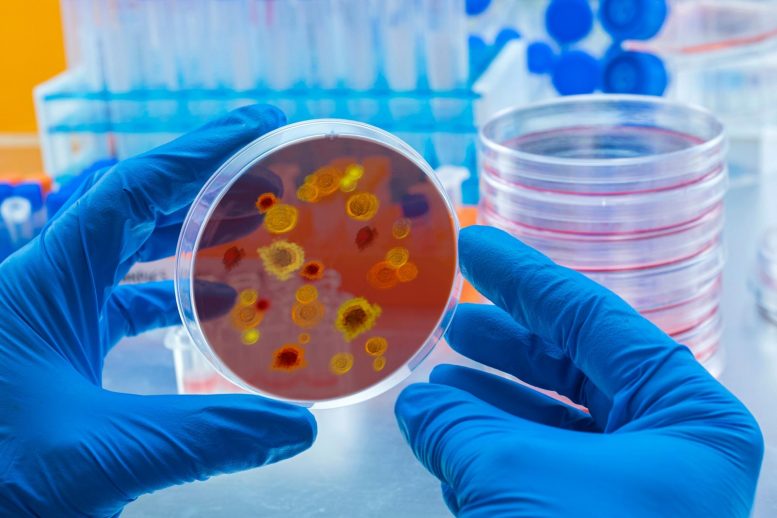
Dengue immune function discovery could benefit much-needed vaccine development.
Despite a daunting more than 130 million cases of SARS-CoV-2 infections to date worldwide, another global pathogen — the Aedes mosquito-borne dengue virus — saw a record number of over 400 million cases in 2019. But vaccine development has been challenging due to the need to protect equally against all four dengue strains. The discovery of new possible biomarkers to predict clinical and immune responses to dengue virus infection, published today (May 24, 2021) in Nature Communication, could be critical to informing future vaccines.
As with SARS-CoV-2 infection, the effects of dengue virus infection can range from asymptomatic to severe disease that can be fatal. Climate change has expanded the viruses’ geographic distribution far beyond tropical areas like Southeast Asia and Latin America to the southern U.S. and Europe. Only one vaccine, Dengvaxia, has been approved for a subset of at-risk individuals in endemic areas.
This study, led by University of Vermont (UVM) Associate Professor of Microbiology and Molecular Genetics (MMG) Sean Diehl, Ph.D., set out to determine biomarker candidates and predictors for clinical and immunological responses resulting from dengue infection. Previous research published by Diehl and MMG Chair Beth Kirkpatrick, M.D., director of the UVM Vaccine Testing Center, has shown how a dengue vaccine being developed together with Johns Hopkins and the National Institutes of Health activates an immune response that protects against challenge with this dengue virus.
Live, weakened viruses are the basis for the most-effective and longest-lasting vaccines against many viral diseases. This “live attenuated” approach is used in the next-generation dengue vaccine that is being co-developed at UVM. To better understand how live attenuated dengue viruses turn on the immune system, Diehl and colleague John Hanley, Ph.D., a UVM research specialist, in collaboration with Kirkpatrick and the Vaccine Testing Center, investigated which genes are activated or repressed in the immune cells from subjects exposed to a well-characterized and safe live attenuated dengue virus. Hanley developed a new statistical approach to integrate the genomics data with the extensive clinical data collected during the careful monitoring of dengue virus-exposed study participants.
A Novel Genomic-Clinical Analysis Approach
The team found strong correlations between the activation of specific immune genes and the ability of participants’ immune systems to turn on early cellular defense mechanisms and make protective antibodies against dengue virus.
“These data offer new potential biomarkers for characterizing dengue virus infection and novel pathways that could be leveraged to combat viral replication,” says Diehl. “Our results also gave us some clues about how we might be able to boost protective immune responses, which is the goal of developing effective vaccines.”
Diehl adds that for some of the genes identified in this study, little is known about their role in the response against dengue virus.
“This is very exciting, because it could lead to new ways to fight dengue, so we are now investigating these in the lab,” says Diehl.
He and Kirkpatrick are also working to determine how long protective immunity lasts after receiving a dengue vaccine and are in the process of identifying volunteers who received the NIH-developed dengue vaccine up to 11 years ago to obtain a current blood sample for further testing.
“A durable protective immune response is the goal of a good vaccine,” says Kirkpatrick.
Reference: “Immunotranscriptomic profiling the acute and clearance phases of a human challenge dengue virus serotype 2 infection model” by John P. Hanley, Huy A. Tu, Julie A. Dragon, Dorothy M. Dickson, Roxana del Rio-Guerra, Scott W. Tighe, Korin M. Eckstrom, Nicholas Selig, Samuel V. Scarpino, Stephen S. Whitehead, Anna P. Durbin, Kristen K. Pierce, Beth D. Kirkpatrick, Donna M. Rizzo, Seth Frietze and Sean A. Diehl, 24 May 2021, Nature Communications.
DOI: 10.1038/s41467-021-22930-6
Funding: National Institute of Health, Bill and Melinda Gates Foundation, University of Vermont
Never miss a breakthrough: Join the SciTechDaily newsletter.
Follow us on Google and Google News.