
Close Menu
    Facebook X (Twitter) Instagram
    SciTechDaily
    • Biology
    • Chemistry
    • Earth
    • Health
    • Physics
    • Science
    • Space
    • Technology
    Facebook X (Twitter) Pinterest YouTube RSS
    SciTechDaily
    Home»Science»Grant May Lead to New Light Technology and Advances in Healthcare
    Science

    Grant May Lead to New Light Technology and Advances in Healthcare

    By University of St AndrewsApril 19, 2012No Comments3 Mins Read
    Facebook Twitter Pinterest Telegram LinkedIn WhatsApp Email Reddit
    Share
    Facebook Twitter LinkedIn Pinterest Telegram Email Reddit
    New Light Technology
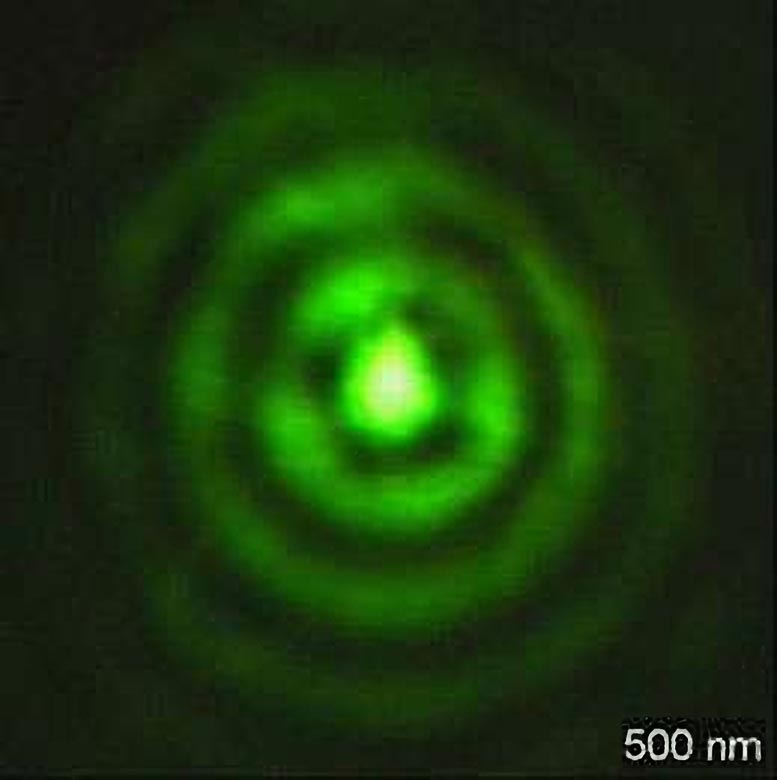
    University of St Andrews scientists received a £5.6m grant to develop new light technologies for better disease diagnosis and treatments. Credit: University of St Andrews

    Scientists at the University of St. Andrews were awarded a £5.6m grant to work on photonics in the hope to advance healthcare by improving diagnosis and treatments of diseases by being able to see more depth and detail in the human body.

    World-leading experts at the University of St Andrews have been awarded a £5.6m grant to develop new light technologies which could improve diagnosis and treatments of diseases by being able to see into the human body in more depth and detail than ever before.

    The team at the School of Physics and Astronomy at the University of St Andrews, led by Professor Kishan Dholakia, has been awarded the grant from the EPSRC worth £5.6 million.

    The grant focuses on the science of photonics – the generation and application of light in its many forms – and explores a range of concepts of shaping or ‘structuring’ light at the micro and nanoscales.

    Such advances with light have major potential in healthcare. Further down the line this could enable improved diagnosis of diseases, and treatments using light therapy, making a significant contribution to improved quality of life.

    The methods developed would not be restricted to biomedicine, however, and could be used in other industries.

    The project “Challenging the Limits of Photonics: Structured Light” will also involve Professors Ifor Samuel and Thomas Krauss at St Andrews as co-investigators on the grant.

    They will contribute their world-renowned experience in polymer light-emitting materials and photonic crystals respectively.

    Prof Dholakia is a world-leading expert in optical trapping, beam shaping, and biophotonics.

    The ambitious goal of this new program is to challenge and overcome current limits in the generation, propagation, and penetration of light.

    One of the key targets of the project is imaging through scattering media, especially biological tissue and skin, another is to achieve imaging with extremely high resolution, even at a distance.

    These targets will be achieved by developing new approaches to the field of “structured light,” which sees the generation of complicated laser beam structures by using full control over the amplitude, phase, and polarization and applying these to novel sources.

    New forms of sensing will be possible, whereby the ability of light to interrogate extremely small volumes of tissue or biofluids (e.g. the content of a cell) can be used to find new methods for disease detection and prevention.

    Professor Dholakia said: “Our new understanding and applications of light can also impact in other areas of biology and medicine such as the emergent field of optogenetics.

    “Optogenetics is the Science of controlling events in targeted cells using light alone, which has immense promise in relation to neuroscience, e.g. to understand conditions such as epilepsy and control Alzheimer’s disease.”

    He added: “This grant is a testament to the excellent advances made by our team in the photonics area at St Andrews in the last decade.

    “We are very excited about making ground-breaking advances both in fundamental photonics and light sources but also notably with colleagues in Biology and Medicine with real impact upon emerging healthcare challenges.”

    Never miss a breakthrough: Join the SciTechDaily newsletter.
    Follow us on Google and Google News.

    Alzheimer's Disease Biomedicine Disease Nanotechnology Optogenetics Photonics University of St. Andrews
    Share. Facebook Twitter Pinterest LinkedIn Email Reddit

    Related Articles

    How Nanoscience Will Improve Our Lives in the Coming Years

    New MIT Gene Therapy Technique May Help Prevent Cancer Metastasis

    New Research Opens New Realms of Light-Matter Interaction

    Nanoparticles Shut Down Cancer Growth

    Researchers Control Light Emission by Pairing Exotic 2D Materials

    Researchers Solve a Long Standing Nano Mystery

    New Metamaterial Gives Visible Light a Nearly Infinite Wavelength

    Glymphatic System May Hold a Key to Treating Alzheimer’s

    Will a New Drug that Boosts Mouse Memory be Alzheimer’s Cure?

    Leave A Reply Cancel Reply

    • Facebook
    • Twitter
    • Pinterest
    • YouTube

    Don't Miss a Discovery

    Subscribe for the Latest in Science & Tech!

    Trending News

    Popular Sugar-Free Sweetener Linked to Liver Disease, Study Warns

    What Is Hantavirus? The Deadly Disease Raising Alarm Worldwide

    Scientists Just Discovered How the Universe Builds Monster Black Holes

    Scientists Unveil New Treatment Strategy That Could Outsmart Cancer

    A Simple Vitamin May Hold the Key to Treating Rare Genetic Diseases

    Scientists Think the Real Fountain of Youth May Be Hiding in Your Gut

    Ravens Don’t Follow Wolves, They Predict Them

    This Common Knee Surgery May Be Doing More Harm Than Good

    Follow SciTechDaily
    • Facebook
    • Twitter
    • YouTube
    • Pinterest
    • Newsletter
    • RSS
    SciTech News
    • Biology News
    • Chemistry News
    • Earth News
    • Health News
    • Physics News
    • Science News
    • Space News
    • Technology News
    Recent Posts
    • Popular Supplement Ingredient Linked to Shorter Lifespan in Men
    • Scientists May Have Found a Way To Repair Nerve Damage in Multiple Sclerosis
    • GLP-1 Weight Loss Linked To Dramatically Lower Risk of Sleep Apnea, Kidney Disease and More
    • Scientists Uncover the Surprising Source of Strange Clouds Near the Milky Way’s Supermassive Black Hole
    • This Dazzling Green Snake Was Hiding in Plain Sight for Decades
    Copyright © 1998 - 2026 SciTechDaily. All Rights Reserved.
    • Science News
    • About
    • Contact
    • Editorial Board
    • Privacy Policy
    • Terms of Use

    Type above and press Enter to search. Press Esc to cancel.