
Close Menu
    Facebook X (Twitter) Instagram
    SciTechDaily
    • Biology
    • Chemistry
    • Earth
    • Health
    • Physics
    • Science
    • Space
    • Technology
    Facebook X (Twitter) Pinterest YouTube RSS
    SciTechDaily
    Home»Technology»Graphene Binds Drugs That Kill Bacteria on Medical Implants To Prevent Infection
    Technology

    Graphene Binds Drugs That Kill Bacteria on Medical Implants To Prevent Infection

    By Chalmers University of TechnologyAugust 24, 2021No Comments4 Mins Read
    Facebook Twitter Pinterest Telegram LinkedIn WhatsApp Email Reddit
    Share
    Facebook Twitter LinkedIn Pinterest Telegram Email Reddit
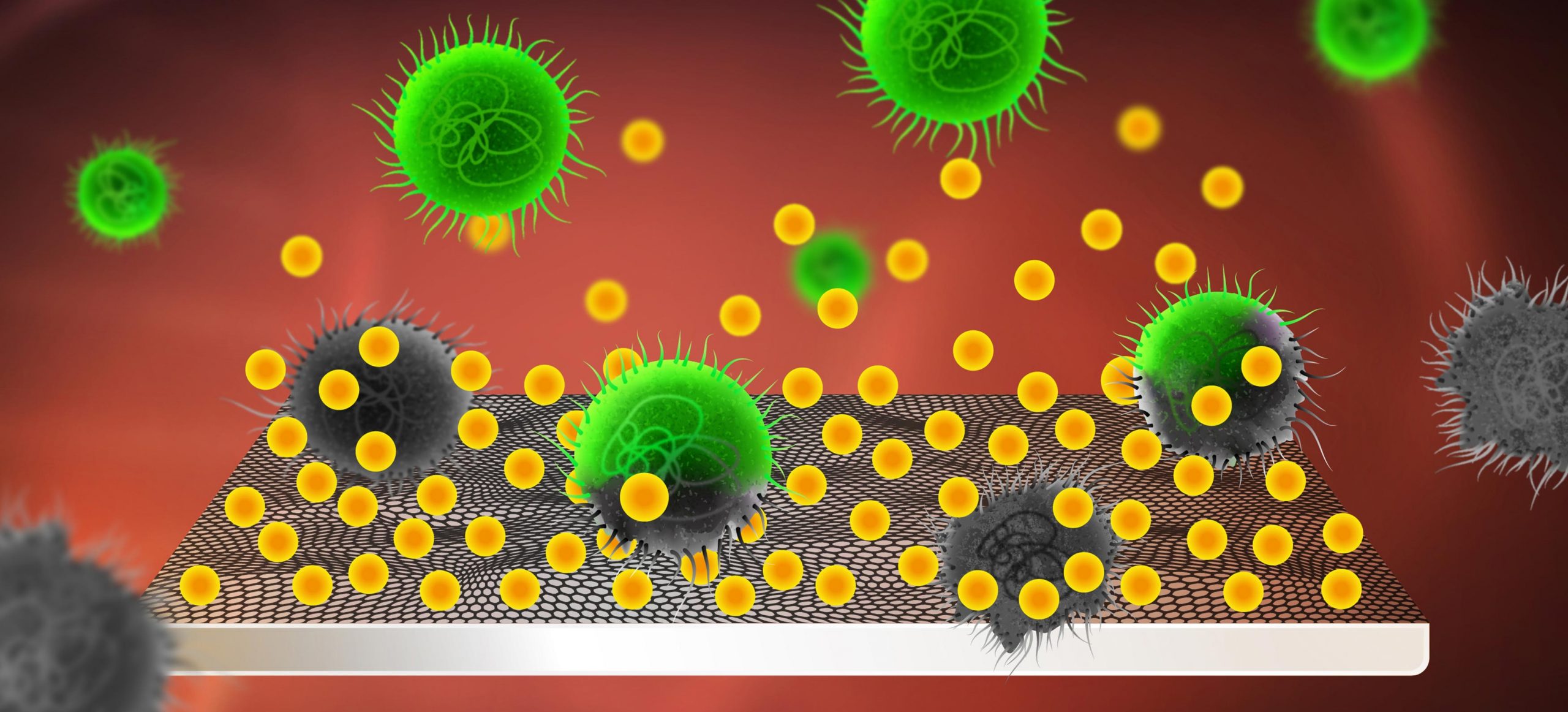
    Graphene-Bound Usnic Acid Protects Implants
    Usnic acid (yellow) is integrated in and released from the implant’s graphene coating. The usnic acid kills the bacteria (green) and thereby prevents them from forming infectious biofilms on the surface. Credit: Yen Strandqvist/Chalmers University of Technology

    Bacterial infections relating to medical implants place a huge burden on healthcare and cause great suffering to patients worldwide. Now, researchers at Chalmers University of Technology, Sweden, have developed a new method to prevent such infections, by covering a graphene-based material with bactericidal molecules.

    “Through our research, we have succeeded in binding water-insoluble antibacterial molecules to the graphene, and having the molecules release in a controlled, continuous manner from the material,” says Santosh Pandit, researcher at the Department of Biology and Biological Engineering at Chalmers, and first author of the study which was recently published in Scientific Reports.

    “This is an essential requirement for the method to work. The way in which we bind the active molecules to the graphene is also very simple, and could be easily integrated into industrial processes.”

    Certain bacteria can form impenetrable surface layers, or ‘biofilms’, on surgical implants, such as dental and other orthopedic implants, and represent a major problem for healthcare globally. Biofilms are more resistant than other bacteria, and the infections are therefore often difficult to treat, leading to great suffering for patients, and in the worst cases, necessitating removal or replacement of the implants. In addition to the effects on patients, this entails large costs for healthcare providers.

    Santosh Pandit
    “Through our research, we have succeeded in binding water-insoluble antibacterial molecules to the graphene, and having the molecules release in a controlled, continuous manner from the material,” says Santosh Pandit, researcher at the Department of Biology and Biological Engineering at Chalmers. Credit: Johan Bodell/Chalmers University of Technology

    Graphene Is Suitable as an Attachment Material

    There are a variety of water-insoluble, or hydrophobic, drugs and molecules that can be used for their antibacterial properties. But in order for them to be used in the body, they must be attached to a material, which can be difficult and labor-intensive to manufacture.

    “Graphene offers great potential here for interaction with hydrophobic molecules or drugs, and when we created our new material, we made use of these properties. The process of binding the antibacterial molecules takes place with the help of ultrasound,” says Santosh Pandit.

    In the study, the graphene material was covered with usnic acid, which is extracted from lichens, for example, fruticose lichen. Previous research has shown that usnic acid has good bactericidal properties. It works by preventing bacteria from forming nucleic acids, especially inhibiting of RNA synthesis, and thus blocking protein production in the cell.

    Simple Method Paves Way for Future Drugs

    Usnic acid was tested for its resistance to the pathogenic bacteria Staphylococcus aureus and Staphylococcus epidermidis, two common culprits for biofilm formation on medical implants. The researchers’ new material displayed a number of promising properties. In addition to successful results for integrating the usnic acid into the surface of the graphene material, they also observed that the usnic acid molecules were released in a controlled and continuous manner, thus preventing the formation of biofilms on the surface.

    “Even more importantly, our results show that the method for binding the hydrophobic molecules to graphene is simple. It paves the way for more effective antibacterial protection of biomedical products in the future. We are now planning trials where we will explore binding other hydrophobic molecules and drugs with even greater potential to treat or prevent various clinical infections,” says Santosh Pandit.

    Reference: “Sustained release of usnic acid from graphene coatings ensures long term antibiofilm protection” by Santosh Pandit, Shadi Rahimi, Abderahmane Derouiche, Athmane Boulaoued and Ivan Mijakovic, 11 May 2021, Scientific Reports.
    DOI: 10.1038/s41598-021-89452-5

    The research project is run by Professor Ivan Mijakovic’s group at the Department of Biology and Biotechnology at Chalmers University of Technology, Sweden. It is funded by Formas and the Swedish Research Council.

    Never miss a breakthrough: Join the SciTechDaily newsletter.
    Follow us on Google and Google News.

    Biomedical Engineering Biotechnology Chalmers University of Technology Graphene Nanotechnology Popular
    Share. Facebook Twitter Pinterest LinkedIn Email Reddit

    Related Articles

    Compact Wearable “Lab on the Skin” Continuously Monitors Glucose, Alcohol, and Lactate

    What Do Bacteria Sound Like? Bacterial Soundtracks Revealed by Nanotechnology

    Incredible Fibers Produced by Engineered Bacteria: Stronger Than Steel, Tougher Than Kevlar

    “Wonder Material” Can Be Used to Detect COVID-19 Virus Quickly and Accurately

    Revolutionary Self-Aware Materials Build the Foundation for Living Structures

    Structure of a Toxic Matter Identified That Destroys the Nerves in the Brain, Causing Alzheimer’s and Parkinson’s Diseases

    COVID-19 Coronavirus Breathalyzer Test Developed

    Desalination Technique Using Graphene Sheets Improves Permeability and Efficiency

    Graphene Based Composite Being Developed as Rust Proofing Alternative

    Leave A Reply Cancel Reply

    • Facebook
    • Twitter
    • Pinterest
    • YouTube

    Don't Miss a Discovery

    Subscribe for the Latest in Science & Tech!

    Trending News

    One of the Universe’s Largest Stars May Be Getting Ready To Explode

    Scientists Discover Enzyme That Could Supercharge Ozempic-Like Weight Loss Drugs

    Popular Sweetener Linked to DNA Damage – “It’s Something You Should Not Be Eating”

    Ancient “Rock” Microbes May Reveal How Complex Life Began

    Researchers Capture Quantum Interference in One of Nature’s Rarest Atoms

    “A Plague Is Upon Us”: The Mass Death That Changed an Ancient City Forever

    Scientists Discover Game-Changing New Way To Treat High Cholesterol

    This Small Change to Your Exercise Routine Could Be the Secret to Living Longer

    Follow SciTechDaily
    • Facebook
    • Twitter
    • YouTube
    • Pinterest
    • Newsletter
    • RSS
    SciTech News
    • Biology News
    • Chemistry News
    • Earth News
    • Health News
    • Physics News
    • Science News
    • Space News
    • Technology News
    Recent Posts
    • Natural Compounds Boost Bone Implant Success While Killing Bacteria and Cancer Cells
    • After 60 Years, Scientists Uncover Unexpected Brain Effects of Popular Diabetes Drug Metformin
    • New Research Uncovers Hidden Side Effects of Popular Weight-Loss Drugs
    • Scientists Rethink Extreme Warming After Surprising Ocean Discovery
    • The Surprising Role of Asteroids in the Origin of Life
    Copyright © 1998 - 2026 SciTechDaily. All Rights Reserved.
    • Science News
    • About
    • Contact
    • Editorial Board
    • Privacy Policy
    • Terms of Use

    Type above and press Enter to search. Press Esc to cancel.