
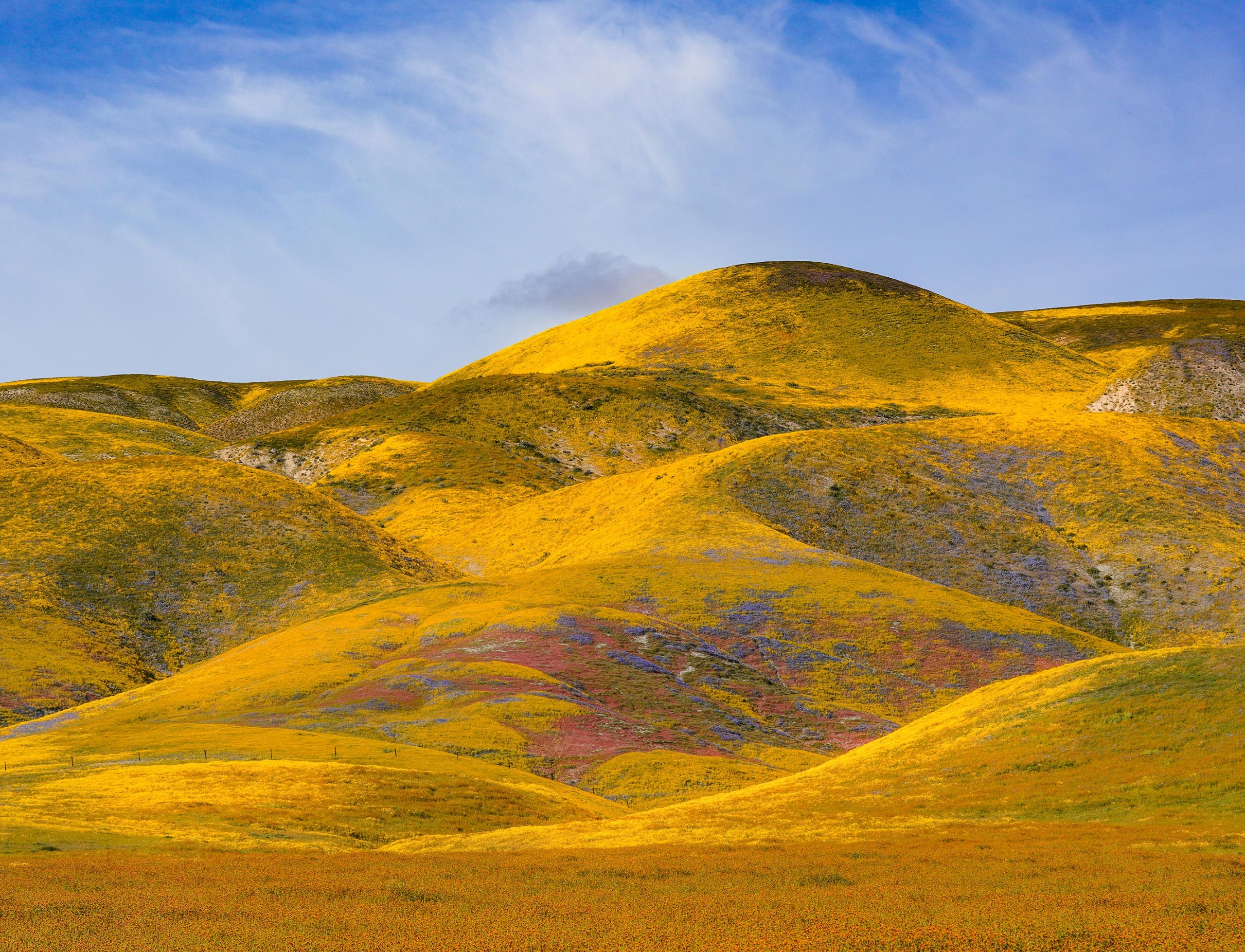
Research from the University of Michigan reveals that unlike forests, which accumulate a ‘climate debt,’ grasslands respond to climate changes almost instantaneously.
The study found significant shifts in species dominance in response to temperature and precipitation changes in California’s grasslands, highlighting the rapid ecological changes and their potential negative consequences on biodiversity.
Immediate Ecological Responses to Climate Change
Climate change impacts all ecosystems, but the effects may not be immediately noticeable. For instance, changes in forest biodiversity often occur slowly, trailing behind shifts in temperature and precipitation within their habitats.
In contrast, grasslands respond to climate change in real time, according to recent research from the University of Michigan. Kai Zhu and Yiluan Song, the lead authors of the study, describe this phenomenon by comparing it to financial terms: while forests build up a “climate debt,” grasslands are effectively “paying as they go,” adapting to changes as they happen.
“Climate change does have consequences for our ecosystems. It’s going to come sooner or later,” said Song, a postdoctoral fellow at the Michigan Institute for Data and AI in Society. “Grasslands are at the faster end of the spectrum.”
Insights for Grassland Restoration
This work will help the scientific community better understand and predict the impacts of climate change, said Zhu, associate professor at the U-M School for Environment and Sustainability. The work will also provide key insights for the restoration of grassland vegetation.
“If you want to restore grasslands, you have to ask what types of species you will plant,” Zhu said. “In order to answer that, you need to at least take climate change into consideration.”
The research team reported its findings today (October 16) in the journal Nature Ecology & Evolution.
Long-Term Observations and Experimental Data
The team, made up of researchers from more than a dozen institutions, amassed data from years of observations across grassland communities located in what’s known as the California Floristic Province.
Within this biodiversity hotspot that stretches along the U.S. West Coast, the team documented trends for 12 sites observed over decades. The researchers found that, as the climate in the region became hotter and drier, species that preferred those kinds of conditions became more dominant in plant communities.
Ecological Shifts and Their Implications
The team also included results from long-term global change experiments in the region, enabling the group to show that climate change is able to drive the changes in communities.
“We know correlation doesn’t imply causation,” Zhu said. “But the experimental data allow us to attribute the causality.”
The team characterized the climate preferences or niches for various species in the region. The researchers could then quantify shifts in plant communities in direct relation to temperature and precipitation changes.
This approach yielded a clear, consistent conclusion across the studied observational and experimental sites, which Zhu and Song said is uncommon for an ecological study like this.
But what stood out even more was the pace of the ecological change, they said. It was fast and comparable to the observed rate of changes in climate. And the researchers stressed that this rapid shift in plant communities should not be seen as adaptation—at least not without further studies.
“To me, adaptation gives a positive impression that the system is changing to counter some of the negative effects of climate change,” Song said. “The rapid shifts in grassland communities involve not only the gain of some hotter, drier species but also the loss of some cooler, wetter species. These shifts might have negative consequences such as dominance by non-native species and loss of biodiversity.”
Potential Global Implications for Grasslands
Although their study focused on a single region, Zhu and Song believe the results will hold in other grasslands, provided they’re interpreted in the context of a given region’s climate dynamics. For example, if the climate is trending warmer and wetter, species more at home in those conditions will likely start taking over at a speed that matches the changing climate.
“I would hypothesize that we may see an even greater response to climate change in other grasslands around the world,” Zhu said.
Reference: “Rapid shifts in grassland communities driven by climate change” by Kai Zhu, Yiluan Song, Josephine C. Lesage, Justin C. Luong, James W. Bartolome, Nona R. Chiariello, Joan Dudney, Christopher B. Field, Lauren M. Hallett, Michele Hammond, Susan P. Harrison, Grey F. Hayes, Richard J. Hobbs, Karen D. Holl, Peter Hopkinson, Loralee Larios, Michael E. Loik and Laura R. Prugh, 16 October 2024, Nature Ecology & Evolution.
DOI: 10.1038/s41559-024-02552-z
Researchers from California Polytechnic State University, Clark College, the East Bay Regional Park District, the University of Oregon, the University of Washington, the University of Western Australia and Stanford University also contributed to the study. The team also included members from several University of California institutions, including UC Berkeley, UC Davis, UC Riverside, UC Santa Barbara and UC Santa Cruz, where Zhu and Song began the project.
Never miss a breakthrough: Join the SciTechDaily newsletter.
Follow us on Google and Google News.