

Close Menu
    Facebook X (Twitter) Instagram
    SciTechDaily
    • Biology
    • Chemistry
    • Earth
    • Health
    • Physics
    • Science
    • Space
    • Technology
    Facebook X (Twitter) Pinterest YouTube RSS
    SciTechDaily
    Home»Earth»Greenland’s Ice Giants Captured in Breathtaking Satellite Images
    Earth

    Greenland’s Ice Giants Captured in Breathtaking Satellite Images

    By European Space Agency (ESA)December 14, 2024No Comments3 Mins Read
    Facebook Twitter Pinterest Telegram LinkedIn WhatsApp Email Reddit
    Share
    Facebook Twitter LinkedIn Pinterest Telegram Email Reddit
    Jakobshavn Glacier, Greenland From Space
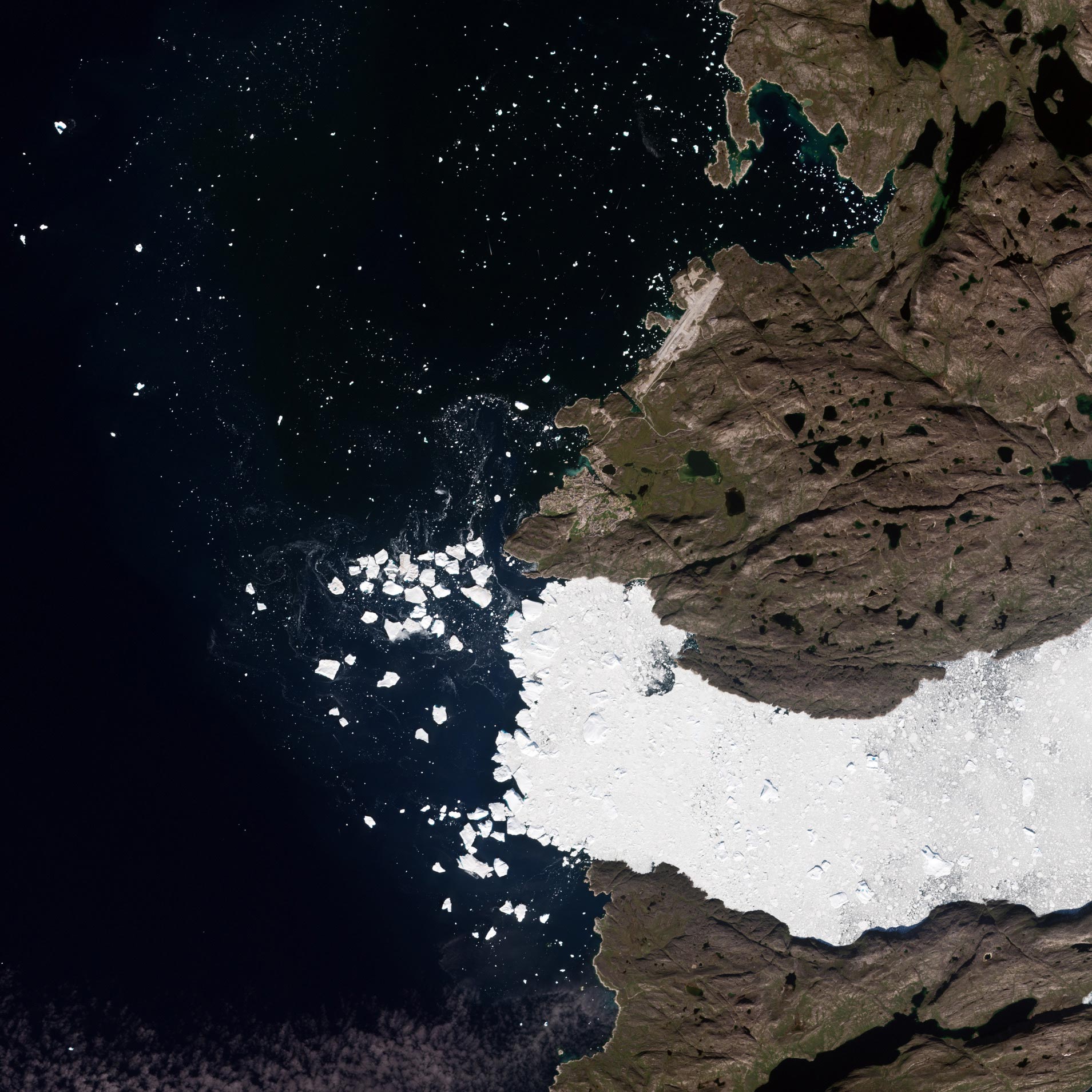
    Sentinel-2 optical image, captured on August 5, 2024, reveals the mouth of Greenland’s Ilulissat Icefjord, home to the Jakobshavn Glacier. Credit: Contains modified Copernicus Sentinel data (2024), processed by ESA
    Jakobshavn Glacier, Greenland Radar View
    Sentinel-1 radar image from August 3, 2024, reveals Greenland’s giant icebergs frozen in time. Its radar sensors track iceberg movements even through cloud cover and darkness, showing the icebergs’ positions before drifting toward Ilulissat. Credit: Contains modified Copernicus Sentinel data (2024), processed by ESA

    Copernicus Sentinel missions have provided detailed images showcasing Greenland’s west coast during the summer of 2024, focusing on the dynamic Jakobshavn Glacier and its icebergs.

    These images captured both the visible and radar spectra, revealing changes over time and the impact of environmental factors on iceberg movement.

    Satellite Imagery of Greenland’s Ice

    These summer images from the Copernicus Sentinel-2 and Sentinel-1 missions offer distinct satellite perspectives of Greenland’s west coast.

    The optical image from Sentinel-2 (upper image), captured on August 5, 2024, highlights the mouth of the Ilulissat Icefjord, easily recognizable by its bright white appearance. This fjord hosts the Jakobshavn Glacier, also known by its Greenlandic name, Sermeq Kujalleq — one of the world’s fastest and most active glaciers.

    The Life Cycle of Greenlandic Icebergs

    Jakobshavn Glacier drains about 6.5% of the Greenland ice sheet and generates approximately 10% of its icebergs. Some of these icebergs are so massive that they become grounded in shallower parts of the fjord, where they remain trapped for years until they melt enough to break apart and drift away.

    Several icebergs in the image appear as white dots scattered across the fjord, speckling the waters of Disko Bay like stars in the night sky. These towering icebergs, some reaching heights of 100 m above the water, conceal even larger portions beneath the surface. Their shapes, sizes, and colors vary greatly. Despite their appearance, some of the largest icebergs pictured here have a perimeter of 2 km.

    Tourist Attraction in a Changing Landscape

    Just north of the fjord’s mouth lies the small town of Ilulissat, with the town’s airport visible in light brown further north. Ilulissat, which means ‘icebergs’ in Greenlandic, is a popular destination for tourists who come to see the giant icebergs passing near the port.

    Monitoring Icebergs With Advanced Radar Technology

    The radar image (lower image), captured on August 3, 2024, by Copernicus Sentinel-1, shows the positions of the giant bergs two days prior to the Sentinel-2 acquisition. By comparing these two images, the movement of the icebergs can be tracked. Their movement depends on various factors, including size, sea depth, currents, and wind. In this region, icebergs typically drift northward towards Ilulissat.

    Radar missions like Sentinel-1 are remarkably useful in monitoring sea ice, ice sheets, and drifting icebergs, particularly in polar regions. Unlike optical imaging, radar can acquire images under any weather conditions, day or night.

    Enhancements in Satellite Capabilities

    On December 5, Sentinel-1C, the third Copernicus Sentinel-1 satellite, was launched from Europe’s Spaceport in French Guiana. Along with its sibling Sentinel-1A already in orbit, Sentinel-1C will restore the mission to its full strength as a two-satellite constellation to continue support a diverse range of applications, such as environmental management, disaster response, and climate change research.

    Never miss a breakthrough: Join the SciTechDaily newsletter.
    Follow us on Google and Google News.

    European Space Agency Geography Glacier Greenland
    Share. Facebook Twitter Pinterest LinkedIn Email Reddit

    Related Articles

    Meltdown of Alaska’s Columbia Glacier Captured From Orbit

    Exploring Earth From Space: Liverpool Land, Greenland

    Exploring Earth From Space: Batura Glacier and the “Karakoram Anomaly”

    Exploring Earth From Space: The Stunningly Beautiful Kangerlussuaq Glacier

    Greenland – Exploring the World’s Largest Island From Space

    New NASA Research Identifies Pathway for Greenland Meltwater to Reach Ocean

    Jakobshavn Glacier Sheds a Massive Chunk of Ice

    Scientists Discover Mega-Canyon under Greenland Ice Sheet

    1930s Photos Reveal History of Greenland Glaciers

    Leave A Reply Cancel Reply

    • Facebook
    • Twitter
    • Pinterest
    • YouTube

    Don't Miss a Discovery

    Subscribe for the Latest in Science & Tech!

    Trending News

    Why Popular Diabetes Drugs Like Ozempic Don’t Work for Everyone: The “Genetic Glitch”

    Scientists Stunned After Finding Plant Thought Extinct for 60 Years

    Scientists Discover Tiny New Spider That Hunts Prey 6x Its Size

    Natural Component From Licorice Shows Promise for Treating Inflammatory Bowel Disease

    Scientists Warn: Popular Sweetener Linked to Dangerous Metabolic Effects

    Monster Storms on Jupiter Unleash Lightning Beyond Anything on Earth

    Scientists Create “Liquid Gears” That Spin Without Touching

    The Simple Habit That Could Help Prevent Cancer

    Follow SciTechDaily
    • Facebook
    • Twitter
    • YouTube
    • Pinterest
    • Newsletter
    • RSS
    SciTech News
    • Biology News
    • Chemistry News
    • Earth News
    • Health News
    • Physics News
    • Science News
    • Space News
    • Technology News
    Recent Posts
    • 100,000-Year-Old Neanderthal Fossils in Poland Reveal Unexpected Genetic Connections
    • Unexpected Hormone Discovery Could Change How We Treat Arthritis
    • Scientists Supercharge “Natural Killer” Cells To Break Through Cancer’s Defenses
    • Simple “Gut Reset” May Prevent Weight Gain After Ozempic or Wegovy
    • 2.8 Days to Disaster: Scientists Warn Low Earth Orbit Could Suddenly Collapse
    Copyright © 1998 - 2026 SciTechDaily. All Rights Reserved.
    • Science News
    • About
    • Contact
    • Editorial Board
    • Privacy Policy
    • Terms of Use

    Type above and press Enter to search. Press Esc to cancel.