
Close Menu
    Facebook X (Twitter) Instagram
    SciTechDaily
    • Biology
    • Chemistry
    • Earth
    • Health
    • Physics
    • Science
    • Space
    • Technology
    Facebook X (Twitter) Pinterest YouTube RSS
    SciTechDaily
    Home»Health»Gut Microbes May Be the Key to Unlocking Anxiety
    Health

    Gut Microbes May Be the Key to Unlocking Anxiety

    By Lawrence Berkeley National LaboratoryMarch 6, 2021No Comments2 Mins Read
    Facebook Twitter Pinterest Telegram LinkedIn WhatsApp Email Reddit
    Share
    Facebook Twitter LinkedIn Pinterest Telegram Email Reddit
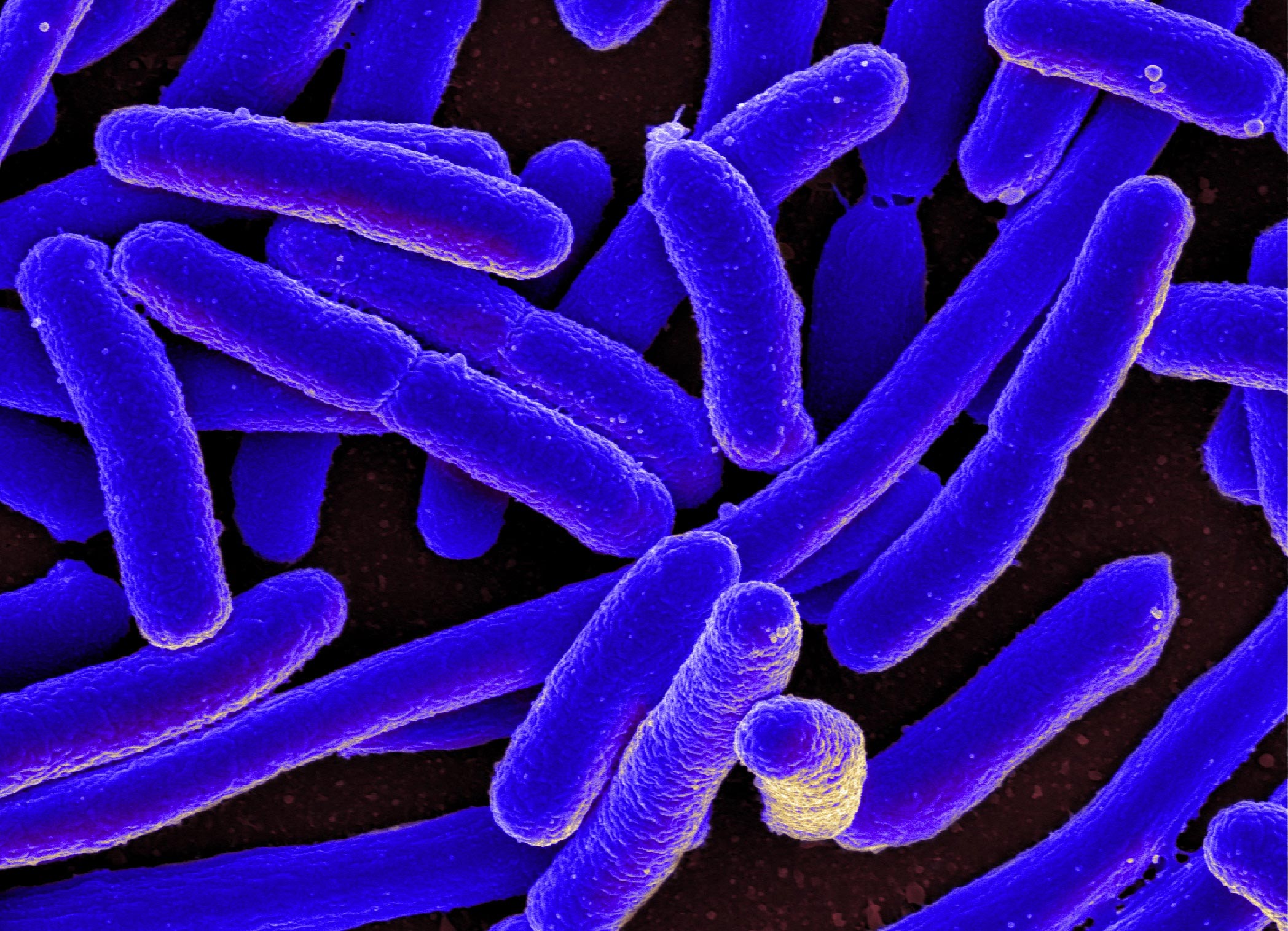
    Escherichia coli Scanning Electron Micrograph
    A scanning electron micrograph of Escherichia coli, which are one of many strains of bacteria found in mammalian guts. Credit: National Institute of Allergy and Infectious Diseases, National Institutes of Health

    A mouse study suggests the genetic contribution to anxiety is partially mediated by the gut microbiome.

    The prevalence of anxiety disorders, already the most common mental illness in many countries, including the U.S., has surged during the novel coronavirus pandemic. A study, published in Scientific Reports, led by researchers in Berkeley Lab’s Biosciences Area provides evidence that taking care of our gut microbiome may help mitigate some of that anxiety.

    The team used a genetically heterogeneous lineage of mice known as the Collaborative Cross (CC) to probe connections among genes, gut microbiome composition, and anxiety-like behavior. They first categorized 445 mice across 30 CC strains as high or low anxiety based on their behavior in the light/dark box assay: a box with two compartments – one transparent and illuminated, the other black and un-illuminated – connected by an opening. The degree to which rodents’ innate aversion to brightly lit, open spaces supersedes (or doesn’t) their instinct to explore a novel environment is a rough analog for high (or low) anxiety.

    The researchers then performed genome-wide association study (GWAS) analysis, comparing high and low anxiety mice, and also analyzed and compared gut microbiome composition in high versus low anxiety animals. They identified specific genetic variants and families of gut microbes associated with anxiety-like behavior, including host genes that influence anxiety indirectly by modulating the abundance of specific microorganisms in the gut.

    “We hope this study will inform future research to evaluate treatments for anxiety that take into account both host genome and microbiome,” said co-lead author Antoine Snijders, a staff scientist in the Biological Systems and Engineering Division.

    Reference: “Gut microbiome partially mediates and coordinates the effects of genetics on anxiety-like behavior in Collaborative Cross mice” by X. Jin, Y. Zhang, S. E. Celniker, Y. Xia, J.-H. Mao, A. M. Snijders and H. Chang, 11 January 2021, Scientific Reports.
    DOI: 10.1038/s41598-020-79538-x

    The study was conducted in collaboration with Dr. Xiaoqing Jin, a visiting scholar from Zhongnan Hospital of Wuhan University.

    Never miss a breakthrough: Join the SciTechDaily newsletter.
    Follow us on Google and Google News.

    Anxiety Disorders Lawrence Berkeley National Laboratory Mental Health Microbiology Microbiome
    Share. Facebook Twitter Pinterest LinkedIn Email Reddit

    Related Articles

    The Probiotic Breakthrough for Natural Anxiety Relief and Better Mental Health

    Brain on Fat: Study Reveals How Diet May Drive Anxiety

    The Probiotic Breakthrough for Anxiety Relief: How Gut Bacteria Influence Mental Health

    Safety Concerns Dim Mental Health Benefits of Parks

    Neuroscientists May Have Just Discovered Why Some People Are More Prone to Anxiety

    Researchers Can Accurately Estimate Your Age Based on the Microbes Living on Your Body

    New Study Uncovers Some Surprisingly Good News About Anxiety

    A Matchmaker for Microbiomes – Identifying Relationships of Microbes and Metabolites

    Diet Impacts the Sensitivity of Gut Microbiome to Antibiotics

    Leave A Reply Cancel Reply

    • Facebook
    • Twitter
    • Pinterest
    • YouTube

    Don't Miss a Discovery

    Subscribe for the Latest in Science & Tech!

    Trending News

    This Deadly Disease Was Wiping Out Humans 5,500 Years Ago

    Beyond DNA: Scientists Discover Inheritance That Breaks the Rules of Genetics

    Scientists Just Discovered the Eye Defies a Long-Held Rule of Vision

    What if Time Isn’t Fundamental? Physicists Just Tested the Idea in the Lab

    Scientists Say We’ve Been Wrong About the Aging Brain

    68 Quadrillion Miles: Scientists Map Earth’s Vast Hidden Fungal Network for the First Time

    Hidden Damage From Youth May Explode Into Disease Later in Life

    Climate Models May Be Wrong About How Trees Store Carbon

    Follow SciTechDaily
    • Facebook
    • Twitter
    • YouTube
    • Pinterest
    • Newsletter
    • RSS
    SciTech News
    • Biology News
    • Chemistry News
    • Earth News
    • Health News
    • Physics News
    • Science News
    • Space News
    • Technology News
    Recent Posts
    • Scientists Rediscover Rare Island Fox Not Seen for More Than 20 Years
    • The Amazon’s Mysterious “Ghost Dog” Has Been Hiding a Big Secret
    • Scientists Say Frequent Ejaculation May Improve Sperm Quality and Fertility
    • Antarctica’s Future May Be More Predictable Than Scientists Thought
    • Sea Level Rise Is Swallowing Farmland at Alarming Rates
    Copyright © 1998 - 2026 SciTechDaily. All Rights Reserved.
    • Science News
    • About
    • Contact
    • Editorial Board
    • Privacy Policy
    • Terms of Use

    Type above and press Enter to search. Press Esc to cancel.