

A major genetic study shows that some suicides arise from hidden, nontraditional risk factors, challenging long-standing assumptions about who is most vulnerable.
Among the loved ones of people who die by suicide, a familiar reaction is often: I didn’t know.
Although some individuals have a history of attempts, about half of those who die by suicide leave no record of suicidal thoughts or actions, and they also lack recognized psychiatric conditions linked to elevated risk, such as depression. In many cases, there are simply no clear signs beforehand that they might be vulnerable.
A new genetic investigation from the University of Utah suggests that these unexpected cases are not just missed by the mental health system because of limited contact with psychiatric care. Instead, their underlying sources of risk may differ in meaningful ways.
The study reported that people who die by suicide without prior non-fatal suicidal thoughts or behaviors tend to have both fewer psychiatric diagnoses and lower genetic risk for several psychiatric conditions compared to individuals who had shown earlier warning signs.
“There are a lot of people out there who may be at risk of suicide where it’s not just that you’ve missed that they’re depressed, it’s likely that they’re in fact actually not depressed,” says Hilary Coon, PhD, professor of psychiatry in the Spencer Fox Eccles School of Medicine at the University of Utah and first author on the study.
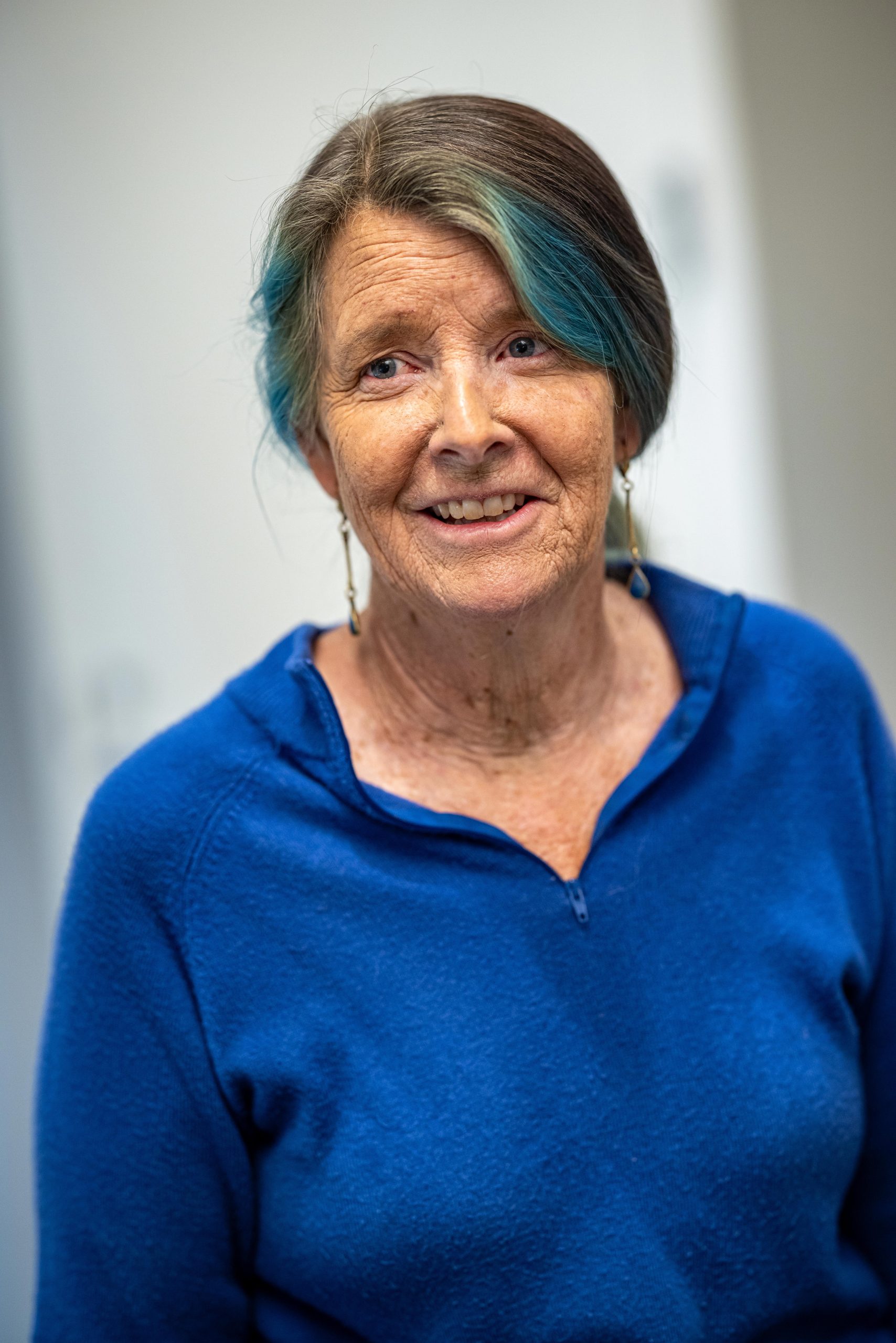
“That is important in widening our view of who may be at risk. We need to start to think about aspects leading to risk in different ways.”
The findings, reported in JAMA Network Open, challenge long-standing assumptions about what drives suicide risk and point toward new strategies that may improve prevention efforts.
Uncovering hidden risk
Earlier studies showed that individuals who die by suicide without any previously known signs of suicidality are less likely to have psychiatric diagnoses, including depression, than those with documented suicidal thoughts or behaviors. However, the reason behind this contrast remained unclear. Researchers had speculated that people without known suicidality might still experience similar levels of depression or anxiety, only without formal diagnosis, and that they’re just undiagnosed.
But Coon’s team was surprised to find that this isn’t the case. Instead, they found that this group has different genetic risk factors from people with known suicidality. By comprehensively analyzing anonymized genetic data from more than 2,700 people who died by suicide, the researchers found that people without prior suicidality tend to have fewer genetic risk factors for several psychiatric conditions, including major depressive disorder, anxiety, Alzheimer’s disease, and PTSD.
The genetic data also suggests that this group isn’t any more likely than the general population to have milder conditions, like depressed mood and neuroticism.
This means that conventional wisdom on how to reduce suicide may need to be rethought. “A tenet in suicide prevention has been that we just need to screen people better for associated conditions like depression,” Coon explains. “And if people had the same sort of underlying vulnerabilities, then additional efforts in screening might be very helpful. But for those who actually have different underlying vulnerabilities, then increasing that screening might not help for them.”
Helping those most at risk for suicide
Figuring out how to find and treat these “hidden” at-risk individuals is a major focus of Coon’s upcoming research. Previous studies with clinical data have shown potential links between suicide risk and hard-to-treat conditions like chronic pain. Coon is also investigating how other physical disorders, such as inflammation and respiratory conditions, may impact suicide risk. Her work will also focus on traits that may confer resilience to suicide.
Coon emphasizes that, on their own, individual genetic risk factors related to suicide have very small effects on risk, and there’s no single gene—or combination of genes—that causes suicide. Environmental and societal contexts are crucial contributors to risk, and understanding the interplay between the environment and underlying biology will be essential to discovering who’s at risk.
“We hope our work will begin to define subsets of individuals at risk, and also the contexts in which these risk characteristics may be important,” Coon says. “If people have a certain type of clinical diagnosis that makes them particularly vulnerable within particular environmental contexts, they still may not ever say they’re suicidal. We hope our work may help reveal traits and contexts associated with high risk so that doctors can deliver care more effectively and specifically. ” Better identification of at-risk individuals will help people get the care they need.
Reference: “Genetic Liabilities to Neuropsychiatric Conditions in Suicide Deaths With No Prior Suicidality” by Hilary Coon, Andrey A. Shabalin, Eric T. Monson, Emily DiBlasi, Seonggyun Han, Lisa M. Baird, Erin A. Kaufman, Douglas Tharp, Michael J. Staley, Zhe Yu, Qingqin S. Li, Sarah M. Colbert, Amanda V. Bakian, Anna R. Docherty, Andrew M. McIntosh, Heather C. Whalley, Dierdre Amaro, David K. Crockett, Niamh Mullins and Brooks R. Keeshin, , JAMA Network Open.
DOI: 10.1001/jamanetworkopen.2025.38204
The work was supported by the National Institute of Mental Health (grants R01MH122412, R01MH123489, R01ES032028, and R01MH123619), Janssen Research & Development, the American Foundation for Suicide Prevention (grant BSG-1-005-18), the Brain & Behavior Research Foundation–National Alliance for Research on Schizophrenia and Depression (grants 28132, 28686, and 31249), and the Clark Tanner Foundation.
Never miss a breakthrough: Join the SciTechDaily newsletter.
Follow us on Google and Google News.
4 Comments
I was attending one of the Army’s mandatory suicide prevention training sessions when the instructor presented something I never heard at any other one, before or after.
She said people don’t commit suicide because they are depressed; they do it because they feel trapped.
People “with hard-to-treat conditions like chronic pain” or PTSD, students facing unending bullying by their peers, women in Afghanistan setting themselves on fire – they see no other escape from the problems trapping them. This is even true of the classical “depressed” suicides. They see no other true relief from their depression. Maybe that why they are depressed to begin with – they are trapped.
This article seems to verify, or at least, seems to be looking in that direction.
We were trained in this 40 years ago in psychology “shadow mind”. Is it just American’s rediscovering it?
I knew this you might say from the inside all my life. Autism might be a nice addition to the list, at least for older people from when an Autism diagnosis brought shame on the whole family. (e.g. RFK Jr. and his aunt Rosemary.) In college, is there any way out? Came close to suicide but didn’t want to leave a mess around. It would have involved a LOT of blood. Much later on, is there any way out? Came close, faced a very tough “shame” decision, accepted the shame to live. Sex change was the best thing I did for myself. Lost nearly everything except, to my surprise, my job. My autistic super-power, one might call it, is an intuitive feel for pushing electrons around circuits. Then at age 80 I discovered most of my “I must have come from another planet as a changeling or something” was “simply” a hefty position in the autistic spectrum. So this gives those clueless ones two more places to look for silent suicides. PTSD phui – for me PTSD was a way of life.
{+_+}
Suicide is no simple matter.