
Close Menu
    Facebook X (Twitter) Instagram
    SciTechDaily
    • Biology
    • Chemistry
    • Earth
    • Health
    • Physics
    • Science
    • Space
    • Technology
    Facebook X (Twitter) Pinterest YouTube RSS
    SciTechDaily
    Home»Earth»High-Severity Wildfires on the Rise in Northern California’s Coastal Ranges Since 1984
    Earth

    High-Severity Wildfires on the Rise in Northern California’s Coastal Ranges Since 1984

    By University of California - DavisSeptember 19, 20201 Comment3 Mins Read
    Facebook Twitter Pinterest Telegram LinkedIn WhatsApp Email Reddit
    Share
    Facebook Twitter LinkedIn Pinterest Telegram Email Reddit
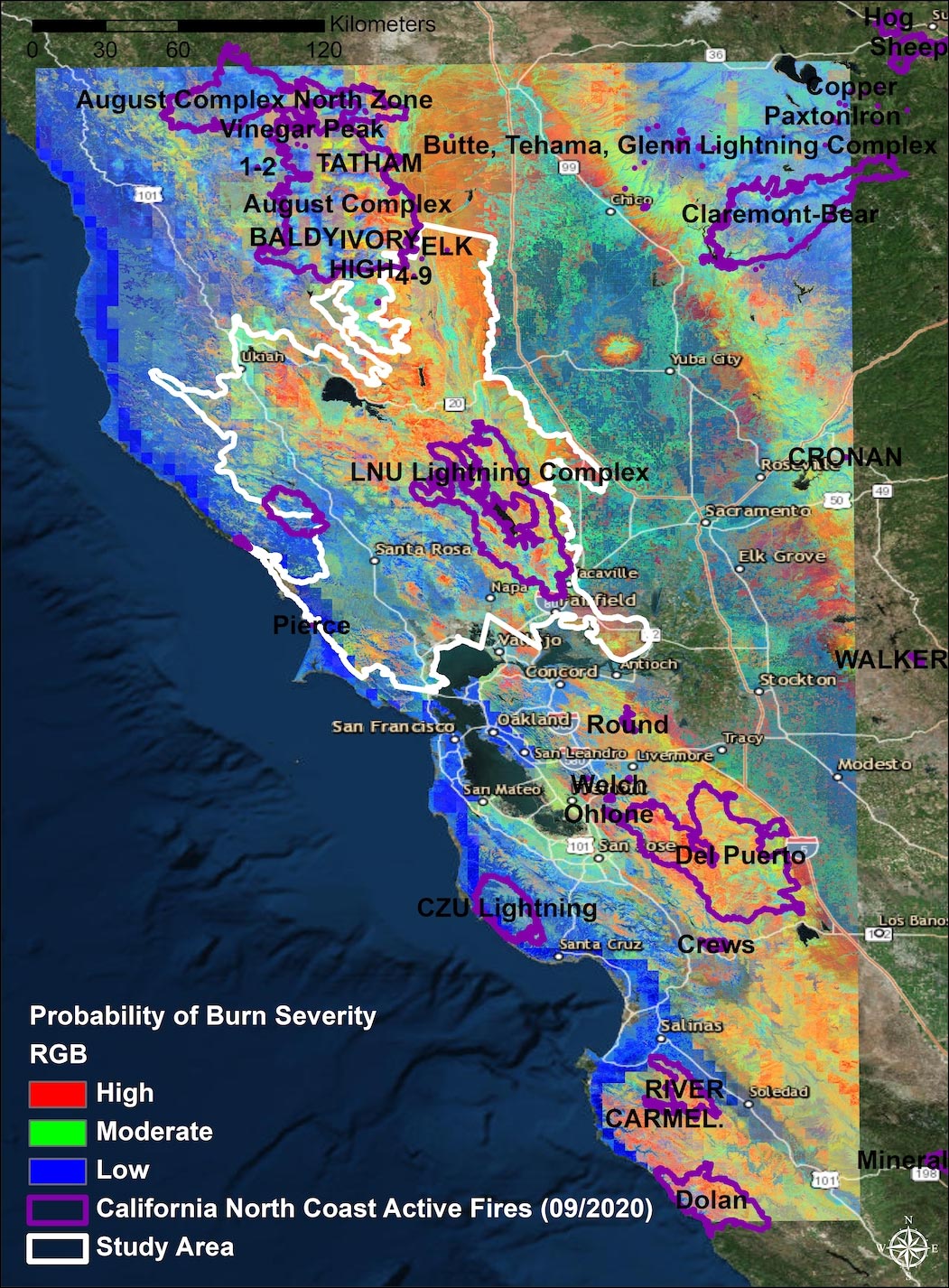
    Northern CA Wildfire Burn Severity Probability Map
    This map overlays the probability of burn severity in California’s northern coastal mountains, as forecasted in a UC Davis study, with burn perimeters of wildfires burning in September 2020. Credit: UC Davis

    From Berryessa to Klamath Mountains, High-Severity Burns Quadrupled During Warm Drought

    High-severity wildfires in northern coastal California have been increasing by about 10 percent per decade since 1984, according to a study from the University of California, Davis, that associates climate trends with wildfire.

    The study, published online in Environmental Research Letters, shows that the drought of 2012-2016 nearly quadrupled the area burned severely, compared to the relatively cooler drought of 1987-1992.

    “The severity of wildfires has been increasing over the past four decades,” said lead author Yuhan Huang, a graduate student researcher at UC Davis. “We found that fires were much bigger and more severe during dry and hot years compared to other climatic conditions.”

    Heat wave fans flames

    The study area includes coastal foothills and mountains surrounded by Central Valley lowlands to the east and stretching north to the Klamath Mountains. Berryessa Snow Mountain National Monument resides in the southeast portion. It and several areas described in the study have been impacted by wildfire in recent months during a heat wave and the largest wildfire season recorded in California.

    “Most of the fires occurring now are exacerbated by this heat wave,” said co-leading author Yufang Jin, an associate professor in the UC Davis Department of Land, Air and Water Resources. “Our study shows how prolonged and historic dry conditions lead to extreme behaviors of wildfires, especially when they coincide with warmer temperatures.”

    The hot and dry difference

    The scientists used a machine-learning model that enables near real-time prediction of the likelihood of different levels of fire severity, given ignition. The model shows that during dry years, the northwest and southern parts of the study area are particularly at risk of high-severity fires, although the entire area is susceptible.

    According to the historical data, about 36 percent of all fires between 1984 and 2017 in the mapped area burned at high severity, with dry years experiencing much higher burn severity. During wet years, however, only about 20 percent of burns were considered high-severity fires, while the remainder burned at moderate or low severity. Higher temperatures further amplified the severity of wildfires.

    The research highlights the importance of careful land-use planning and fuel management in the state’s most vulnerable areas to reduce the risk of large, severe fires as the climate becomes drier and warmer.

    “Those are things we can control in the short-term,” Jin said. “Prioritizing high-risk areas is something more practical to reduce the damages.”

    Reference: “Intensified burn severity in California’s northern coastal mountains by drier climatic condition” by Yuhan Huang, Yufang Jin, Mark W. Schwartz and James H Thorne, 16 July 2020, Environmental Research Letters.
    DOI: 10.1088/1748-9326/aba6af

    The study’s additional co-authors include Mark Schwartz and James Thorne of UC Davis.

    The study was funded by the Bureau of Land Management, UC National Laboratory Fees Research Program, the California Strategic Growth Council, and the UC Davis Agricultural Experimental Station.

    Never miss a breakthrough: Join the SciTechDaily newsletter.
    Follow us on Google and Google News.

    Climate Science Environment Forests UC Davis Wildfires
    Share. Facebook Twitter Pinterest LinkedIn Email Reddit

    Related Articles

    The “Wrong Kind of Fire” Is Burning – Unprecedented Levels of High-Severity Fire Burn in Sierra Nevada

    Fire-Resistant Tropical Forest on Brink of Disappearance – Crucial for Preventing Catastrophic Fire

    Increased Threat of Fierce Fires and Accelerated Global Warming From Water Loss in Northern Peatlands

    Rivers of Glacial Meltwater Contribute to Rising Sea Levels

    New Research Reveals the Missing Piece of the Climate Puzzle

    Rutgers Study Shows Previous Climate Change Was Caused by the Ocean and the Atmosphere

    An Invasive Grass Species Spreads Wildfires Quicker

    Reliance on Satellite Data Blamed for Overestimation of India’s Forest Cover

    Cloud Forests are at Risk of Destruction from Global Warming

    1 Comment

    1. Clyde Spencer on September 19, 2020 5:50 pm

      What are the controls on this study? Is there evidence that the conclusions apply across political boundaries, such as state lines? If not, how can one be certain that it is climate change instead of forest management or building codes?

      Reply
    Leave A Reply Cancel Reply

    • Facebook
    • Twitter
    • Pinterest
    • YouTube

    Don't Miss a Discovery

    Subscribe for the Latest in Science & Tech!

    Trending News

    Bone-Strengthening Discovery Could Reverse Osteoporosis

    Scientists Uncover Hidden Trigger Behind Stem Cell Aging

    Scientists Find Way to Reverse Fatty Liver Disease Without Changing Diet

    Could Humans Regrow Limbs? New Study Reveals Promising Genetic Pathway

    Scientists Reveal Eating Fruits and Vegetables May Increase Your Risk of Lung Cancer

    Scientists Reverse Brain Aging With Simple Nasal Spray

    Scientists Uncover Potential Brain Risks of Popular Fish Oil Supplements

    Scientists Discover a Surprising Way To Make Bread Healthier and More Nutritious

    Follow SciTechDaily
    • Facebook
    • Twitter
    • YouTube
    • Pinterest
    • Newsletter
    • RSS
    SciTech News
    • Biology News
    • Chemistry News
    • Earth News
    • Health News
    • Physics News
    • Science News
    • Space News
    • Technology News
    Recent Posts
    • Europe’s Most Active Volcano Just Got Stranger – Here’s Why Scientists Are Rethinking It
    • Why Are Giant Ants Letting Tiny Ants Crawl All Over Them?
    • Revolutionary Technique Sends Healthy Mitochondria Exactly Where They’re Needed
    • This Student Recreated the Universe in a Bottle. What She Discovered Could Help Reveal How Life Started on Earth
    • Alzheimer’s Symptoms May Start Outside the Brain, Study Finds
    Copyright © 1998 - 2026 SciTechDaily. All Rights Reserved.
    • Science News
    • About
    • Contact
    • Editorial Board
    • Privacy Policy
    • Terms of Use

    Type above and press Enter to search. Press Esc to cancel.