
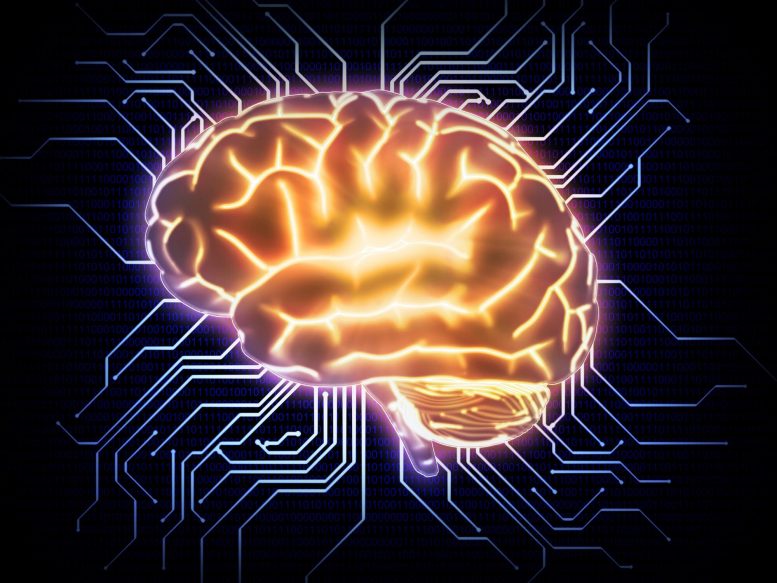
Researchers from KTH Royal Institute of Technology and Stanford University have developed a new material, 2D titanium carbide (MXene), that could significantly advance the commercial viability of neuromorphic computers, which mimic the human brain.
These computers could be thousands of times more energy-efficient than current models. The breakthrough involves using Electrochemical Random Access Memory (ECRAM) components that can perform in-memory computation and have multiple states, unlike traditional transistors. While challenges remain, this discovery represents a major step toward the development of powerful, energy-efficient artificial intelligence.
Breakthrough in Neuromorphic Computing Material
Researchers from KTH Royal Institute of Technology and Stanford University have fabricated a material for computer components that enable the commercial viability of computers that mimic the human brain.
Electrochemical random access (ECRAM) memory components made with 2D titanium carbide showed outstanding potential for complementing classical transistor technology, and contributing toward commercialization of powerful computers that are modeled after the brain’s neural network. Such neuromorphic computers can be thousands of times more energy efficient than today’s computers.
These advances in computing are possible because of some fundamental differences between the classic computing architecture in use today, and the ECRAM, a component that acts as a sort of synaptic cell in an artificial neural network, says KTH Associate Professor Max Hamedi.
“Instead of transistors that are either on or off, and the need for information to be carried back and forth between the processor and memory—these new computers rely on components that can have multiple states, and perform in-memory computation,” Hamedi says.
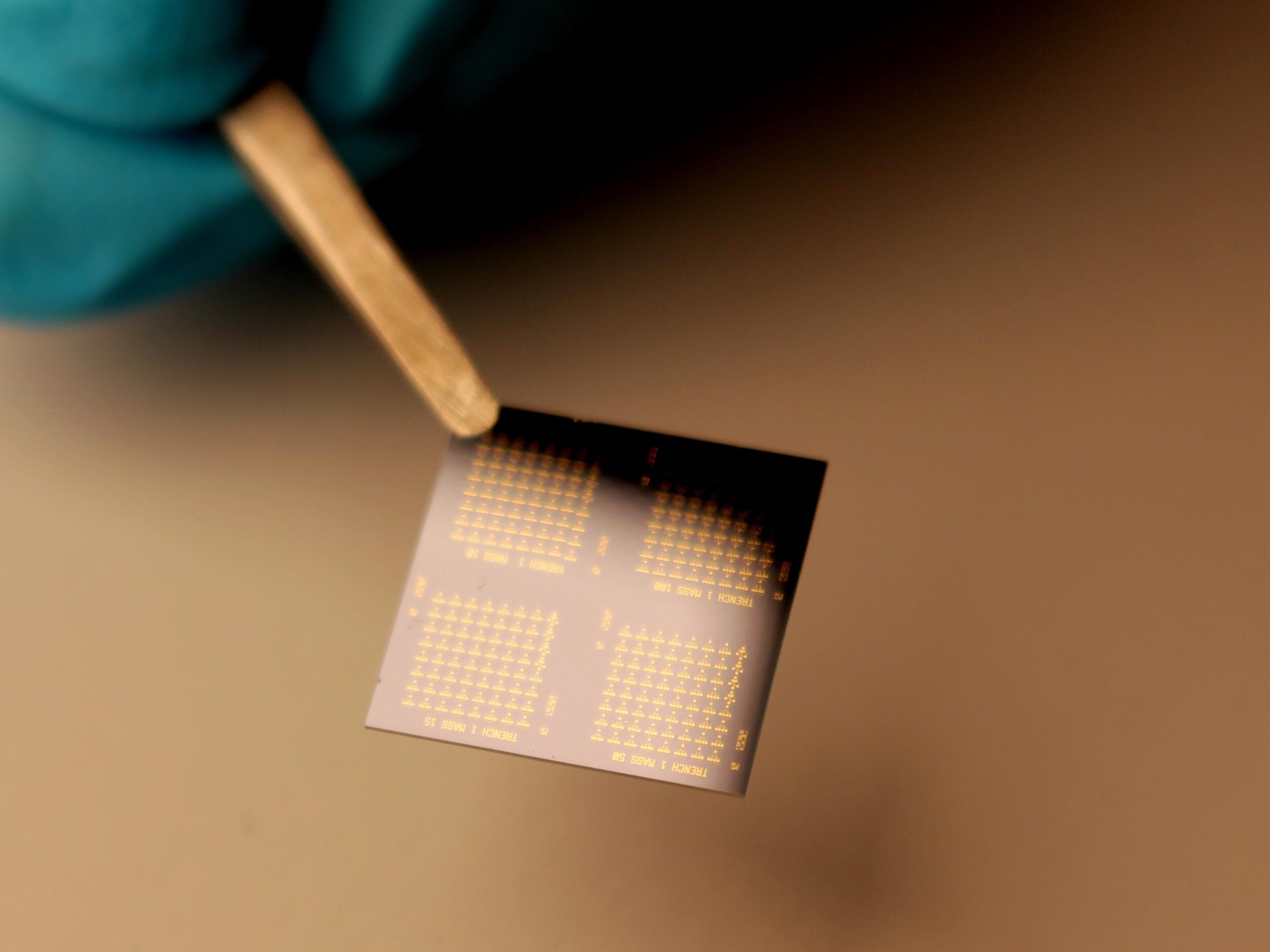
The scientists at KTH and Stanford have focused on testing better materials for building an ECRAM, a component in which switching occurs by inserting ions into an oxidation channel, in a sense similar to our brain which also works with ions. What has been needed to make these chips commercially viable are materials that overcome the slow kinetics of metal oxides and the poor temperature stability of plastics.
Importance of MXene in ECRAM Technology
The key material in the ECRAM units that the researchers fabricated is referred to as MXene—a two-dimensional (2D) compound, barely a few atoms thick, consisting of titanium carbide (Ti3C2Tx). The MXene combines the high speed of organic chemistry with the integration compatibility of inorganic materials in a single device operating at the nexus of electrochemistry and electronics, Hamedi says.
Co-author Professor Alberto Salleo at Stanford University, says that MXene ECRAMs combine the speed, linearity, write noise, switching energy, and endurance metrics essential for parallel acceleration of artificial neural networks.
“MXenes are an exciting materials family for this particular application as they combine the temperature stability needed for integration with conventional electronics with the availability of a vast composition space to optimize performance, Salleo says”
While there are many other barriers to overcome before consumers can buy their own neuromorphic computers, Hamedi says the 2D ECRAMs represent a breakthrough at least in the area of neuromorphic materials, potentially leading to artificial intelligence that can adapt to confusing input and nuance, the way the brain does with thousands time smaller energy consumption. This can also enable portable devices capable of much heavier computing tasks without having to rely on the cloud.
Reference: “High-Speed Ionic Synaptic Memory Based on 2D Titanium Carbide MXene” by Armantas Melianas, Min-A Kang, Armin VahidMohammadi, Tyler James Quill, Weiqian Tian, Yury Gogotsi, Alberto Salleo and Mahiar Max Hamedi, 21 November 2021, Advanced Functional Materials.
DOI: 10.1002/adfm.202109970
Never miss a breakthrough: Join the SciTechDaily newsletter.
Follow us on Google and Google News.
1 Comment
на примере углеродных связей я показывал синхронизацию электронов, и изменение реакций с другими ионами, где температура основная сила. время. это не только продолжительность, не только температура, это вращение частиц атома, где стабильность достигается синхронизацией. другие атомы в проводнике как катализаторы, доноры или инициаторы для каждых температурных пределов свои. для мозга 36, 6 *с. возможности широки. Но узкие пределы температур, давление тоже имеет влияние, но в меньшей степени. Подход правильный результаты будут. Успехов.