
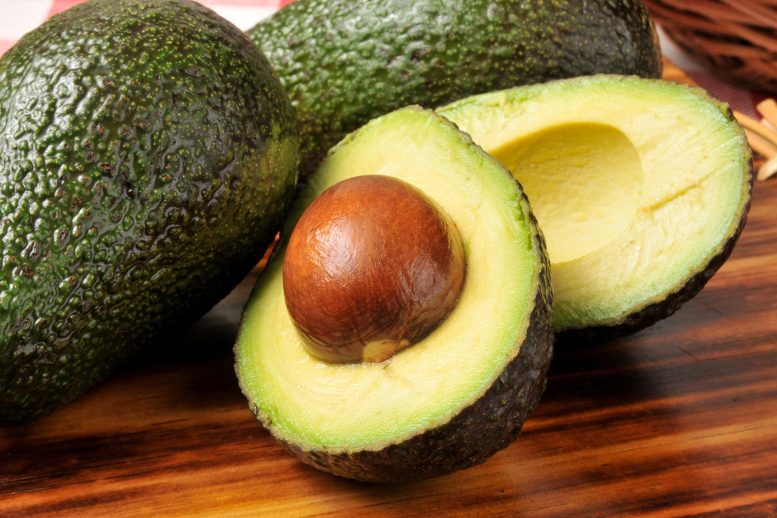
A chitosan-based coating has been developed by researchers to extend avocados’ shelf life and an imaging technique to predict their remaining shelf life. The coating outperformed traditional methods, keeping avocados optimally ripe for 12 days, while an accompanying machine learning model helps to assess quality.
Smashed on toast, creamed in guacamole, or blended into salad dressing, avocados always seem to be popular. However, the fruits are notoriously finicky, going from pale green and firm to brown and mushy in the blink of an eye. Now, researchers in ACS Food Science & Technology report a chitosan-based coating that preserves them for longer periods. The team also developed an imaging technique to quickly predict their shelf life.
To tell if avocados are ripe, most people gently squeeze them, and a little sponginess indicates that they’re mature. Producers conduct similar assessments to determine which avocados can withstand transportation to grocery stores. Despite these tests, some of them spoil prematurely. Therefore, researchers have developed techniques to delay ripening, using compounds such as 1-methyl-cyclopropene (1-MCP). And more recently, studies have shown that naturally-derived chitosan — a biomaterial derived from shellfish exoskeletons — imparts antimicrobial activity when applied as a coating to fruits, including avocados. So, Angie Homez-Jara, Angelica Sandoval-Aldana, and colleagues wanted to compare the effectiveness of the two preservation methods on avocados’ quality and shelf life.
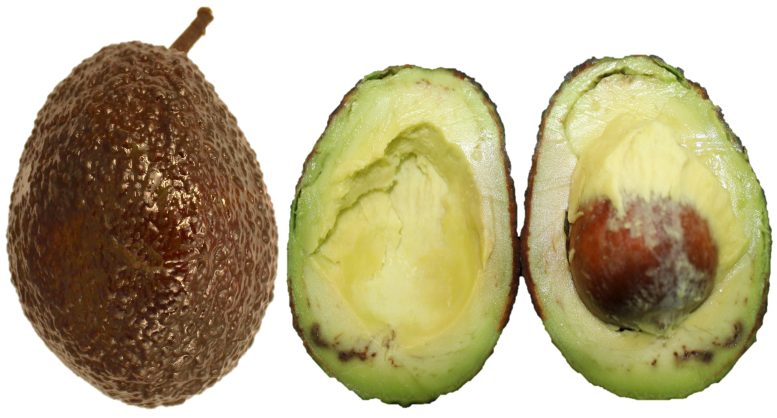
The researchers treated commercially mature Hass avocados with either gaseous 1-MCP or water-based solutions that contained different concentrations of chitosan. Mimicking realistic transportation conditions, treated and untreated avocados were chilled at 41 degrees Fahrenheit for 21 days and then moved to room temperature to simulate a grocery store environment, until they were rotten. Untreated samples and those treated with either 1-MCP or 1% chitosan-based coating were at optimal ripeness for 6 days. Fruits treated with a 1.5% chitosan-based coating were best for 12 days. However, these samples also had uneven firmness once they were ripe, as well as green and purplish spots in the peel, which the researchers say shows that the chitosan coating could be improved in the future.
Throughout the study, the researchers also imaged the entire surface of the fruits with hyperspectral cameras in the visible and near-infrared spectrum. Then the reflectance data from the images were compared to the avocados’ firmness, peel color, oxygen consumption, and weight loss, using a number of computer models. Two machine learning models best explained the changes that occurred during the avocados’ ripening and could predict their remaining shelf life. The researchers say that their chitosan-based coating and prediction technique could help improve the shelf life and quality of avocados for sale.
Reference: “Postharvest Treatments of Hass Avocado (Persea americana Mill.) and Estimation of Its Quality Using Hyperspectral Imaging (HSI)” by Angie Homez-Jara, Henry Cardenas-Roa, Miguel Montealegre, Loong-Tak Lim, Maria G. Corradini, Henry Alexander Váquiro-Herrera and Angelica Sandoval-Aldana, 3 May 2023, ACS Food Science & Technology.
DOI: 10.1021/acsfoodscitech.3c00084
The authors acknowledge funding and support from the Gobernación del Tolima, the Natural Sciences and Engineering Research Council of Canada Discovery Program, the Ontario Graduate Scholarship Program and the SMART Training Platform.
Never miss a breakthrough: Join the SciTechDaily newsletter.
Follow us on Google and Google News.
4 Comments
Finding new problem solving adaptations is always a great insight to our ingenuity, I would like to give this stay fresh longer problem a look into when we take our groceries home, most of them are perishable and go into the frig for cold storage. If an experiment hasn’t been performed we should. Try adding a ultraviolet like in the frig so when the door closes the ultraviolet lite illuminates disinfecting the space inside the refrigerator keeping bacteria eliminated.
What about all the people who are allergic to shellfish? This could kill them.
How about not messing with nature? All this pseudo science is poisoning the globe. We can use more local farmers and fewer BigChem alternatives.
Great, more poison on our foods. I bet in a few years we will have a skyrocketing percentage of cancer.