

DESI’s analysis of nearly six million galaxies spanning 11 billion years provides compelling evidence that cosmic clustering follows Einstein’s theory of general relativity.
The findings confirm the universe’s leading model and refine limits on alternative theories, offering unprecedented insights into dark energy and gravity.
Validating the Universe’s Leading Model
Using its first year of data, the Dark Energy Spectroscopic Instrument (DESI), located on a mountaintop in Arizona, has mapped the growth of cosmic structures across most of the Universe’s history. This analysis provides the most precise test yet of how gravity operates on the largest scales.
The findings confirm the current leading model of the universe while narrowing down alternative theories of modified gravity that aim to explain the universe’s accelerated expansion.
DESI is a global collaboration of over 900 researchers from more than 70 institutions, managed by the U.S. Department of Energy’s Lawrence Berkeley National Laboratory (Berkeley Lab).
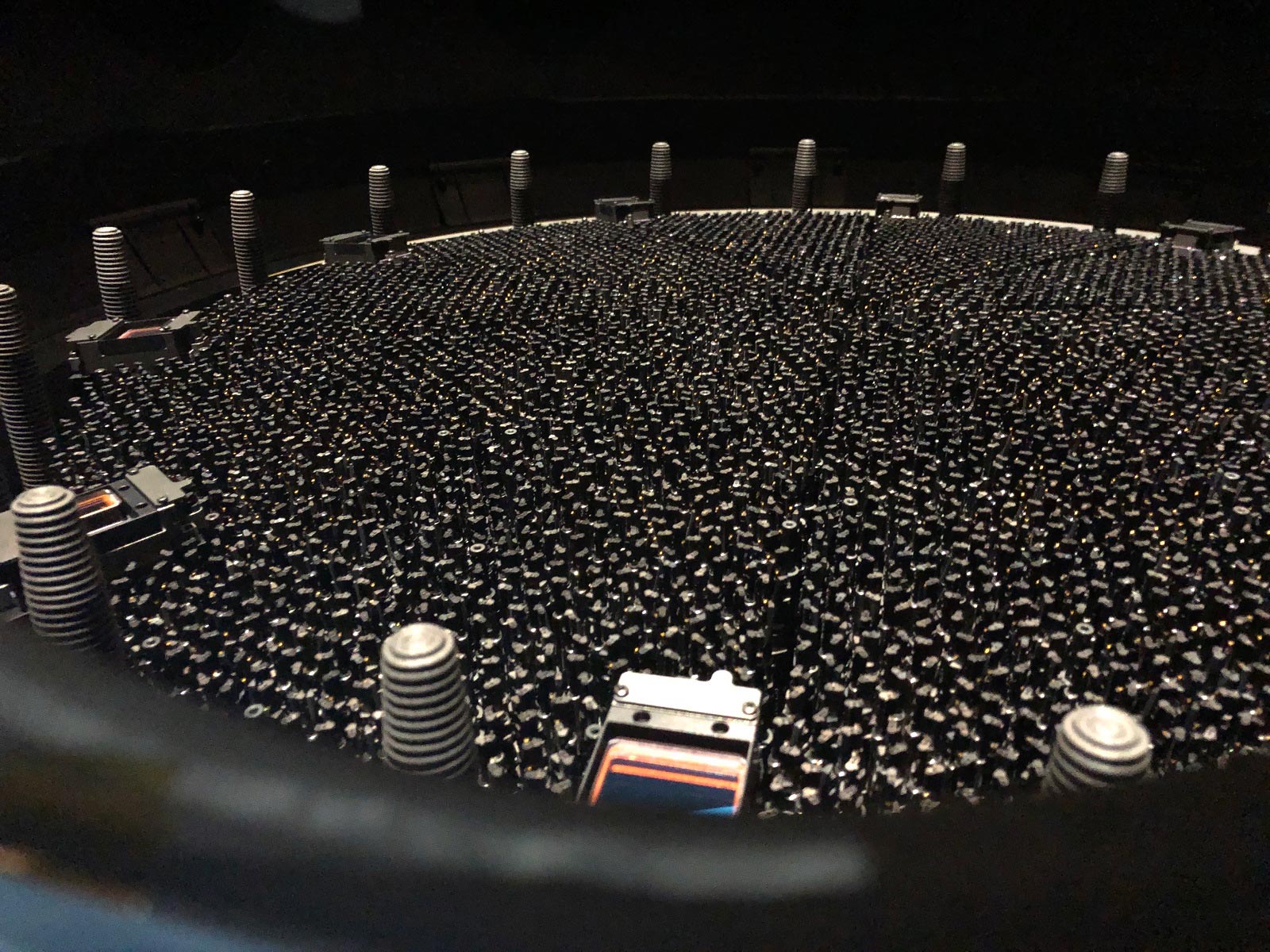
DESI contains 5,000 fiber-optic “eyes,” each of which can collect light from a galaxy in just 20 minutes. Professors Peter Doel and David Brooks at UCL Physics & Astronomy helped design, assemble, and build the DESI’s optical corrector – six lenses, the largest 1.1m across, that focus light on to the “eyes.” The optical corrector construction was supported by STFC. (Four other UCL staff and their early career associates, as well as scientists from six other UK universities, are also involved in DESI.)
Remarkable Findings in Cosmic Measurements
With just one year of data, DESI has made the most precise overall measurement of the growth of the Universe’s structure, surpassing previous efforts that took decades to make.
Professor Ofer Lahav (UCL Physics & Astronomy), a DESI collaborator and a member of its Executive Committee, said: “The clustering of DESI galaxies on huge cosmological scales spectacularly validates Einstein’s theory of gravity, as well as telling us about dark matter and dark energy. Remarkably, the galaxy clustering also sets upper limits on the yet unknown mass of tiny particles called neutrinos, as their presence affects the growth of structure.”
Neutrino Mass Constraints and Gravitational Theories
Previous neutrino experiments found that the sum of the masses of the three types of neutrinos should be at least 0.059 eV/c2. (For comparison, an electron has a mass of about 511,000 eV/c2.) DESI’s results indicate that the sum should be less than 0.071 eV/c2, leaving a narrow window for neutrino masses.
Dr. Pauline Zarrouk, a cosmologist at the French National Center for Scientific Research (CNRS) working at the Laboratory of Nuclear and High-Energy Physics (LPNHE), who co-led the new analysis, said: “General relativity has been very well tested at the scale of solar systems, but we also needed to test that our assumption works at much larger scales. Studying the rate at which galaxies formed lets us directly test our theories and, so far, we’re lining up with what general relativity predicts at cosmological scales.”
Historical Insight and Extended Analysis
The collaboration, including UCL co-authors, shared the results in several papers posted to the online repository arXiv. The complex analysis used nearly 6 million galaxies and quasars and lets researchers see up to 11 billion years into the past.
The new results provide an extended analysis of DESI’s first year of data, which in April made the largest 3D map of our universe to date and revealed hints that dark energy might be evolving over time. The April results looked at a particular feature of how galaxies cluster known as baryon acoustic oscillations (BAO). The new analysis, called a “full-shape analysis,” broadens the scope to extract more information from the data, measuring how galaxies and matter are distributed on different scales throughout space. The study required months of additional work and cross-checks. Like the previous study, it used a technique to hide the result from the scientists until the end, mitigating any unconscious bias.
Professor Dragan Huterer of the University of Michigan, co-lead of DESI’s group interpreting the cosmological data, said: “Both our BAO results and the full-shape analysis are spectacular. This is the first time that DESI has looked at the growth of cosmic structure. We’re showing a tremendous new ability to probe modified gravity and improve constraints on models of dark energy. And it’s only the tip of the iceberg.”
For more on this research:
- DESI Tests Einstein’s Theory of Relativity Across 11 Billion Years of Cosmic History
- Stunning Cosmic Map Confirms Gravity Theory Across Billions of Years
- Dark Energy May Be Evolving, Transforming Our View of the Universe
More About DESI
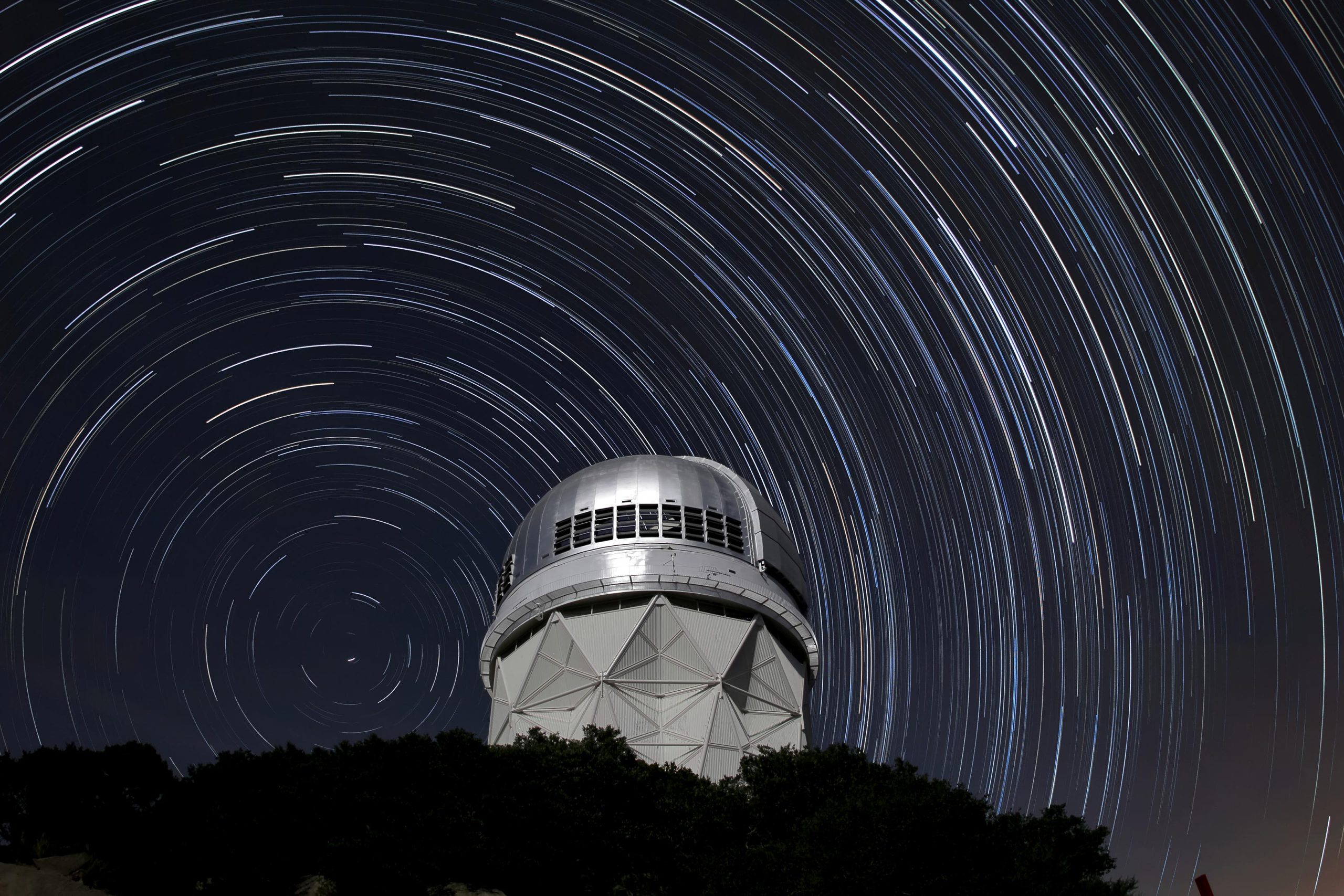
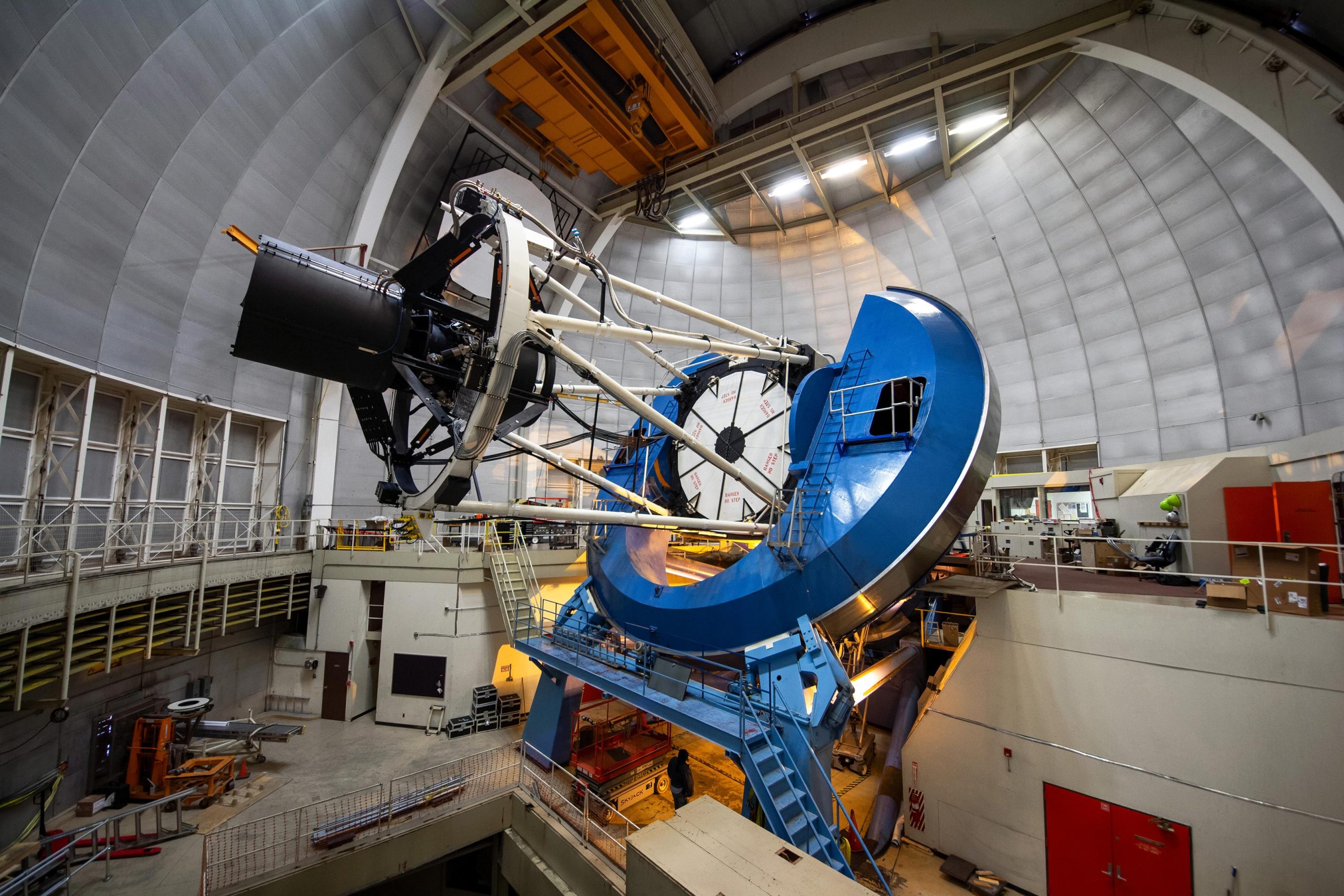
DESI was designed and is operated with funding from the US Department of Energy’s (DOE) Office of Science. The instrument is installed on the Nicholas U. Mayall 4-meter Telescope at Kitt Peak National Observatory in Arizona, part of the US National Science Foundation’s (NSF) NOIRLab program. Now in its fourth year of a five-year sky survey, DESI aims to map approximately 40 million galaxies and quasars by the project’s conclusion.
The collaboration is currently analyzing data from the first three years of observations and expects to release updated measurements of dark energy and the universe’s expansion history in spring 2025. The latest results, announced today, align with earlier findings suggesting an evolving dark energy, increasing anticipation for the forthcoming analysis.
DESI receives funding from the DOE Office of Science and the National Energy Research Scientific Computing Center (NERSC), a DOE Office of Science user facility. In the United Kingdom, additional support is provided by the Science and Technology Facilities Council (STFC).
The DESI collaboration respectfully acknowledges the privilege of conducting research on I’oligam Du’ag (Kitt Peak), a site of deep cultural importance to the Tohono O’odham Nation.
Never miss a breakthrough: Join the SciTechDaily newsletter.
Follow us on Google and Google News.