

Close Menu
    Facebook X (Twitter) Instagram
    SciTechDaily
    • Biology
    • Chemistry
    • Earth
    • Health
    • Physics
    • Science
    • Space
    • Technology
    Facebook X (Twitter) Pinterest YouTube RSS
    SciTechDaily
    Home»Biology»How Body Lice Could Rewrite the History of the Black Death
    Biology

    How Body Lice Could Rewrite the History of the Black Death

    By PLOSMay 21, 2024No Comments3 Mins Read
    Facebook Twitter Pinterest Telegram LinkedIn WhatsApp Email Reddit
    Share
    Facebook Twitter LinkedIn Pinterest Telegram Email Reddit
    Black Death Plague Doctor Art
    New research indicates human body lice are highly efficient at spreading the plague, potentially reshaping our understanding of historical pandemics, including the Black Death of the Middle Ages which killed millions of people in Europe.

    Study could challenge the widespread view that fleas and rats are the only contributors to plague outbreaks.

    According to the results of a new laboratory study, human body lice are more efficient at transmitting Yersinia pestis, the bacterium that causes plague, than previously thought. This supports the possibility that they may have contributed to past pandemics. David Bland and colleagues at the United States’ National Institute of Allergy and Infectious Diseases (NIAID) present these findings today (May 21st) in the open-access journal PLOS Biology.
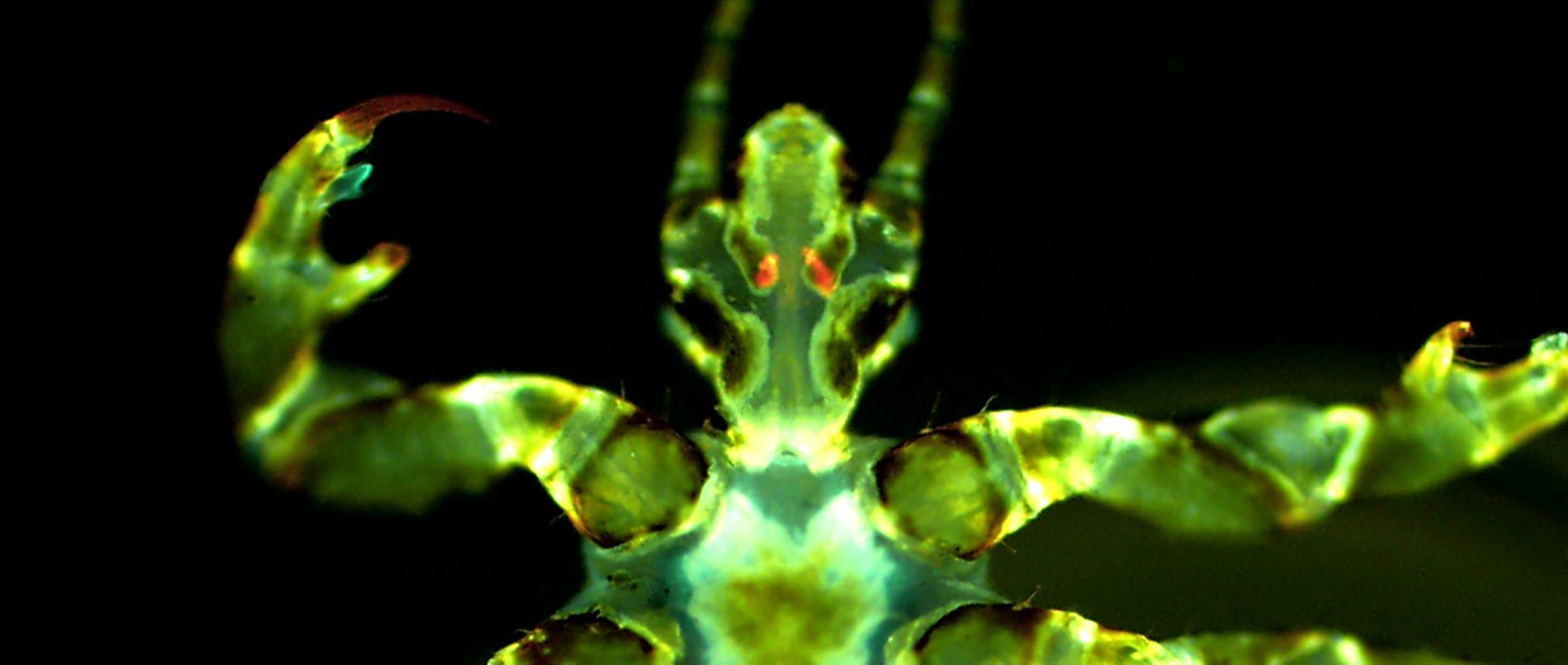
    Human Body Louse With Yersinia pestis Infection
    Fluorescent image of a human body louse with Yersinia pestis infection (orange/red) in the Pawlowsky glands. Credit: David M. Bland

    Historical Context of Y. pestis

    Y. pestis has been the culprit behind numerous pandemics, including the Black Death of the Middle Ages which killed millions of people throughout Europe. It naturally cycles between rodents and fleas, and fleas sometimes infect humans through bites; thus, fleas and rats are thought to be the primary drivers of plague pandemics. Body lice—which feed on human blood—can also carry Y. pestis, but are widely considered to be too inefficient at spreading it to contribute substantially to outbreaks. However, the few studies that have addressed lice transmission efficiency have disagreed considerably.

    To help clarify the potential role of body lice in plague transmission, Bland and colleagues conducted a series of laboratory experiments in which body lice fed on blood samples containing Y. pestis. These experiments involved the use of membrane feeders, which simulate warm human skin, enabling scientists to study transmission potential in a laboratory setting.

    Enhanced Transmission via Body Lice

    They found that the body lice became infected with Y. pestis and were capable of routinely transmitting it after feeding on blood containing levels of the pathogen similar to those found in actual human plague cases.

    They also found that Y. pestis can infect a pair of salivary glands found in body lice known as the Pawlowsky glands, and lice with infected Pawlowsky glands transmitted the pathogen more consistently than lice whose infection was limited to their digestive tract. It is thought that Pawlowsky glands secrete lubricant onto the lice’s mouthparts, leading the researchers to hypothesize that, in infected lice, such secretions may contaminate mouthparts with Y. pestis, which may then spread to humans when bitten.

    These findings suggest that body lice may be more efficient spreaders of Y. pestis than previously thought, and they could have played a role in past plague outbreaks.

    Conclusion and Implications

    The authors add, “We have found that human body lice are better at transmitting Yersinia pestis than once appreciated and achieve this in more than one way. We describe a new bite-based mechanism in which a set of accessory salivary glands unique to lice, termed the Pawlowsky glands, become infected with Y. pestis and secrete lubricant containing plague bacilli onto the insect’s mouthparts prior to blood feeding.”

    Reference: “Yersinia pestis can infect the Pawlowsky glands of human body lice and be transmitted by louse bite” by David M. Bland, Dan Long, Rebecca Rosenke and B. Joseph Hinnebusch, 21 May 2024, PLOS Biology.
    DOI: 10.1371/journal.pbio.3002625

    Never miss a breakthrough: Join the SciTechDaily newsletter.
    Follow us on Google and Google News.

    Bacteria Infectious Diseases PLOS Popular
    Share. Facebook Twitter Pinterest LinkedIn Email Reddit

    Related Articles

    Fasting May Help Ward Off Infections – Protects Against Foodborne Illness Such As Salmonella

    Researchers Shocked to Discover Bacterial Parasites Behind Rise of “Superbugs”

    Oldest Black Death Victim Was 5,000-Year-Old Hunter-Gatherer – Had Earliest Known Strain of the Plague

    Probiotic Protection? Gut Bacteria Discovered That Protects the Intestine From Invasion of the COVID-19 Virus

    New Research Finds SARS-CoV-2 (the Virus That Causes COVID-19) Jumped From Bats to Humans Without Much Change

    Evolution of a Killer: How African Salmonella Made the Leap From Gut to Bloodstream Infections in Humans

    Researchers Analyze Nasty Species of Bacteria That Has Colonized Space Station’s Water Dispenser

    Rise in Allergies Linked to Widespread Antibiotic Use to Combat Bacteria

    Viruses Use Bacteria for Reproduction

    Leave A Reply Cancel Reply

    • Facebook
    • Twitter
    • Pinterest
    • YouTube

    Don't Miss a Discovery

    Subscribe for the Latest in Science & Tech!

    Trending News

    One of the Universe’s Largest Stars May Be Getting Ready To Explode

    Scientists Discover Enzyme That Could Supercharge Ozempic-Like Weight Loss Drugs

    Popular Sweetener Linked to DNA Damage – “It’s Something You Should Not Be Eating”

    Ancient “Rock” Microbes May Reveal How Complex Life Began

    Researchers Capture Quantum Interference in One of Nature’s Rarest Atoms

    “A Plague Is Upon Us”: The Mass Death That Changed an Ancient City Forever

    Scientists Discover Game-Changing New Way To Treat High Cholesterol

    This Small Change to Your Exercise Routine Could Be the Secret to Living Longer

    Follow SciTechDaily
    • Facebook
    • Twitter
    • YouTube
    • Pinterest
    • Newsletter
    • RSS
    SciTech News
    • Biology News
    • Chemistry News
    • Earth News
    • Health News
    • Physics News
    • Science News
    • Space News
    • Technology News
    Recent Posts
    • Scientists Discover a Surprising Way To Make Bread Healthier and More Nutritious
    • Natural Compounds Boost Bone Implant Success While Killing Bacteria and Cancer Cells
    • After 60 Years, Scientists Uncover Unexpected Brain Effects of Popular Diabetes Drug Metformin
    • New Research Uncovers Hidden Side Effects of Popular Weight-Loss Drugs
    • Scientists Rethink Extreme Warming After Surprising Ocean Discovery
    Copyright © 1998 - 2026 SciTechDaily. All Rights Reserved.
    • Science News
    • About
    • Contact
    • Editorial Board
    • Privacy Policy
    • Terms of Use

    Type above and press Enter to search. Press Esc to cancel.