
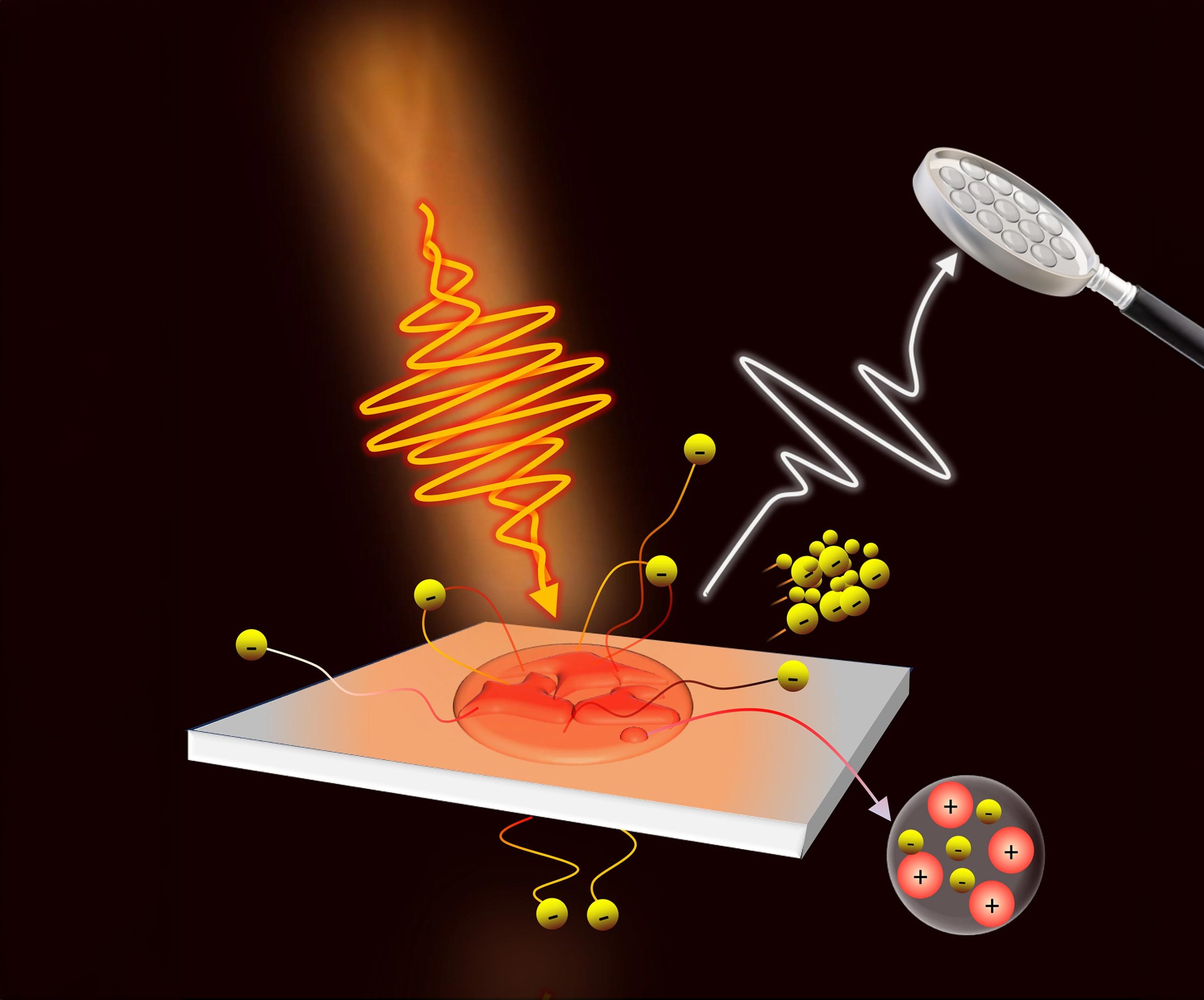
Researchers have developed a powerful new way to measure ultrashort, high-energy laser pulses in a single shot, solving long-standing challenges in capturing their complex profiles.
This innovation is crucial as laser technology moves toward unprecedented energy levels and plasma-based optics.
Breakthrough in Measuring Laser Pulses
Researchers at the Tata Institute of Fundamental Research (TIFR), Mumbai, have developed a new method to accurately measure ultrashort, ultrahigh-power laser pulses. Their findings were published in Optica, a leading open-access journal in the field of optics.
What’s the breakthrough?
Lasers are one of the most remarkable technologies of the modern age. They can produce pulses of light that last for incredibly short durations, among the shortest ever created by humans. Even more impressively, these brief flashes can carry immense amounts of energy, resulting in peak power levels that far exceed the total electrical power consumption of the entire world, by orders of magnitude.
In this realm, optics has become a game of extreme power.
The Challenge of Pulse Distortions
However, measuring the precise time structure, or temporal shape, of these laser pulses is a major challenge. Although scientists have developed a range of techniques over the past few decades, several critical problems remain.
One key issue is that when these intense pulses pass through any material, their timing can become distorted. And the more powerful the pulse, the greater the distortion.
Yet another major complication has to do with the pulse time profile being different at different points within the laser beam itself. Most often, scientists may not bother about these variations across the beam spatial extent and assume a single temporal profile. However, the larger the beam and/or the more the length it traverses in a medium, the more critical these distortions become, dramatically changing the pulse. And at ultrahigh peak powers it is imperative to know what the time duration is at different points across the spatial extent of the beam.
A Precision Tool from TIFR
The TIFR team used a specially designed instrument to measure the time profiles across spatial points in the ultrashort laser beam. They used an optical technique named ‘spectral interferometry’ at different spatial locations across the beam simultaneously, to achieve this. The team collaborated with Umea University, Sweden on this study.
With the scientific world marching towards peak laser powers never imagined before (tens of thousand trillion watts!) in laser beams spread over diameters of several tens of centimeters, this method will not only be extremely useful but essential.
Measuring a Single Pulse at a Time
Here is yet another boost for this method. These ultrahigh power lasers emit pulses every once in a while – once over many seconds/ minutes/ hours. The earlier techniques of measurement needed to sample multiple pulses before estimating the pulse profile will be extremely cumbersome.
The TIFR advance solves this too. It works for a single pulse!
Handling Plasmas and Extreme Conditions
Now, the icing on the cake. As laser peak powers shoot through the roof, the normal solid optical components cannot handle them as they break down by ionization. The technology is therefore moving towards using ionized matter or ‘plasma’ itself, to design these optical components. And these plasmas can be highly unstable and cause further distortions in the spatiotemporal profiles of the pulse incident on them. The TIFR method is perfectly suited to measure these distortions.
A Game-Changer for Extreme Lasers
A one-shot solution for all ultrahigh peak power lasers?
That is the promise!
Reference: “Single-shot, spatio-temporal analysis of relativistic plasma optics” by Laszlo Veisz, G. Ravindra Kumar, Anandam Choudhary, Ankit Dulat, Amit D. Lad, Yash M. Ved and C. Aparajit, 19 August 2024, Optica.
DOI: 10.1364/OPTICA.522870
Never miss a breakthrough: Join the SciTechDaily newsletter.
Follow us on Google and Google News.