
A clinical trial of college students, including those at UC San Diego, will try to answer that question, and whether vaccinated persons might still pose an infection risk to others.
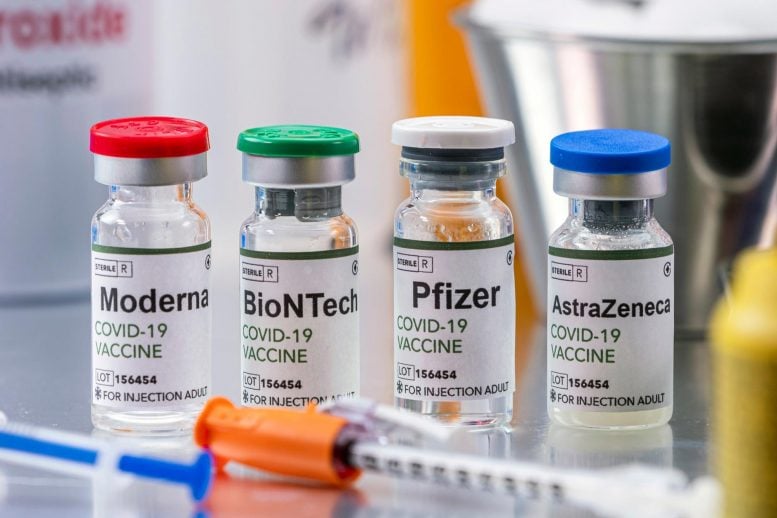
COVID-19 vaccines were designed to reduce the likelihood that infection by the SARS-CoV-2 virus would lead to severe outcomes, such as hospitalization and death. In that sense, all of the currently approved vaccines — Moderna, Pfizer, and Johnson & Johnson — have proven comparably effective.
But much less is known about the actual ability of these vaccines to prevent infection, most notably asymptomatic cases in which vaccinated persons might not become ill or display symptoms, but could still carry sufficient levels of the virus to pose a potential transmission threat to others.
New research is beginning to fill this knowledge gap. A recent UC San Diego School of Medicine study, published in The New England Journal of Medicine of vaccinated health care workers found the risk of infection to be small, but possible. A subsequent study by the Centers for Disease Control and Prevention reported both the Moderna and Pfizer vaccines were highly effective at preventing symptomatic and asymptomatic infections among a larger cohort of vaccinated health care workers and first responders.
Researchers at the University of California San Diego, with participating academic institutions across the country, will now look at a different demographic group: students.
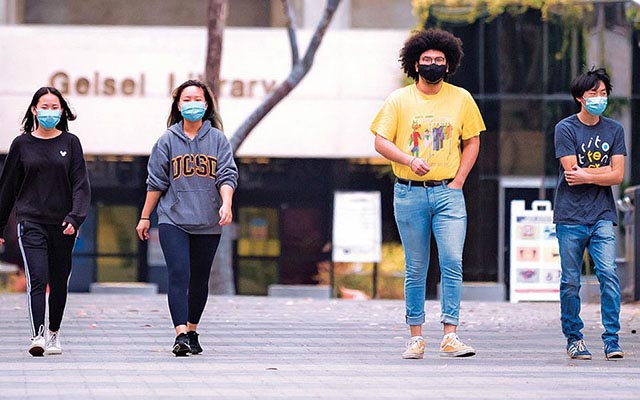
The randomized, controlled five-month clinical trial will enroll approximately 12,000 healthy university students, ages 18 through 26. Half of the students will receive an immediate Moderna vaccination; the other half will be vaccinated near the end of the trial.
The trial is being conducted under the auspices of the COVID-19 Prevention Network (CoVPN), a collaboration of infectious disease research networks and participating partners. CoVPN was created by the National Institute of Allergy and Infectious Diseases and is headquartered at Fred Hutchinson Cancer Research Center in Seattle.
The Moderna vaccine is an mRNA vaccine, which provides cells with instructions how to produce a harmless piece of the SARS-CoV-2’s characteristic spike protein that primes the body’s immune system to subsequently recognize and fend off exposure to the virus. The vaccine requires two injections, spaced approximately 28 days apart.
“The ongoing Phase III trials of the vaccines were not designed to estimate how well they prevented infections, particularly asymptomatic infection, nor their efficacy at reducing viral shedding and transmission risk,” said Susan Little, MD, professor of medicine at UC San Diego School of Medicine and principal investigator for the UC San Diego site of the new clinical trial.
“As a result, we don’t know if being vaccinated reduces the need to wear masks or socially distance. We don’t know if vaccinations should be required in certain settings, such as schools or for air travel. Having a better understanding of how effective COVID-19 vaccines are at reducing infections in others is important, both for individuals and for setting public health policy.”
Using student volunteers makes considerable sense, said researchers.
First, they comprise a demographic at particular risk of acquiring and transmitting SARS-CoV-2. Their congregate and social living situations (young people tend to live in close proximity to others) heightens risk of exposure and consequent COVID-19 cases.
For example, between August and September 2020, COVID-19 cases among young people ages 18 – 22 increased 55 percent nationally; and between June and August of last year, people ages 20 – 29 had the highest incidence of disease in the country, accounting for more than one-fifth of all cases. These numbers preceded increases among older adults by four to 15 days, indicating that younger people were spreading infection to older, more vulnerable populations.
On the other hand, young people account for just a tiny percentage (0.5) of all deaths due to COVID-19 and at an increasing number of universities and colleges, they are subject to intensive testing and monitoring for infection and disease.
For example, the Return to Learn program at UC San Diego includes a rigorous surveillance program that currently requires at least weekly screening of all students. In addition, environmental monitoring includes daily tests of wastewater samples from university facilities to detect the presence of SARS-CoV-2. These efforts have allowed nearly 9,000 students to return to living on campus and thousands more to attending in-person classes.
That increased level of routine health surveillance, said Little, will help researchers track infections in real time. In addition, trial participants will collect daily nasal swabs to record viral loads. Researchers will also gather data on close contacts of trial participants to see if and to what degree an infected participant transmits the virus to others and will compare the rate of secondary transmission events between participants in the immediate and delayed vaccination study groups.
In the event that a secondary transmission is documented, contact tracing will expand to involve more participants, who will also collect daily nasal swabs and provide blood samples for serology (to determine the presence of neutralizing antibodies).
Organizers said the trial will run through the 2021 spring and summer school terms, with a goal to report results prior to the fall school term so that academic institutions can adjust policies accordingly.
The UC San Diego trial site will recruit approximately 400 student volunteers. For more information on how to participate and register, visit http://www.
Never miss a breakthrough: Join the SciTechDaily newsletter.
Follow us on Google and Google News.