
Close Menu
    Facebook X (Twitter) Instagram
    SciTechDaily
    • Biology
    • Chemistry
    • Earth
    • Health
    • Physics
    • Science
    • Space
    • Technology
    Facebook X (Twitter) Pinterest YouTube RSS
    SciTechDaily
    Home»Space»Hubble Image of the Week – Spiral Galaxy NGC 5559
    Space

    Hubble Image of the Week – Spiral Galaxy NGC 5559

    By ESA/HubbleSeptember 5, 20171 Comment2 Mins Read
    Facebook Twitter Pinterest Telegram LinkedIn WhatsApp Email Reddit
    Share
    Facebook Twitter LinkedIn Pinterest Telegram Email Reddit
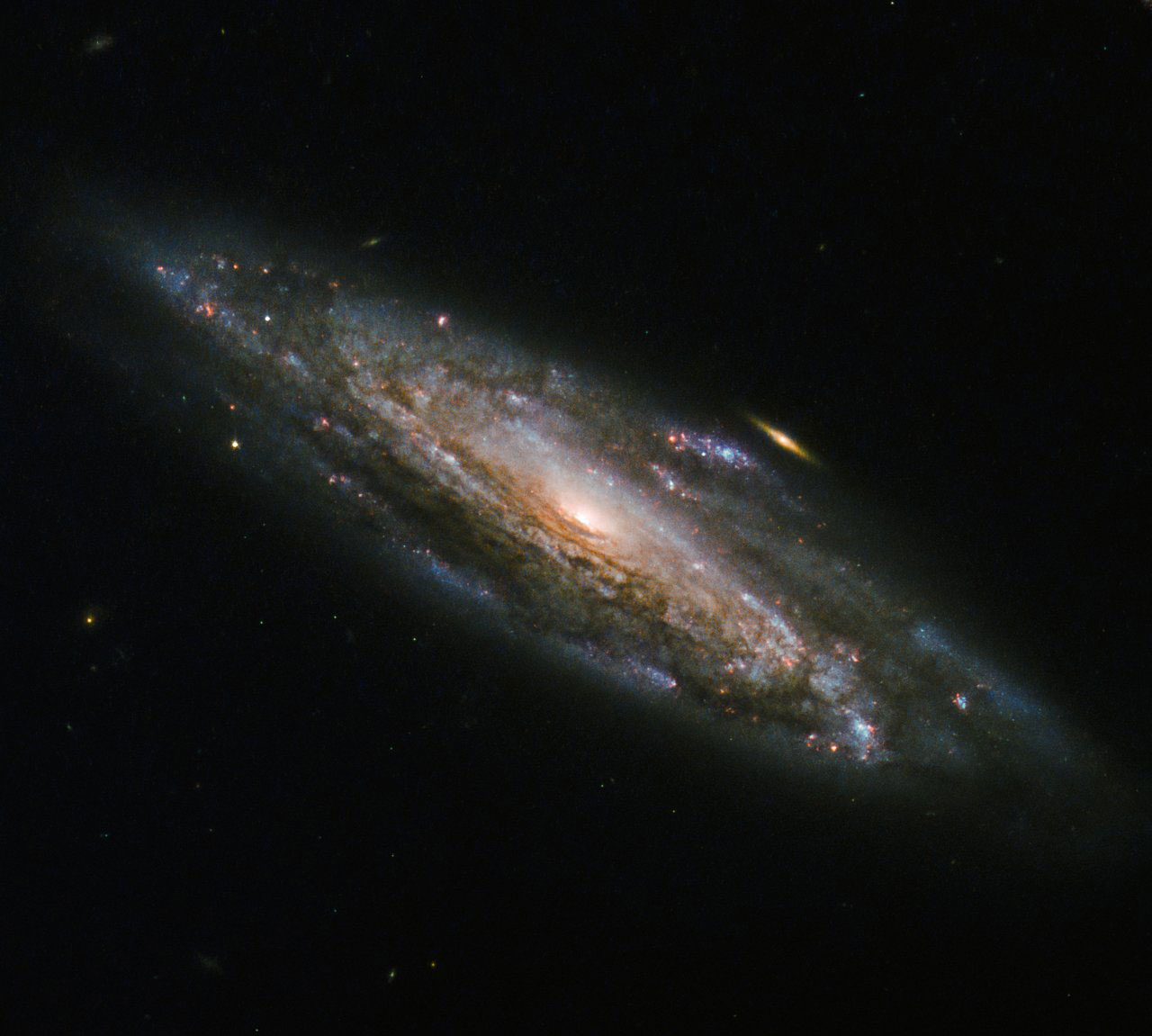
    Spiral Galaxy NGC 5559
    Hubble Space Telescope image of spiral galaxy NGC 5559, which is located approximately 220 million light-years away. Credit: ESA/Hubble & NASA

    This newly released Hubble image of the weeks shows spiral galaxy NGC 5559, which is located about 220 million light-years away from Earth.

    Like firecrackers lighting up the sky on New Year’s Eve, the majestic spiral arms of NGC 5559 are alight with new stars being born. NGC 5559 is a spiral galaxy, with spiral arms filled with gas and dust sweeping out around the bright galactic bulge. These arms are a rich environment for star formation, dotted with a festive array of colors including the newborn stars glowing blue as a result of their immensely high temperatures.

    NGC 5559 was discovered by astronomer William Herschel in 1785 and lies approximately 220 million light-years away in the northern constellation of Boötes (the herdsman).

    In 2001, a calcium-rich supernova called 2001co was observed in NGC 5559. Calcium-rich supernovae (Ca-rich SNe) are described as “fast-and-faint”, as they’re less luminous than other types of supernovae and also evolve more rapidly, to reveal spectra dominated by strong calcium lines. 2001co occurred within the disc of NGC 5559 near star-forming regions, but Ca-rich SNe are often observed at large distances from the nearest galaxy, raising curious questions about their progenitors.

    Never miss a breakthrough: Join the SciTechDaily newsletter.
    Follow us on Google and Google News.

    Astronomy Hubble Space Telescope
    Share. Facebook Twitter Pinterest LinkedIn Email Reddit

    Related Articles

    A Morphing Spiral Galaxy Amongst Friends

    Hubble Views Magnificent Lopsided Galaxy NGC 2276

    Hubble Captures Fantastic Detail of Eponymous Spiral Galaxy NGC 691

    Spectacular Image Captured by Hubble Shows a Strangely Contorted Spiral Galaxy

    A Distant Spiral in Virgo: Extraordinary Detail Seen in a Galaxy 150 Million Light-Years Away From Earth

    Magnetic Monsters: Hubble Tracks Down Location of Mysterious Radio Signals From Intergalactic Space

    A Menagerie of Galaxies: Hubble Captures a Cluster With Galaxies of All Shapes and Sizes

    How Habitable Are Planets That Orbit Red Dwarfs – The Most Common Type of Stars in the Galaxy?

    Cosmic Silver Lining: Hubble Spots V565 Surrounded by Four Prominent Diffraction Spikes

    1 Comment

    1. Valeriy on September 6, 2017 6:09 pm

      There are some very complicated issues of galaxy formation. Unfortunately, here is the same problem as with the stars. The origin of galaxies remains unclear, in spite of huge activity in the field. What the “formation” means? It means that we have the material that is assembling into galaxies.

      Reply
    Leave A Reply Cancel Reply

    • Facebook
    • Twitter
    • Pinterest
    • YouTube

    Don't Miss a Discovery

    Subscribe for the Latest in Science & Tech!

    Trending News

    Scientists May Have Solved a Long-Standing Melanoma Treatment Mystery

    This Flesh-Eating Fly Is Back in the U.S. – Scientists Are Tracking Where It Could Strike Next

    Scientists Have Uncovered a Troubling New Pattern Hidden in America’s Rivers

    “Entirely Surprising” – Scientists Have Found a Martian Meteorite Unlike Any Known Before

    “Find of the Year” – Archaeologists Discover the Smallest Ice Age Figurines Ever Found

    New Research Challenges Common Exercise Advice for Bone Health

    Avoiding These 3 Health Risks in Midlife Linked to 13 More Years Without Dementia

    Where Were All the Tiny Dinosaurs? Scientists May Finally Have an Answer

    Follow SciTechDaily
    • Facebook
    • Twitter
    • YouTube
    • Pinterest
    • Newsletter
    • RSS
    SciTech News
    • Biology News
    • Chemistry News
    • Earth News
    • Health News
    • Physics News
    • Science News
    • Space News
    • Technology News
    Recent Posts
    • Scientists Identify a Surprising 129-Day Limit for Predicting the Weather
    • The Ancient Mediterranean Diet Wasn’t What You Think
    • 11,000-Year-Old Grains Reveal a Surprise About the Origins of Agriculture
    • Lost Vatican Letter Recasts 1066 as a Holy War Against “Followers of Satan”
    • This Common Gut-Bacteria Compound May Be Linked to Alzheimer’s Disease
    Copyright © 1998 - 2026 SciTechDaily. All Rights Reserved.
    • Science News
    • About
    • Contact
    • Editorial Board
    • Privacy Policy
    • Terms of Use

    Type above and press Enter to search. Press Esc to cancel.