
Close Menu
    Facebook X (Twitter) Instagram
    SciTechDaily
    • Biology
    • Chemistry
    • Earth
    • Health
    • Physics
    • Science
    • Space
    • Technology
    Facebook X (Twitter) Pinterest YouTube RSS
    SciTechDaily
    Home»Space»Hubble Is in Safe Mode Again – Here Are the Steps NASA Is Taking To Investigate
    Space

    Hubble Is in Safe Mode Again – Here Are the Steps NASA Is Taking To Investigate

    By NASA's Goddard Space Flight CenterNovember 6, 20211 Comment3 Mins Read
    Facebook Twitter Pinterest Telegram LinkedIn WhatsApp Email Reddit
    Share
    Facebook Twitter LinkedIn Pinterest Telegram Email Reddit
    Hubble Space Telescope Inside
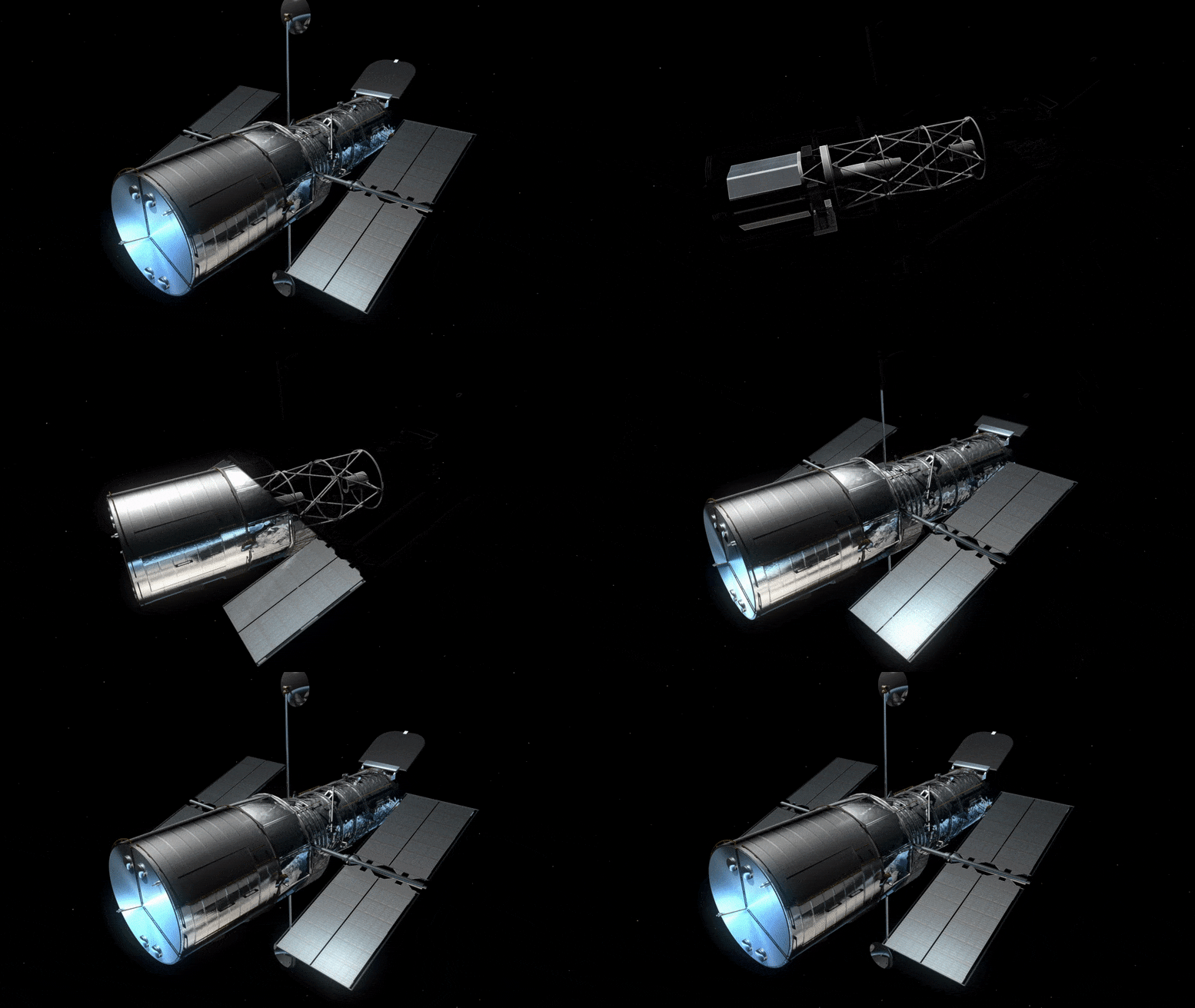
    Hubble Space Telescope illustration. Credit: ESA/Hubble (M. Kornmesser)

    NASA is continuing work to resolve an issue that has suspended science operations on the Hubble Space Telescope. The science instruments entered a safe mode configuration on October 25 after detecting a loss of specific data synchronization messages.

    The Hubble team is focusing its efforts to isolate the problem on hardware that commands the instruments and is part of the Science Instrument Command and Data Handling Unit. Specifically, the team is analyzing the circuitry of the Control Unit, which generates synchronization messages and passes them onto the instruments.
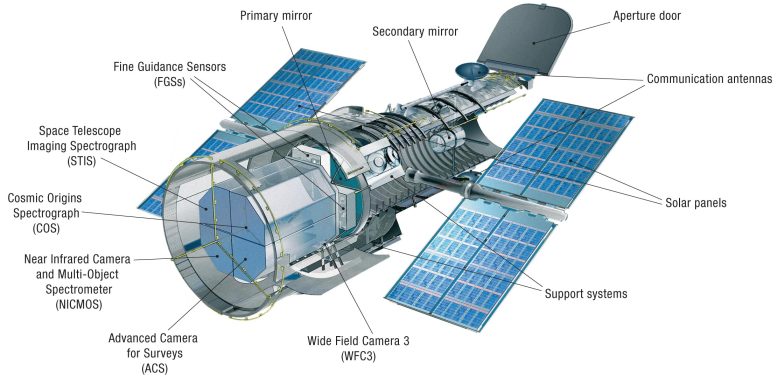
    Hubble’s Instruments Including Control and Support Systems
    This is a cutaway diagram of the Hubble Space Telescope, with components labeled. The forward shell houses the telescope’s optical assembly. In the middle of the telescope are the reaction wheels and the bays that house the observatory’s control electronics. The aft shroud houses the scientific instruments, gyroscopes, and star trackers. The instruments are located in containers that make them easy to remove and replace. Credit: NASA’s Goddard Space Flight Center, ESA

    While analyzing the Control Unit, the team is working to identify potential workarounds for the issue. These include possible changes to instrument flight software that could check for these lost messages and compensate for them without putting the instruments into safe mode. These workarounds would first be verified using ground simulators to ensure they work as planned.

    Over the weekend of October 30, the team prepared to turn on parts of the Near Infrared Camera and Multi Object Spectrometer (NICMOS) instrument to collect data on this issue, allowing the team to determine how frequently this problem occurs. Installed in 1997, NICMOS has been inactive since 2010, when the Wide Field Camera 3 became operational. NICMOS allowed the team to use an instrument to collect information on these lost messages while keeping the active instruments off as a safety precaution. Since NICMOS was recovered on November 1, no additional synchronization messages have been lost.
    Hubble's Final Release Over Earth
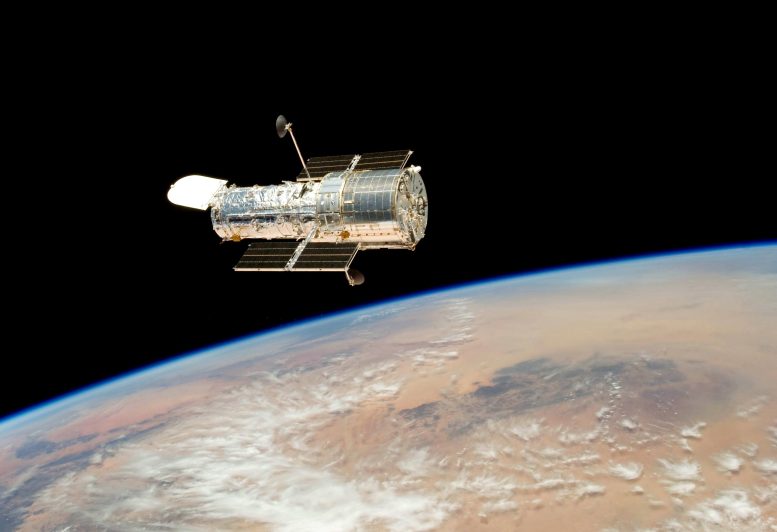
    Hubble drifts over Earth after its release on May 19, 2009 by the crew of the Space Shuttle Atlantis. Credit: NASA

    The team is now taking steps to recover Hubble’s Advanced Camera for Surveys (ACS) instrument from safe mode and start collecting science with that instrument at the beginning of next week. The team will make the decision on Sunday after analyzing the latest data. If a lost message is seen before then, the decision to activate ACS will also be revisited. The team is proceeding cautiously to ensure the safety of the instruments and avoid additional stresses on the hardware. Therefore, only ACS will be used in this capacity next week. ACS was selected as the first instrument to recover as it faces the fewest complications should a lost message occur.

    Over the next week, the team will continue analyzing the Control Unit design diagrams and data associated with the lost messages to determine what may have caused this problem. They will also be looking into potential instrument software changes that could help address it. Once the team better understands the frequency of the problem and has determined the time needed to implement possible software changes, they will discuss a plan for returning the other instruments to science operations.

    Never miss a breakthrough: Join the SciTechDaily newsletter.
    Follow us on Google and Google News.

    Astronomy Hubble Space Telescope NASA NASA Goddard Space Flight Center Popular
    Share. Facebook Twitter Pinterest LinkedIn Email Reddit

    Related Articles

    Historic Discovery: Twin Titans Clash As NASA Unveils Closest Supermassive Black Hole Duo

    The Great Escape: NASA’s Hubble and MAVEN Help Solve Mystery of Mars’ Vanishing Water

    Webb and Hubble Unite: A Breathtaking 3D Journey Through the Pillars of Creation

    Stellar Sleuths: Citizen Scientists and AI Uncover Hidden Asteroids With Hubble

    Stellar Fireworks: Hubble Revisits a Strange Star’s 40-Year Nova Mystery

    Cosmic Geode: Hubble Captures the Birth of a Sun-like Star

    Jupiter Unveiled: Hubble Captures the Giant’s Roaring Storms and Volcanic Moon Io

    Cyclones in Space? See How Hubble Uncovered Extreme Weather on a Distant Planet

    Saturn’s Seasonal Spectacle: Hubble’s Ultra-Sharp Vision Unveils Ring Spoke Phenomenon

    1 Comment

    1. Donald Watts on November 6, 2021 12:06 pm

      Re: Hubble problems. Fresh out of college, I worked on Surveyor at an aerospace company, and my boss had me review the entire schematic to the landing radar & write a memo about any problems I found. One was using a 1N914 signal diode to charge a big capacitor from a firing SCR. When Surveyor 3 “happily landed 3 times in order to sample the surface” my boss came to me very angry and asked why I missed that diode overstress, because the diode had failed in the latest Thermal Vaccum test. I told him it was in my memo. His face turned white and he walked away without another word. He had not bothered to read my memo. The Surveyor engine had not fired The 13 Foot Mark to shut off the rocket and slowly fall. It simply had run out of fuel and “bounced” twice, making 3 delightful footprints. That was what NASA told the press. “Now we know the surface is like face powder.”

      Reply
    Leave A Reply Cancel Reply

    • Facebook
    • Twitter
    • Pinterest
    • YouTube

    Don't Miss a Discovery

    Subscribe for the Latest in Science & Tech!

    Trending News

    Scientists Discover How Coffee Impacts Memory, Mood, and Gut Health

    Why Did the Neanderthals Disappear? Scientists Reveal Humans Had a Hidden Advantage

    Physicists Propose Strange Experiment Where Time Goes Quantum

    Magnesium Magic: New Drug Melts Fat Even on a High-Fat, High-Sugar Diet

    Weight-Loss Drugs Like Ozempic May Come With an Unexpected Cost

    Mezcal “Worm” in a Bottle Mystery: DNA Testing Reveals a Surprise

    New Research Reveals That Your Morning Coffee Activates an Ancient Longevity Switch

    This Is What Makes You Irresistible to Mosquitoes

    Follow SciTechDaily
    • Facebook
    • Twitter
    • YouTube
    • Pinterest
    • Newsletter
    • RSS
    SciTech News
    • Biology News
    • Chemistry News
    • Earth News
    • Health News
    • Physics News
    • Science News
    • Space News
    • Technology News
    Recent Posts
    • Harvard Scientists Reveal Secret Structure Behind How You Smell
    • Scientists Just Discovered the Hidden Trick That Keeps Your Cells Alive
    • This Simple Movement Could Be Secretly Cleaning Your Brain
    • Male Birth Control Breakthrough: Scientists Find Way To Turn Sperm Production Off and Back On
    • A Common Vitamin Could Hold the Key to Treating Fatty Liver Disease
    Copyright © 1998 - 2026 SciTechDaily. All Rights Reserved.
    • Science News
    • About
    • Contact
    • Editorial Board
    • Privacy Policy
    • Terms of Use

    Type above and press Enter to search. Press Esc to cancel.