
Close Menu
    Facebook X (Twitter) Instagram
    SciTechDaily
    • Biology
    • Chemistry
    • Earth
    • Health
    • Physics
    • Science
    • Space
    • Technology
    Facebook X (Twitter) Pinterest YouTube RSS
    SciTechDaily
    Home»Space»Hubble Space Telescope Goes Galactic Birdwatching
    Space

    Hubble Space Telescope Goes Galactic Birdwatching

    By ESA/HubbleMay 30, 2022No Comments2 Mins Read
    Facebook Twitter Pinterest Telegram LinkedIn WhatsApp Email Reddit
    Share
    Facebook Twitter LinkedIn Pinterest Telegram Email Reddit
    Barred Spiral Galaxy NGC 7496
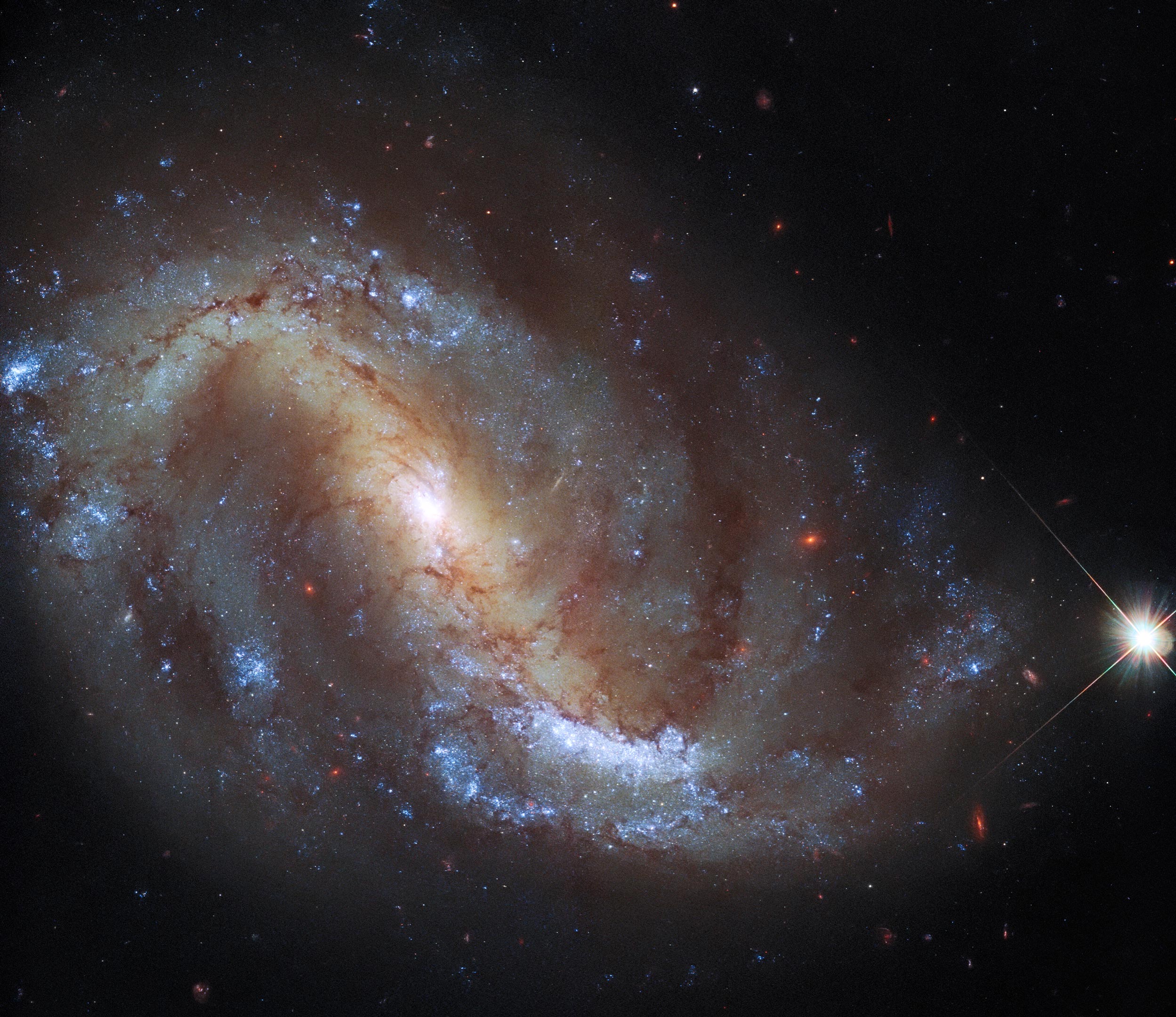
    Hubble Space Telescope image of the barred spiral galaxy NGC 7496, which lies over 24 million light-years away in the constellation Grus. Credit: ESA/Hubble & NASA, J. Lee and the PHANGS-HST Team, Acknowledgment: J. Schmidt

    This image from the Hubble Space Telescope shows the barred spiral galaxy NGC 7496, which lies over 24 million light-years away from Earth in the constellation Grus. This constellation, whose name is Latin for crane, is one of four constellations collectively known as the Southern Birds. The others are Pavo, Phoenix, and Tucana, which depict a peacock, phoenix, and toucan respectively. The rest of the night sky is also home to a flock of ornithological constellations, including an eagle (Aquilla), swan (Cygnus), crow (Corvus), and dove (Columba).

    This NASA/ESA Hubble image comes from a collection of observations delving into the relationship between young stars and the cold, dense clouds of gas in which they form. In addition to observations with Hubble’s Wide Field Camera 3 and Advanced Camera for Surveys, the astronomers behind this project gathered data using the Atacama Large Millimeter/submillimeter Array (ALMA), one of the largest radio telescopes in the world.

    As well as shedding light on the speed and efficiency of star formation in a variety of galactic environments, this project is also creating a treasury of data incorporating both Hubble and ALMA observations. This treasure trove of data from two of the world’s most capable observatories will contribute to wider research into star formation, and help pave the way for future science with the James Webb Space Telescope.

    Never miss a breakthrough: Join the SciTechDaily newsletter.
    Follow us on Google and Google News.

    Astronomy Birds European Space Agency Hubble Space Telescope NASA Ornithology
    Share. Facebook Twitter Pinterest LinkedIn Email Reddit

    Related Articles

    Hubble’s Newest Discovery Isn’t a Star, It’s a Window Into the Dark Universe

    This Nearby Galaxy Shows How Frozen Clouds Ignite Into Stars

    This Chaotic Spiral Galaxy Is Still Recovering From a Cosmic Collision

    This Strange Spiral Galaxy Is Hiding a Massive Black Hole

    Hubble Zooms In on a Galaxy That Maps the Universe’s Expansion

    Hubble Captures a Dazzling Spiral Galaxy Alive With Birth and Destruction

    Hubble Spots a Glowing “Ring of Fire” in a Distant Spiral Galaxy

    Dust, Light & Ancient Collisions: The Sombrero Galaxy Like You’ve Never Seen It

    Star Formation in Motion: Hubble Reveals Spiraling Stars and Sculpted Nebulae

    Leave A Reply Cancel Reply

    • Facebook
    • Twitter
    • Pinterest
    • YouTube

    Don't Miss a Discovery

    Subscribe for the Latest in Science & Tech!

    Trending News

    Aging’s “Zombie Cell” Problem May Have a Solution, Scientists Discover

    Scientists Discover a Surprising Dental Benefit of Cranberry Juice

    Scientists Discover That Eating Peanuts Every Day May Help Protect the Aging Brain

    Scientists Discover Mysterious 150,000-Year-Old Bone From an Extinct Human Relative in Chinese Cave

    Why Do We Have Necks? Scientists Uncover a 380-Million-Year-Old Evolutionary Twist

    “Strangest of Its Kind”: Scientists Uncover a Bizarre Bacterial Self-Destruct Switch

    Scientists Reverse 60 Years of Aging in Human Cells, Turning 80-Year-Old Cells Into 20-Year-Olds

    A Solar Storm Heading Toward Earth Suddenly Changed in Ways Scientists Didn’t Predict

    Follow SciTechDaily
    • Facebook
    • Twitter
    • YouTube
    • Pinterest
    • Newsletter
    • RSS
    SciTech News
    • Biology News
    • Chemistry News
    • Earth News
    • Health News
    • Physics News
    • Science News
    • Space News
    • Technology News
    Recent Posts
    • Scientists Discover How Dead Stars Could Break One of Physics’ Most Famous Limits
    • Alzheimer’s-Linked Proteins Have a Hidden Role in Human Reproduction
    • A Natural Compound Found in Everyday Foods Shows Surprising Power Against Lung Cancer
    • A Last Refuge: Australian Waters Could Save a Critically Endangered Ocean Predator
    • Do Spiders Dream? Scientists Discover a Mysterious Sleep State
    Copyright © 1998 - 2026 SciTechDaily. All Rights Reserved.
    • Science News
    • About
    • Contact
    • Editorial Board
    • Privacy Policy
    • Terms of Use

    Type above and press Enter to search. Press Esc to cancel.