
Close Menu
    Facebook X (Twitter) Instagram
    SciTechDaily
    • Biology
    • Chemistry
    • Earth
    • Health
    • Physics
    • Science
    • Space
    • Technology
    Facebook X (Twitter) Pinterest YouTube RSS
    SciTechDaily
    Home»Space»Hubble Views Globular Cluster Palomar 12
    Space

    Hubble Views Globular Cluster Palomar 12

    By Hubble Space TelescopeFebruary 16, 20151 Comment2 Mins Read
    Facebook Twitter Pinterest Telegram LinkedIn WhatsApp Email Reddit
    Share
    Facebook Twitter LinkedIn Pinterest Telegram Email Reddit
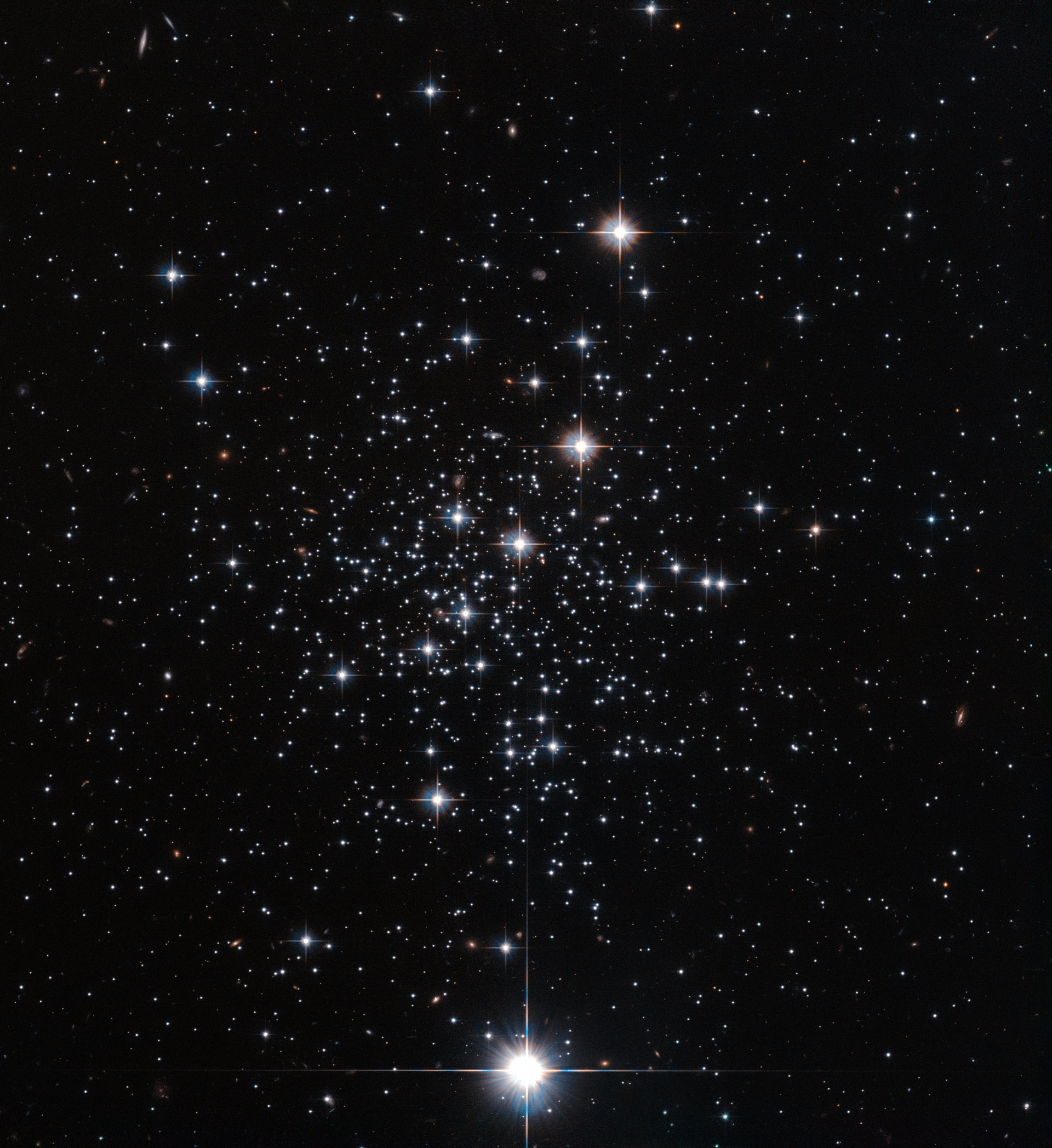
    Hubble Views Globular Cluster of Stars Known as Palomar 12
    Around 1.7 billion years ago, Palomar 12 was ripped from its original home, the Sagittarius Dwarf Elliptical galaxy, due to tidal interactions. The dwarf galaxy is now a satellite of the Milky Way, orbiting closely and slowly being consumed by it. Credit: ESA/Hubble & NASA

    This newly released Hubble image shows a globular cluster of stars known as Palomar 12.

    Panta rhei is a simplified version of the famous Greek philosopher Heraclitus’ teachings. It basically means, everything flows. And everything in the Universe is indeed continually on the move, spiraling and shifting through space.

    Some cosmic objects move a little further than others — take the subject of this NASA/ESA Hubble Space Telescope image, a globular cluster of stars known as Palomar 12.

    Although it currently lies on the outskirts of the Milky Way’s halo, Palomar 12 was not born here. When astronomers first studied this cluster, they were puzzled by its strangely young age when compared to the other clusters in the galaxy. It appeared to be around 30% younger than other Milky Way globulars. Surely if it had been born within our galaxy, it would have sprung to life at a similar time to its cluster companions?

    A bit more digging revealed that Palomar 12 was actually ripped from its initial home, the Sagittarius Dwarf Elliptical galaxy, around 1.7 billion years ago via tidal interactions between its former home and our galaxy. The dwarf galaxy that Palomar 12 once called home is a satellite galaxy to ours, and closely orbits around us — even occasionally passing through the plane of our galaxy. In fact, it is being slowly torn apart and consumed by the Milky Way.

    The sparkling stars in this picture were imaged by Hubble’s Advanced Camera for Surveys.


    Never miss a breakthrough: Join the SciTechDaily newsletter.
    Follow us on Google and Google News.

    Astronomy Globular Cluster Hubble Space Telescope Star
    Share. Facebook Twitter Pinterest LinkedIn Email Reddit

    Related Articles

    Hubble Views Globular Cluster IC 4499

    New Hubble Image of One of the Oldest Known Globular Clusters

    Hubble Reveals Largest Known Group of Star Clusters, Clues to Dark Matter

    Hubble Views Globular Cluster Palomar 2

    Hubble Zooms in on the Center of M4

    Hubble Views Globular Cluster Messier 56

    Hubble Captures a New Image of Messier 107

    Hubble Space Telescope Views the Globular Cluster Messier 10

    Hubble Captures New Image of Messier 9

    1 Comment

    1. Derek on February 17, 2015 2:27 pm

      Oh how that Magnificent space telescope will be missed when it finally goes dark. Hubble has been one of the most valuable tools that science ever built. And the science is not the only thing it has provided… The images that Hubble has given us has opened more minds and inspired more thought about our place in the Universe then any other machine ever constructed. They will be talking about Hubble Hundreds of years from now. It’s images will follow history down through the ages. Someday, Hubble’s Images will be looked at the way we look at the very first pictures of war and exploration of Earth.

      Reply
    Leave A Reply Cancel Reply

    • Facebook
    • Twitter
    • Pinterest
    • YouTube

    Don't Miss a Discovery

    Subscribe for the Latest in Science & Tech!

    Trending News

    Tea or Coffee? Your Daily Choice Could Affect Osteoporosis Risk

    Vitamin C May Fight Cancer in a Surprising Way

    Hidden Earthquake Threat: Oregon’s Fault May Be Closer to the Surface Than Scientists Thought

    Scientists Discover Hidden Sleep Switch That Boosts Brainpower, Builds Muscle, and Burns Fat

    Ancient Mega-Floods Once Ripped Across Mars and Left This Giant Scar

    Scientists Discover Cheap, Natural Remedy for High Blood Pressure

    Earth’s Upper Atmosphere Is Cooling Fast and Scientists Finally Know Why

    32,000 Olympic Pools of Magma Nearly Erupted Beneath Atlantic Island

    Follow SciTechDaily
    • Facebook
    • Twitter
    • YouTube
    • Pinterest
    • Newsletter
    • RSS
    SciTech News
    • Biology News
    • Chemistry News
    • Earth News
    • Health News
    • Physics News
    • Science News
    • Space News
    • Technology News
    Recent Posts
    • Scientists Are Turning Ocean Trash Into Roads – and It’s Actually Working
    • This Alien Planet Has Rock Clouds That Vaporize Before Sunset
    • The Coldest “Stars” in the Galaxy Might Actually Be Alien Megastructures
    • The Simple Habit That Could Lower Your Cancer Risk
    • New AI Blood Test Predicts Stroke, Heart Failure, and More up to 15 Years in Advance
    Copyright © 1998 - 2026 SciTechDaily. All Rights Reserved.
    • Science News
    • About
    • Contact
    • Editorial Board
    • Privacy Policy
    • Terms of Use

    Type above and press Enter to search. Press Esc to cancel.