
Close Menu
    Facebook X (Twitter) Instagram
    SciTechDaily
    • Biology
    • Chemistry
    • Earth
    • Health
    • Physics
    • Science
    • Space
    • Technology
    Facebook X (Twitter) Pinterest YouTube RSS
    SciTechDaily
    Home»Space»Hubble’s Hiccup: Gyro Issue Causes NASA To Suspend Telescope Operations
    Space

    Hubble’s Hiccup: Gyro Issue Causes NASA To Suspend Telescope Operations

    By NASADecember 1, 2023No Comments2 Mins Read
    Facebook Twitter Pinterest Telegram LinkedIn WhatsApp Email Reddit
    Share
    Facebook Twitter LinkedIn Pinterest Telegram Email Reddit
    Hubble Space Telescope Over Earth
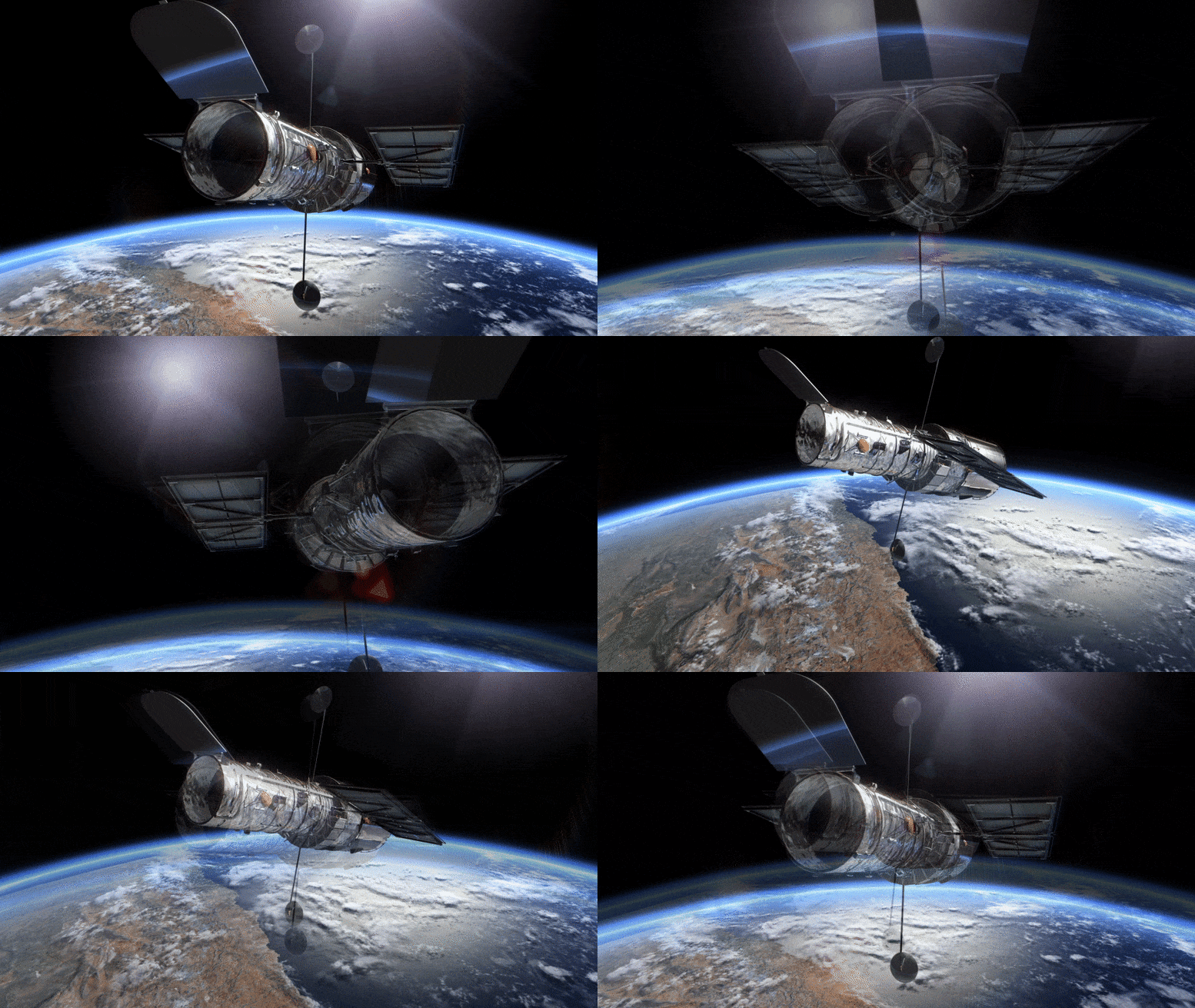
    NASA is diligently working to restore the Hubble Space Telescope’s science operations after it entered safe mode on November 23, due to a malfunctioning gyroscope. (3D animation showing the Hubble Space Telescope over the Earth.) Credit: ESA/Hubble (M. Kornmesser & L. L. Christensen)

    NASA is troubleshooting Hubble’s gyro issue to resume its science operations, ensuring its continued astronomical discoveries alongside telescopes like the James Webb.

    NASA is working to resume science operations of the agency’s Hubble Space Telescope after it entered safe mode on November 23 due to an ongoing gyroscope (gyro) issue. Hubble’s instruments are stable, and the telescope is in good health.

    The telescope automatically entered safe mode when one of its three gyroscopes gave faulty readings. The gyros measure the telescope’s turn rates and are part of the system that determines which direction the telescope is pointed. While in safe mode, science operations are suspended, and the telescope waits for new directions from the ground.
    Hubble Space Telescope in Orbit
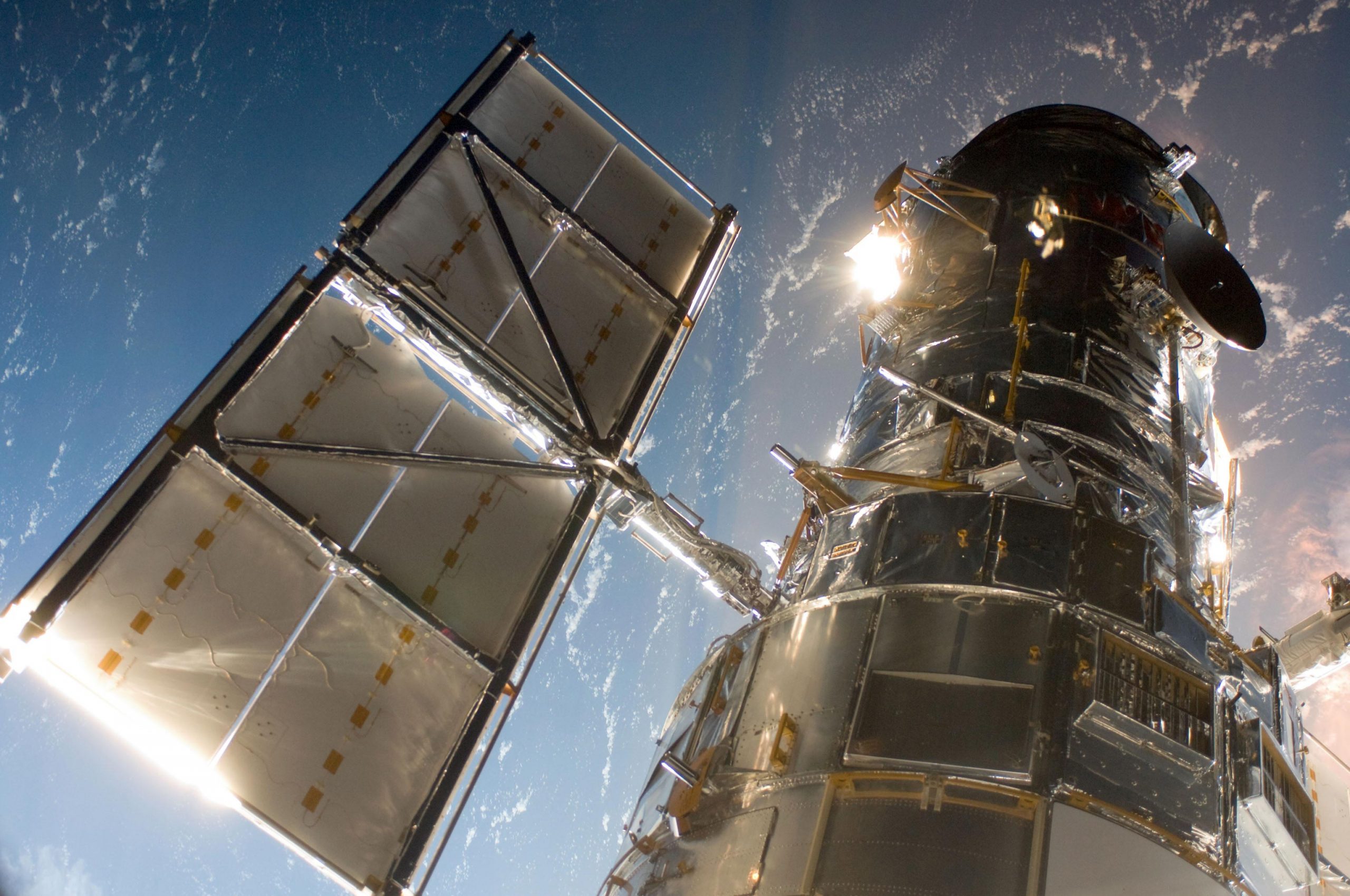
    The Hubble Space Telescope was launched by the space shuttle Discovery on April 24, 1990. Avoiding distortions of the atmosphere, Hubble has an unobstructed view peering to planets, stars, and galaxies, some more than 13.4 billion light-years away. Credit: NASA

    Recent Challenges and Recovery Efforts

    Hubble first entered safe mode on November 19. Although the operations team successfully recovered the spacecraft to resume observations the following day, the unstable gyro caused the observatory to suspend science operations once again on November 21. Following a successful recovery, Hubble entered safe mode again on November 23.

    The team is now running tests to characterize the issue and develop solutions. If necessary, the spacecraft can be re-configured to operate with only one gyro. The spacecraft had six new gyros installed during the fifth and final space shuttle servicing mission in 2009. To date, three of those gyros remain operational, including the gyro currently experiencing fluctuations. Hubble uses three gyros to maximize efficiency, but could continue to make science observations with only one gyro if required.

    Hubble’s Ongoing Legacy and Future Prospects

    NASA anticipates Hubble will continue making groundbreaking discoveries, working with other observatories, such as the agency’s James Webb Space Telescope, throughout this decade and possibly into the next.

    Launched in 1990, Hubble has been observing the universe for more than 33 years. Read more about some of Hubble’s greatest scientific discoveries.

    Never miss a breakthrough: Join the SciTechDaily newsletter.
    Follow us on Google and Google News.

    Astronomy Hubble Space Telescope NASA
    Share. Facebook Twitter Pinterest LinkedIn Email Reddit

    Related Articles

    Hubble Reveals a Star Disk Three Times Hotter Than the Sun’s Surface

    A Star’s Unexpected Heatwave: FU Orionis Challenges Astrophysics Models

    NASA’s Hubble Reveals How the LMC Defied Galactic Destruction

    Legendary Star’s Smooth Disk Mystifies Astronomers, Challenges Planet Formation Theories

    Cosmic Horror Unveiled: NASA Reveals “Blood-Soaked Eyes” Staring From Deep Space [Video]

    Spanning 248 Billion Miles: Stunning Hubble Timelapse Captures a Star’s Violent Eruptions

    Jupiter’s Great Red Spot Enigma: Unexplained Oscillations Baffle Astronomers

    Unlocking Uranus: NASA’s Dual Observations Pave the Way to Discovering New Worlds

    Astronomers Baffled by Black Hole Jets Igniting Star Explosions

    Leave A Reply Cancel Reply

    • Facebook
    • Twitter
    • Pinterest
    • YouTube

    Don't Miss a Discovery

    Subscribe for the Latest in Science & Tech!

    Trending News

    Millions Take These IBS Drugs, But a New Study Finds Serious Risks

    Scientists Unlock Hidden Secrets of 2,300-Year-Old Mummies Using Cutting-Edge CT Scanner

    Bread Might Be Making You Gain Weight Even Without Eating More Calories

    Scientists Discover Massive Magma Reservoir Beneath Tuscany

    Europe’s Most Active Volcano Just Got Stranger – Here’s Why Scientists Are Rethinking It

    Alzheimer’s Symptoms May Start Outside the Brain, Study Finds

    Millions Take This Popular Supplement – Scientists Discover a Concerning Link to Heart Failure

    The Universe Is Expanding Too Fast and Scientists Can’t Explain Why

    Follow SciTechDaily
    • Facebook
    • Twitter
    • YouTube
    • Pinterest
    • Newsletter
    • RSS
    SciTech News
    • Biology News
    • Chemistry News
    • Earth News
    • Health News
    • Physics News
    • Science News
    • Space News
    • Technology News
    Recent Posts
    • Scientists Say Adding This Unusual Seafood to Your Diet Could Reverse Signs of Aging
    • U.S. Waste Holds $5.7 Billion Worth of Crop Nutrients
    • Scientists Say a Hidden Structure May Exist Inside Earth’s Core
    • Doctors Surprised by the Power of a Simple Drug Against Colon Cancer
    • Why Popular Diabetes Drugs Like Ozempic Don’t Work for Everyone: The “Genetic Glitch”
    Copyright © 1998 - 2026 SciTechDaily. All Rights Reserved.
    • Science News
    • About
    • Contact
    • Editorial Board
    • Privacy Policy
    • Terms of Use

    Type above and press Enter to search. Press Esc to cancel.