
Close Menu
    Facebook X (Twitter) Instagram
    SciTechDaily
    • Biology
    • Chemistry
    • Earth
    • Health
    • Physics
    • Science
    • Space
    • Technology
    Facebook X (Twitter) Pinterest YouTube RSS
    SciTechDaily
    Home»Technology»Hypersonic Testing at Up to Seven Times the Speed of Sound in New Shock Tunnel
    Technology

    Hypersonic Testing at Up to Seven Times the Speed of Sound in New Shock Tunnel

    By University of QueenslandNovember 16, 2019No Comments3 Mins Read
    Facebook Twitter Pinterest Telegram LinkedIn WhatsApp Email Reddit
    Share
    Facebook Twitter LinkedIn Pinterest Telegram Email Reddit
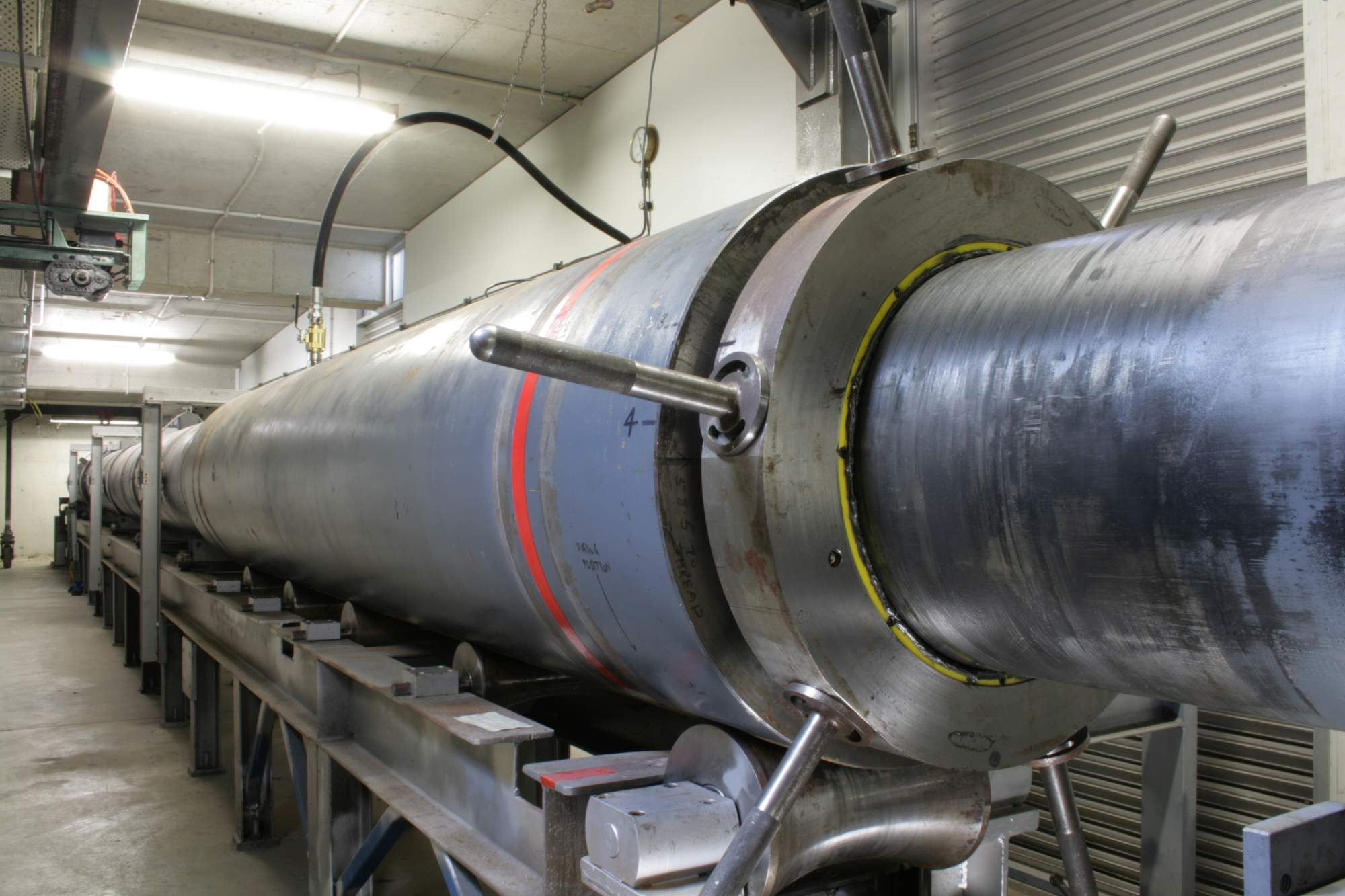
    Large Expansion Tube Facility X3
    An upgrade of one of the largest expansion tube wind tunnels in the world will allow University of Queensland researchers to test larger-scale vehicles at up to seven times the speed of sound. Credit: University of Queensland

    An upgrade of one of the largest expansion tube wind tunnels in the world will allow University of Queensland researchers to test larger-scale vehicles at up to seven times the speed of sound.

    Center for Hypersonics researcher Dr. David Gildfind said UQ’s large expansion tube facility X3, developed by Professor Richard Morgan, can now be reconfigured into a reflected shock tunnel with test time duration in excess of 10 milliseconds.

    “That might not sound like a long time, but at these speeds, it more than triples what is now possible within Australia,” Dr. Gildfind said. “This new addition to our facility will allow us to test the type of vehicles that could one day travel from Australia to Europe in two hours.”

    This reflected shock tunnel operating mode of X3 is known as X3R.

    At the heart of the tunnel is a device called a free-piston driver, a concept invented by Australian Hypersonics Pioneer, the late Professor Ray Stalker.

    Within that driver, in just a few hundred milliseconds, a 500mm diameter piston — weighing more than half a tonne — is accelerated down a 14-meter (46-foot) tube to nearly 500 kilometers (310 miles) per hour.
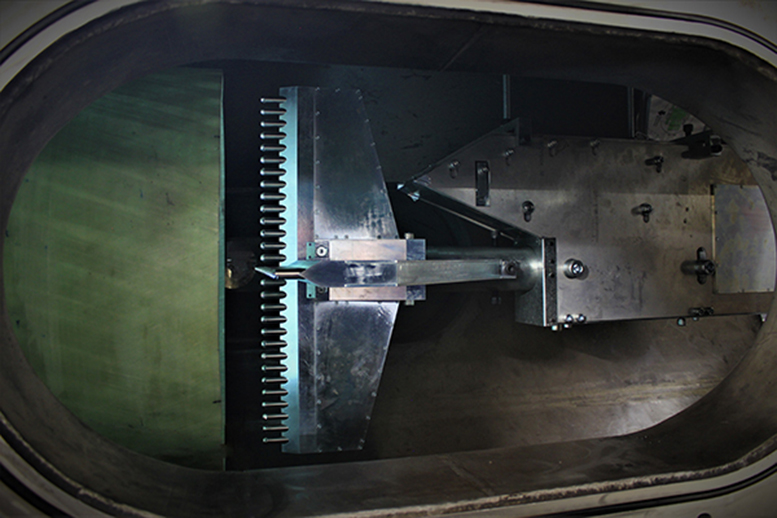
    X3R Pitot Rake
    Pitot rake to survey X3R’s test flow. Credit: University of Queensland

    “The original X3 configuration is optimized for the most extreme flight speeds imaginable and can simulate planetary entry conditions well beyond 40,000 kilometers (25,000 miles) per hour, for about one millisecond,” Dr. Gildfind said.

    “With X3R, we operate the machine in a different way, which can extend the test time to over 10 milliseconds; while this restricts the maximum speed to around 8000 kilometers (5,000 miles) an hour, it’s this lower speed that will allow us to make big advancements in terrestrial hypersonic flight.”

    Dr. Gildfind said the exploration of space relied on the ground testing of hypersonic vehicles through facilities like X3 and X3R.

    “X3R is a transformational capability improvement for Australia, which makes it possible for researchers to investigate fundamental studies of hypersonic phenomena, of which we historically have a great legacy, at a larger scale,” he said. “This has only been made possible by combining the expertise and resources of both UQ and the Department of Defence, Science and Technology.”

    This development is the latest outcome of long-term research and educational collaboration in hypersonics between UQ and DST, covering hypersonic ground and flight testing and the development of transformational flight technologies.

    The X3R facility will be relocated to a new DST laboratory at Eagle Farm in 2019/2020, which will become a focal point for National and International research partnerships in Hypersonic Technologies.

    “This could lead to significant breakthroughs in hypersonic technologies in Australia, and will provide the vital infrastructure Australia needs to support our burgeoning space industry.”

    Never miss a breakthrough: Join the SciTechDaily newsletter.
    Follow us on Google and Google News.

    Hypersonic University of Queensland
    Share. Facebook Twitter Pinterest LinkedIn Email Reddit

    Related Articles

    Hypersonic Breakthrough Could Make One-Hour Global Flights Possible

    Revolution at Mach 10: NASA-Backed Hypersonic Jets Poised to Transform Space Travel

    Unlocking the Technology To Produce Unbreakable Composite Glass Screens

    Solar Technology Breakthrough: World Record Quantum Dot Solar Cell Efficiency

    Cyclone on a Silicon Chip Advances “Oldest Unsolved Problem in Physics”

    Latest Hypersonic Research: Testing Objects Flying at Faster Than 10 Times the Speed of Sound

    Graphene-Based Supercapacitors May Significantly Boost the Power of Electric Vehicles

    Engineers Use Supercomputers to Tackle the Challenges of Hypersonic Flight

    Leave A Reply Cancel Reply

    • Facebook
    • Twitter
    • Pinterest
    • YouTube

    Don't Miss a Discovery

    Subscribe for the Latest in Science & Tech!

    Trending News

    Popular Sugar-Free Sweetener Linked to Liver Disease, Study Warns

    What Is Hantavirus? The Deadly Disease Raising Alarm Worldwide

    Scientists Just Discovered How the Universe Builds Monster Black Holes

    Scientists Unveil New Treatment Strategy That Could Outsmart Cancer

    A Simple Vitamin May Hold the Key to Treating Rare Genetic Diseases

    Scientists Think the Real Fountain of Youth May Be Hiding in Your Gut

    Ravens Don’t Follow Wolves, They Predict Them

    This Common Knee Surgery May Be Doing More Harm Than Good

    Follow SciTechDaily
    • Facebook
    • Twitter
    • YouTube
    • Pinterest
    • Newsletter
    • RSS
    SciTech News
    • Biology News
    • Chemistry News
    • Earth News
    • Health News
    • Physics News
    • Science News
    • Space News
    • Technology News
    Recent Posts
    • Popular Supplement Ingredient Linked to Shorter Lifespan in Men
    • Scientists May Have Found a Way To Repair Nerve Damage in Multiple Sclerosis
    • GLP-1 Weight Loss Linked To Dramatically Lower Risk of Sleep Apnea, Kidney Disease and More
    • Scientists Uncover the Surprising Source of Strange Clouds Near the Milky Way’s Supermassive Black Hole
    • This Dazzling Green Snake Was Hiding in Plain Sight for Decades
    Copyright © 1998 - 2026 SciTechDaily. All Rights Reserved.
    • Science News
    • About
    • Contact
    • Editorial Board
    • Privacy Policy
    • Terms of Use

    Type above and press Enter to search. Press Esc to cancel.