
Close Menu
    Facebook X (Twitter) Instagram
    SciTechDaily
    • Biology
    • Chemistry
    • Earth
    • Health
    • Physics
    • Science
    • Space
    • Technology
    Facebook X (Twitter) Pinterest YouTube RSS
    SciTechDaily
    Home»Earth»Ice Loss Likely to Continue in Antarctica, Even if Climate Change Is Brought Under Control
    Earth

    Ice Loss Likely to Continue in Antarctica, Even if Climate Change Is Brought Under Control

    By Monash UniversityOctober 23, 20201 Comment3 Mins Read
    Facebook Twitter Pinterest Telegram LinkedIn WhatsApp Email Reddit
    Share
    Facebook Twitter LinkedIn Pinterest Telegram Email Reddit
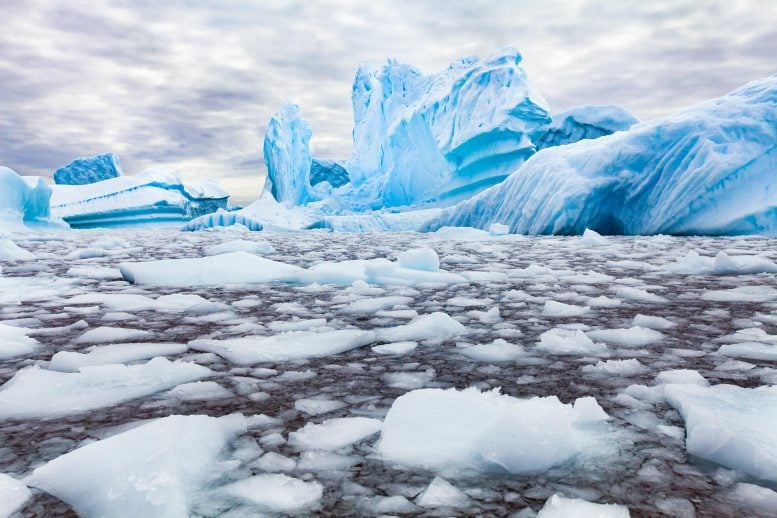
    Antarctica Melting Ice
    An international study indicates that ice loss in Antarctica started centuries ago and is projected to continue even if climate change is brought under control.

    A new international study led by Monash University climate scientists has revealed that ice loss in Antarctica persisted for many centuries after it was initiated and is expected to continue.

    “Our study implies that ice loss unfolding in Antarctica today is likely to continue unabated for a long time — even if climate change is brought under control,” said lead study authors Dr. Richard Jones and Dr. Ross Whitmore, from the Monash University School of Earth, Atmosphere and Environment.

    The study, published on October 21, 2020, in Geology, outlines a cosmogenic surface-exposure chronology from Mawson Glacier, adjacent to a region of the Ross Sea that underwent dynamic marine-based ice sheet retreat following the Last Glacial Maximum.

    The data records at least 220 meters (720 feet) of abrupt ice thinning between 7,500 and 4,500 years ago, followed by more gradual thinning until the last millennium.

    The study presents new results of ice sheet thinning in the southwestern Ross Sea. The results show that abrupt ice loss of several hundred meters occurred at a similar rate and duration across multiple outlet glaciers in the Mid-Holocene, despite complex bed topography.

    Both outlet glaciers demonstrate that abrupt deglaciation occurred across a broad region in the Mid-Holocene.

    When compared to regional sea-level and ocean-temperature changes, the study data indicate that ocean warming most likely drove grounding-line retreat and ice drawdown, which then accelerated as a result of marine ice sheet instability.

    “We show that part of the Antarctic Ice Sheet experienced rapid ice loss in the recent geological past,” said Professor Andrew Mackintosh, who heads the Monash School of Earth, Atmosphere and Environment.

    “This ice loss occurred at a rate similar to that being observed in rapidly changing parts of Antarctica today, and it was caused by the same processes that are considered to cause current and probable future Antarctic ice mass loss — ocean warming, amplified by internal feedbacks,” he said.

    “The retreat persisted for many centuries after it was initiated, which implies that ice loss unfolding in Antarctica today is likely to continue unabated for a long period.”

    Reference: “Regional-scale abrupt Mid-Holocene ice sheet thinning in the western Ross Sea, Antarctica” by R.S. Jones, R.J. Whitmore, A.N. Mackintosh, K.P. Norton, S.R. Eaves, J. Stutz and M. Christl, 21 October 2020, Geology.
    DOI: 10.1130/G48347.1

    Never miss a breakthrough: Join the SciTechDaily newsletter.
    Follow us on Google and Google News.

    Antarctica Atmospheric Science Climate Change Geology Monash University
    Share. Facebook Twitter Pinterest LinkedIn Email Reddit

    Related Articles

    Scientists Warn: Warming of 2°C Would Release Billions of Tons of Soil Carbon

    “Yet Another Wake-Up Call” – Greenland on Track to Lose Ice Faster Than in Any Century Over the Last 12,000 Years

    Sediment Discovered in Texas Cave Upends Meteorite Explanation for Global Cooling

    Tracking California’s Sinking Coast From Space: San Francisco, Monterey Bay, Los Angeles, and San Diego Majorly Affected

    “Snowball Earths” May Have Been Triggered by a Plunge in Incoming Sunlight – “Be Wary of Speed”

    Mysterious Climate Change: Antarctic Cold Reversal

    Climate Models Challenged: Ancient Rocks Show Earth Had High Oxygen Levels 2 Billion Years Ago

    Extreme Atmospheric Chemistry: Barrels of Ancient Antarctic Air Aim to Track History of Rare Gas

    Researchers Warn: Extraordinarily Warm Temperatures Above Antarctica Cause Hot and Dry Extremes in Australia

    1 Comment

    1. Joe Milosch on October 24, 2020 4:19 am

      It will probably continue until the next ice age comes upon us. So expect continuous sea-level rise until the Big Chill arrives.

      Reply
    Leave A Reply Cancel Reply

    • Facebook
    • Twitter
    • Pinterest
    • YouTube

    Don't Miss a Discovery

    Subscribe for the Latest in Science & Tech!

    Trending News

    Your Blood Pressure Reading Could Be Wrong Because of One Simple Mistake

    Astronomers Stunned by Ancient Galaxy With No Spin

    Physicists May Be on the Verge of Discovering “New Physics” at CERN

    Scientists Solve 320-Million-Year Mystery of Reptile Skin Armor

    Scientists Say This Daily Walking Habit May Be the Secret to Keeping Weight Off After Dieting

    New Therapy Rewires the Brain To Restore Joy in Depression Patients

    Giant Squid Detected off Western Australia in Stunning Deep-Sea Discovery

    Popular Sugar-Free Sweetener Linked to Liver Disease, Study Warns

    Follow SciTechDaily
    • Facebook
    • Twitter
    • YouTube
    • Pinterest
    • Newsletter
    • RSS
    SciTech News
    • Biology News
    • Chemistry News
    • Earth News
    • Health News
    • Physics News
    • Science News
    • Space News
    • Technology News
    Recent Posts
    • New Stroke Study Challenges Decades-Old Medical Beliefs
    • These Simple Plant Foods Are Linked to Lower Blood Pressure
    • Common Blood Pressure Drug Supercharges Cancer Treatment in Surprising New Study
    • Key Magic Mushroom Ingredient Increases Laziness and Reduces Aggression
    • Researchers Solve 15-Year Mystery Behind Cancer-Causing Gut Toxin
    Copyright © 1998 - 2026 SciTechDaily. All Rights Reserved.
    • Science News
    • About
    • Contact
    • Editorial Board
    • Privacy Policy
    • Terms of Use

    Type above and press Enter to search. Press Esc to cancel.