
Close Menu
    Facebook X (Twitter) Instagram
    SciTechDaily
    • Biology
    • Chemistry
    • Earth
    • Health
    • Physics
    • Science
    • Space
    • Technology
    Facebook X (Twitter) Pinterest YouTube RSS
    SciTechDaily
    Home»Space»Incredible 10-Year Time Lapse of Sun From NASA’s Solar Dynamics Observatory [Video]
    Space

    Incredible 10-Year Time Lapse of Sun From NASA’s Solar Dynamics Observatory [Video]

    By NASA's Goddard Space Flight CenterJune 24, 20203 Comments3 Mins Read
    Facebook Twitter Pinterest Telegram LinkedIn WhatsApp Email Reddit
    Share
    Facebook Twitter LinkedIn Pinterest Telegram Email Reddit
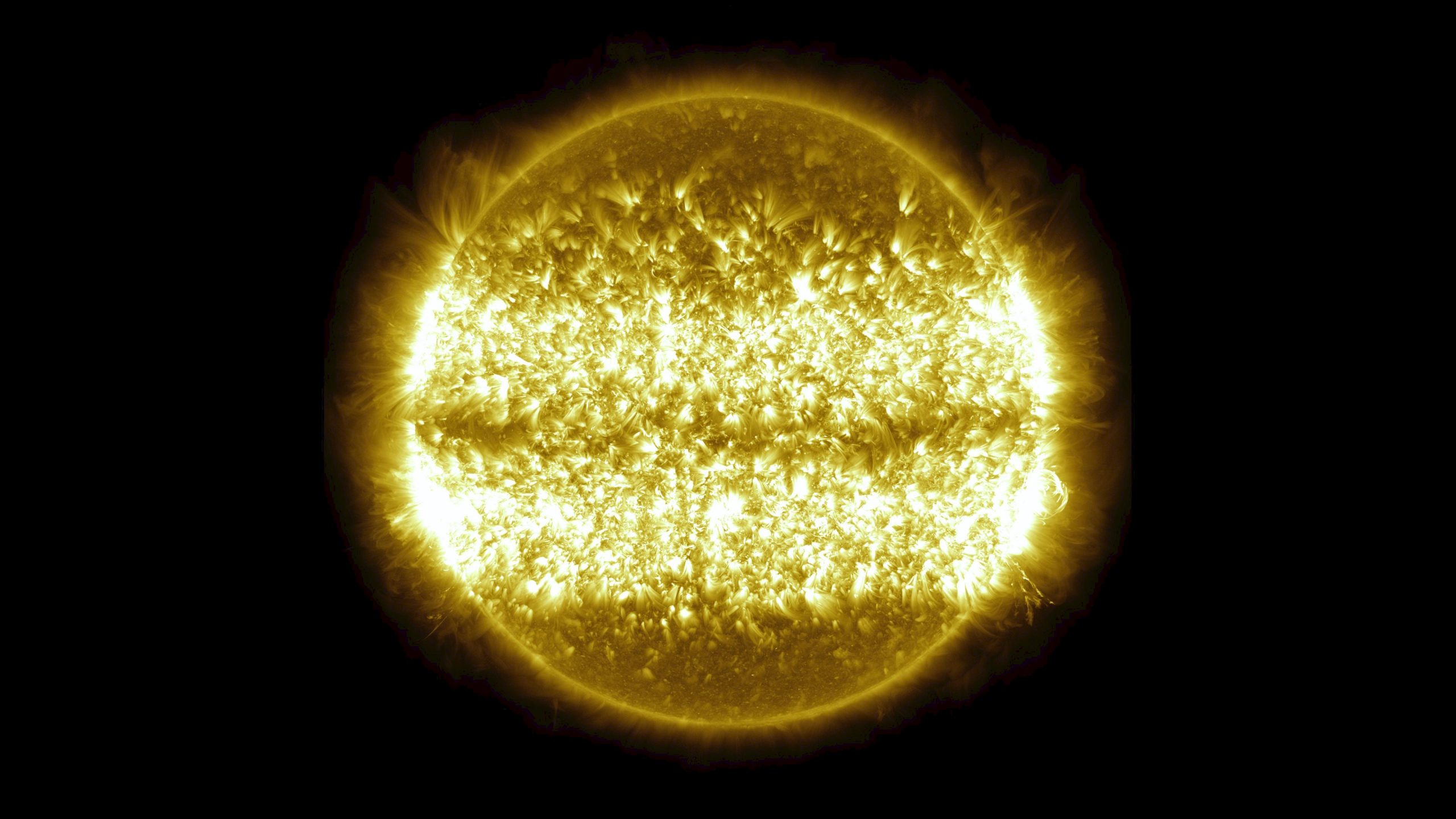
    SDO Composite Image
    This composite image is made from 151 individual SDO frames. They span the full ten-year run of the time lapse and a few notable events are hidden within it. Credit: NASA’s Goddard Space Flight Center

    As of June 2020, NASA’s Solar Dynamics Observatory – SDO – has now been watching the Sun non-stop for over a full decade. From its orbit in space around Earth, SDO has gathered 425 million high-resolution images of the Sun, amassing 20 million gigabytes of data over the past 10 years. This information has enabled countless new discoveries about the workings of our closest star and how it influences the solar system.

    With a triad of instruments, SDO captures an image of the Sun every 0.75 seconds. The Atmospheric Imaging Assembly (AIA) instrument alone captures images every 12 seconds at 10 different wavelengths of light. This 10-year time lapse showcases photos taken at a wavelength of 17.1 nanometers, which is an extreme ultraviolet wavelength that shows the Sun’s outermost atmospheric layer – the corona. Compiling one photo every hour, the movie condenses a decade of the Sun into 61 minutes. The video shows the rise and fall in activity that occurs as part of the Sun’s 11-year solar cycle and notable events, like transiting planets and eruptions. The custom music, titled “Solar Observer,” was composed by musician Lars Leonhard.


    This 10-year time lapse of the Sun at 17.1 nanometers (an extreme ultraviolet wavelength that shows the Sun’s outermost atmospheric layer – the corona) shows the rise and fall of the solar cycle and notable events, like transiting planets and solar eruptions. Credit: NASA’s Goddard Space Flight Center/SDO

    While SDO has kept an unblinking eye pointed toward the Sun, there have been a few moments it missed. The dark frames in the video are caused by Earth or the Moon eclipsing SDO as they pass between the spacecraft and the Sun. A longer blackout in 2016 was caused by a temporary issue with the AIA instrument that was successfully resolved after a week. The images where the Sun is off-center were observed when SDO was calibrating its instruments.

    SDO and other NASA missions will continue to watch our Sun in the years to come, providing further insights about our place in space and information to keep our astronauts and assets safe.

    While the time-lapse above is quite condensed, reducing 10 years and millions of images to a video just over an hour long, the following video smashes it all down to just under a minute:


    Never miss a breakthrough: Join the SciTechDaily newsletter.
    Follow us on Google and Google News.

    Astronomy NASA NASA Goddard Space Flight Center Popular Solar Dynamics Observatory Sun
    Share. Facebook Twitter Pinterest LinkedIn Email Reddit

    Related Articles

    Intensely Powerful X1.0 Solar Flare Witnessed by NASA’s Solar Dynamics Observatory

    New Clues To Predict When and Where the Sun’s Next Flare Might Explode

    Gorgeous New Sun Science Stamps Highlight a Decade of Sun-Watching From Space

    Unusual “Rosetta Stone” Solar Eruption Could Help Explain Mysterious Powerful Explosions on the Sun

    In First, Scientists Trace Dangerous Solar Energetic Particles to Their Roots on the Sun

    A New View of Small Sun Structures Allows NASA to Explore the Solar Wind Like Never Before

    10 Amazing Discoveries About the Sun From NASA’s Solar Dynamics Observatory

    Magnetic Explosions Observed on Sun – Unlike Anything Seen Before [Video]

    NASA Captures Image of an M6.5 Class Flare

    3 Comments

    1. William J Gallagher on June 24, 2020 9:24 am

      why not a full 11 year cycle. I would have thought that that would be better

      Reply
    2. Mark Patten on June 24, 2020 8:30 pm

      Can you loop the hour video and make it a home screen animation?

      Reply
      • Mike O'Neill on June 24, 2020 10:04 pm

        You can download the video here and edit it as you wish: https://svs.gsfc.nasa.gov/13641

        Reply
    Leave A Reply Cancel Reply

    • Facebook
    • Twitter
    • Pinterest
    • YouTube

    Don't Miss a Discovery

    Subscribe for the Latest in Science & Tech!

    Trending News

    289-Million-Year-Old Reptile Mummy Reveals Origin of Human Breathing System

    New Brain Discovery Challenges Long-Held Theory of Teenage Brain Development

    Scientists Discover Plants “Scream” – We Just Couldn’t Hear Them Until Now

    Scientists Discover a Surprising Reason Intermittent Fasting Extends Life

    This Simple Fruit Wash Could Make Produce Safer and Last Days Longer

    Scientists Say Adding This Unusual Seafood to Your Diet Could Reverse Signs of Aging

    Scientists Say a Hidden Structure May Exist Inside Earth’s Core

    Doctors Surprised by the Power of a Simple Drug Against Colon Cancer

    Follow SciTechDaily
    • Facebook
    • Twitter
    • YouTube
    • Pinterest
    • Newsletter
    • RSS
    SciTech News
    • Biology News
    • Chemistry News
    • Earth News
    • Health News
    • Physics News
    • Science News
    • Space News
    • Technology News
    Recent Posts
    • Scientists Propose Radical New Way To Detect Alien Life – Without Traditional Biosignatures
    • Scientists Just Discovered Light Can Actually Slow Plant Growth
    • Scientists Finally Solved One of Water’s Biggest Mysteries
    • 7,000-Year-Old DNA Rewrites the Story of the “Neolithic Revolution”
    • Missing Medieval Relic of Legendary English King Found After Being Missing for 40 Years
    Copyright © 1998 - 2026 SciTechDaily. All Rights Reserved.
    • Science News
    • About
    • Contact
    • Editorial Board
    • Privacy Policy
    • Terms of Use

    Type above and press Enter to search. Press Esc to cancel.