
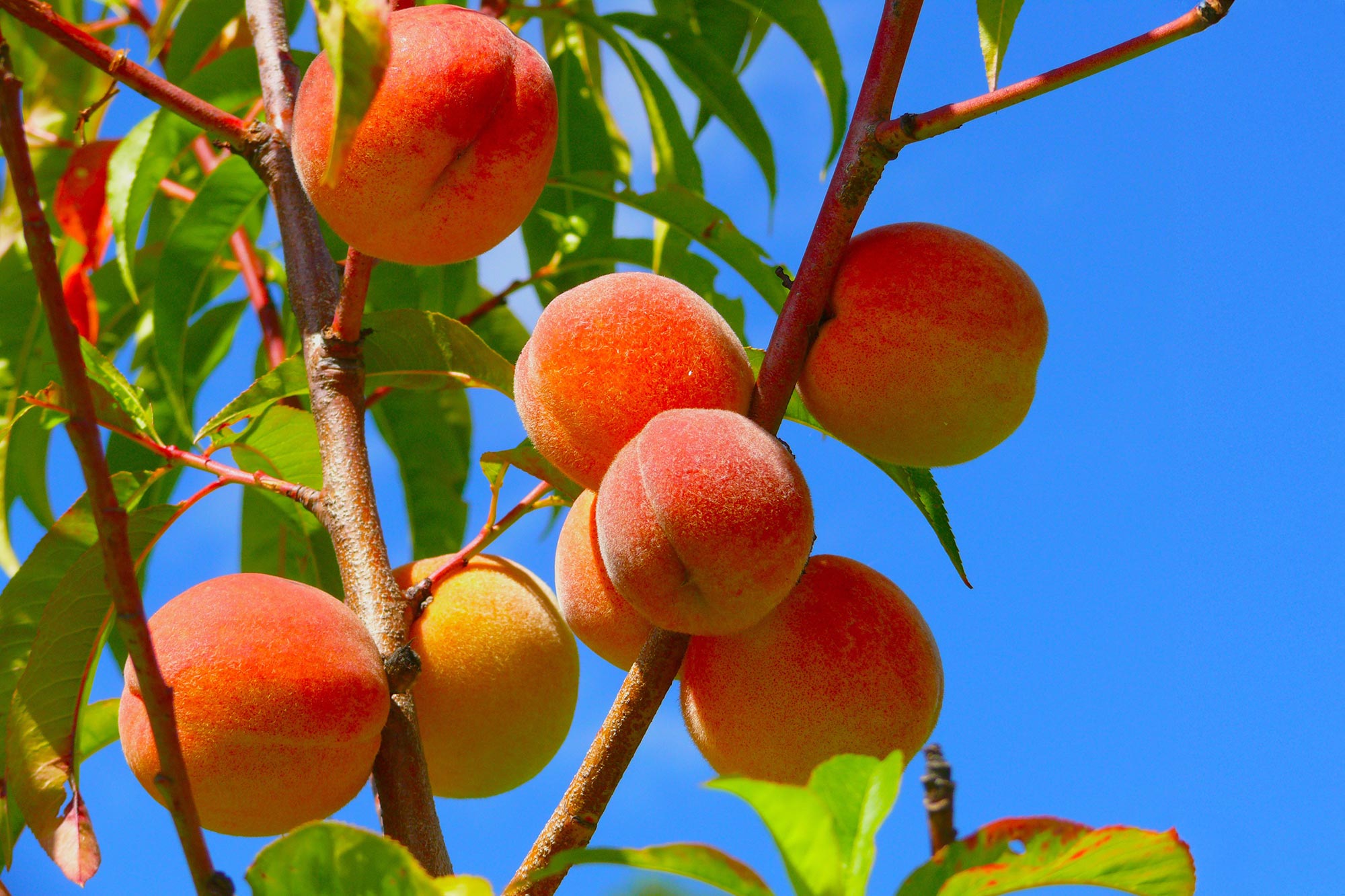
A fascinating study highlights the pivotal role Indigenous communities played in the adoption and spread of peaches across North America, debunking the simplistic narrative that Spanish explorers were primarily responsible.
The research emphasizes the complex interplay of Indigenous social networks and land management in nurturing the fruit, leading to a rich diversity of peach varieties that surpassed those found in Europe even during the early stages of colonization.
Early Introduction and Indigenous Influence on Peaches
Spanish explorers may have introduced peaches to North America, but it was Indigenous communities that helped the fruit thrive, according to a study led by a Penn State researcher.
Published in Nature Communications, the study reveals that Indigenous social and political networks, along with their land management practices, played a crucial role in the spread and cultivation of peaches across the continent.
The Complexity of Peach Dispersal
“Peaches need a lot of care by people to be productive. They need to be planted in appropriate places with a lot of sunlight and the right soil drainage, and they need to be pruned,” explained Jacob Holland-Lulewicz, the study’s first author and assistant professor of anthropology at Penn State. “For a long time, the narrative was that the Spanish introduced peaches and then peaches spread very quickly. The reality is way more complicated. How quickly peaches spread is very much a product of Indigenous networks and land management.”
The researchers analyzed historical documents that mentioned peaches, such as the travel writings of French missionary explorer Jacques Marquette and English merchant Jonathan Dickinson. They also employed radiocarbon dating — a method that measures the decay of radioactive carbon-14 atoms in organic material — to determine the approximate ages of peach pits and other organic samples, like carbonized tree wood, from 28 archaeological sites and two regional locales where archaeologists previously recovered preserved peach pits. The sites were located in the Carolinas, Georgia, Florida, Alabama, Tennessee and Arkansas.
“For a long time, the narrative was that the Spanish introduced peaches and then peaches spread very quickly. … How quickly peaches spread is very much a product of Indigenous networks and land management.”
Jacob Holland-Lulewicz, assistant professor of anthropology, Penn State
Indigenous Networks and Peach Proliferation
The team found that peaches were likely widespread across Indigenous settlements in the interior southeast as early as the year 1620, roughly 100 years after the earliest Spanish expeditions in Florida and in Georgia’s Oconee Valley. The timing suggests that early Spanish settlements becoming important trade nodes within existing Indigenous networks created the necessary conditions for the spread of peaches, according to Holland-Lulewicz.
“Many narratives talk about the Spanish, or Europeans generally, arriving and then you see instantaneous changes to Indigenous histories and the spread of materials, but those initial interactions didn’t cause major changes,” he said. “It’s not until Spanish networks and Indigenous networks become entangled 100 years later that we have the necessary conditions for the spread of peaches.”
The team also identified what are possibly the earliest peaches in North America at a Muskogean farmstead in the Oconee Valley. In the 1990s, the late Penn State archaeologist James Hatch recovered peach pits from the bottom of post holes that once housed support structures for the farmstead’s house. The researchers radiocarbon dated charcoal, nuts and corn kernels from these post holes and found that occupation at the site began between 1520 and 1550 and ended between 1530 and 1570. This timing suggests that peaches had spread to the interior southeast possibly decades before the founding of St. Augustine in 1565, according to the researchers.
Indigenous Contributions and Cultural Significance
“Understanding the path that the introduction of species, such as peach trees, took through colonization and the role that Indigenous people and their long-term relationship with the environment played in shaping these histories demonstrates the importance of these events, people and processes to what becomes a broader American history,” said co-author Victor Thompson, Distinguished Research Professor of archaeology at the University of Georgia (UGA) and executive director of the Georgia Museum of Natural History. “Further, the fact that all of this work took place on museum specimens underscores the importance of maintaining these collections for future study.”
Indigenous peoples not only adopted the peach but selectively bred new varieties outnumbering the varieties found in Europe even at this early time, Holland-Lulewicz said.
“Understanding the path that the introduction of species, such as peach trees, took through colonization and the role that Indigenous people and their long-term relationship with the environment played in shaping these histories demonstrates the importance of these events, people and processes to what becomes a broader American history.”
Victor Thompson, distinguished research professor of archaeology, University of Georgia
“When Europeans started to move through and into the interior of the continent in the mid- to late 1600s, they noted that there were way more varieties of peaches being grown by Indigenous peoples than there were in Europe,” he said, explaining that the fruit had become an important aspect of Indigenous culture. “At this time, Europeans are noting really dense peach orchards around Indigenous towns, but some of these towns and people had never previously interacted with or even heard of Europeans. In fact, there are records of Indigenous peoples describing peaches as an Indigenous fruit.”
The fruit had become so integral to Indigenous history and culture that when the ancestors of the modern-day Muscogee (Creek) Nation were forcibly removed from Georgia and Alabama during the 1800s, they took peaches with them.
“There are Muscogee (Creek) peoples today who grow peaches as heritage crops,” Holland-Lulewicz said. “The act of growing and caring for those peaches is an important cultural practice. These were the first peaches introduced in the 1500s and 1600s that were then carried halfway across the continent and continue to be grown today.”
Reference: “The initial spread of peaches across eastern North America was structured by Indigenous communities and ecologies” by Jacob Holland-Lulewicz, Victor Thompson, Amanda Roberts Thompson, RaeLynn Butler, Dario J. Chavez, Jay Franklin, Turner Hunt, Mark Williams and John Worth, 20 September 2024, Nature Communications.
DOI: 10.1038/s41467-024-52597-8
In addition to Holland-Lulewicz and Thompson, other collaborators include Amanda Roberts Thompson and Mark Williams at the UGA Laboratory of Archaeology, and Dario J. Chavez, University of Georgia; RaeLynn Butler, the Secretary of Culture and Humanities for the Muscogee (Creek) Nation, and Turner Hunt, Muscogee (Creek) Nation citizen; Jay Franklin, Logan Simpson Design; and John Worth, University of West Florida.
The UGA Laboratory of Archaeology and the Institute of Energy and the Environment at Penn State supported this work.
Never miss a breakthrough: Join the SciTechDaily newsletter.
Follow us on Google and Google News.