
Close Menu
    Facebook X (Twitter) Instagram
    SciTechDaily
    • Biology
    • Chemistry
    • Earth
    • Health
    • Physics
    • Science
    • Space
    • Technology
    Facebook X (Twitter) Pinterest YouTube RSS
    SciTechDaily
    Home»Health»Individuals With Extra X or Y Chromosome at Higher Risk of Life-Threatening Blood Clots
    Health

    Individuals With Extra X or Y Chromosome at Higher Risk of Life-Threatening Blood Clots

    By Geisinger Health SystemFebruary 24, 2023No Comments3 Mins Read
    Facebook Twitter Pinterest Telegram LinkedIn WhatsApp Email Reddit
    Share
    Facebook Twitter LinkedIn Pinterest Telegram Email Reddit
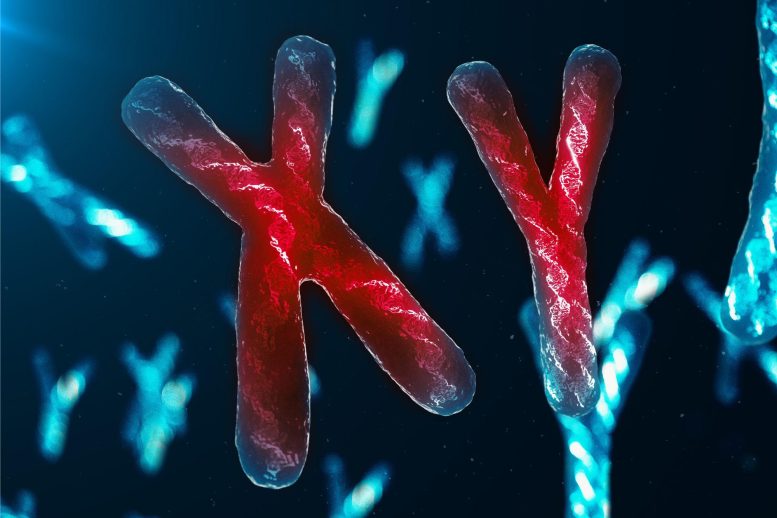
    X Y Chromosomes
    Supernumerary sex chromosome aneuploidy refers to a condition in which individuals have an extra sex chromosome, resulting in an abnormal number of chromosomes in their cells. This condition can occur when there is an error in the division of chromosomes during cell division, leading to an unequal distribution of chromosomes in the resulting cells.

    An Extra X or Y Chromosome Significantly Increases VTE Risk

    A Geisinger study has uncovered that individuals with supernumerary sex chromosome aneuploidy, a condition characterized by an extra X or Y chromosome, are at a heightened risk of developing venous thromboembolism (VTE), a type of blood clot.

    The findings were published in the Journal of the American Medical Association (JAMA).

    VTE, an often fatal condition, affects approximately 900,000 people in the United States annually. This condition is a common complication for those in intensive care, as well as for individuals with medical issues like cancer and COVID-19. VTE includes deep vein thrombosis (a blood clot in a deep vein, typically in the leg) and pulmonary embolism (a blood clot in the lung).

    The Geisinger research team, led by Matthew Oetjens, Ph.D., assistant professor at Geisinger’s Autism & Developmental Medicine Institute, analyzed genetic and electronic health record data on two groups of patients—642,544 in all—enrolled in Geisinger’s MyCode Community Health Initiative and the UK Biobank, another large population study based in the United Kingdom. They found that approximately one in 500 Geisinger patients have an additional X or Y chromosome in their genome beyond the typical two found in females (XX) and males (XY). Those with an additional X or Y chromosome had a risk for VTE that was four to five times higher than expected.

    “An additional X or Y chromosome is more common than many people think, but it does not often receive clinical attention,” Dr. Oetjens said. “Our study shows that there are underappreciated health risks associated with these disorders that could change medical care if known in advance.”

    “VTE is a life-threatening, but preventable disease,” said Alex Berry, Ph.D., a staff scientist at Geisinger and the first author of the study. “It is important to identify individuals at high risk for VTE to minimize unnecessary illness and death.”

    The analysis also suggests that the loss of an X or Y chromosome, known as Turner syndrome, is not associated with a higher risk of blood clots. Further research is needed to understand the medical implications of this association, the research team wrote.

    Reference: “Association of Supernumerary Sex Chromosome Aneuploidies With Venous Thromboembolism” by Alexander S. F. Berry, Ph.D.; Brenda M. Finucane, MS; Scott M. Myers, MD; Angela Abril, MD; H. Lester Kirchner, Ph.D.; David H. Ledbetter, Ph.D.; Christa Lese Martin, Ph.D. and Matthew T. Oetjens, Ph.D., 17 January 2023, JAMA.
    DOI: 10.1001/jama.2022.23897

    Never miss a breakthrough: Join the SciTechDaily newsletter.
    Follow us on Google and Google News.

    Chromosomes Genetics
    Share. Facebook Twitter Pinterest LinkedIn Email Reddit

    Related Articles

    Why Are Viral Infections More Severe in Men? Researchers May Have Solved the Mystery

    Whole-Genome Analysis Identifies the Source of a Recent MRSA Outbreak

    New Class of Proteins Inhibit HIV Infection in Cell Cultures

    Role of the SMN Gene in Spinal Muscular Atrophy

    The Tomato Genomics Consortium Sequences the Tomato Genome

    Cancer Cells May Grow More Easily than Thought

    Evolutionary Changes Surrounding the NOS1 Gene

    Obese Children with Genetic Variants Susceptible to Fatty Liver Disease

    New DNA Entity in Mammalian Cells

    Leave A Reply Cancel Reply

    • Facebook
    • Twitter
    • Pinterest
    • YouTube

    Don't Miss a Discovery

    Subscribe for the Latest in Science & Tech!

    Trending News

    Scientists Discover Game-Changing New Way To Treat High Cholesterol

    This Small Change to Your Exercise Routine Could Be the Secret to Living Longer

    Scientists Discover 430,000-Year-Old Wooden Tools, Rewriting Human History

    AI Could Detect Early Signs of Alzheimer’s in Under a Minute – Far Before Traditional Tests

    What if Dark Matter Has Two Forms? Bold New Hypothesis Could Explain a Cosmic Mystery

    This Metal Melts in Your Hand – and Scientists Just Discovered Something Strange

    Beef vs. Chicken: Surprising Results From New Prediabetes Study

    Alzheimer’s Breakthrough: Scientists Discover Key Protein May Prevent Toxic Protein Clumps in the Brain

    Follow SciTechDaily
    • Facebook
    • Twitter
    • YouTube
    • Pinterest
    • Newsletter
    • RSS
    SciTech News
    • Biology News
    • Chemistry News
    • Earth News
    • Health News
    • Physics News
    • Science News
    • Space News
    • Technology News
    Recent Posts
    • Revolutionary Imaging Technique Unlocks Secrets of Matter at Extreme Speeds
    • Where Does Mass Come From? Scientists Find Evidence of a New Exotic Nuclear State
    • Quantum Breakthrough: Unhackable Keys Sent Over 120 km Using Quantum Dots
    • Researchers Discover Unknown Beetle Species Just Steps From Their Lab
    • Jellyfish Caught Feasting on Exploding Sea Worms for the First Time
    Copyright © 1998 - 2026 SciTechDaily. All Rights Reserved.
    • Science News
    • About
    • Contact
    • Editorial Board
    • Privacy Policy
    • Terms of Use

    Type above and press Enter to search. Press Esc to cancel.