
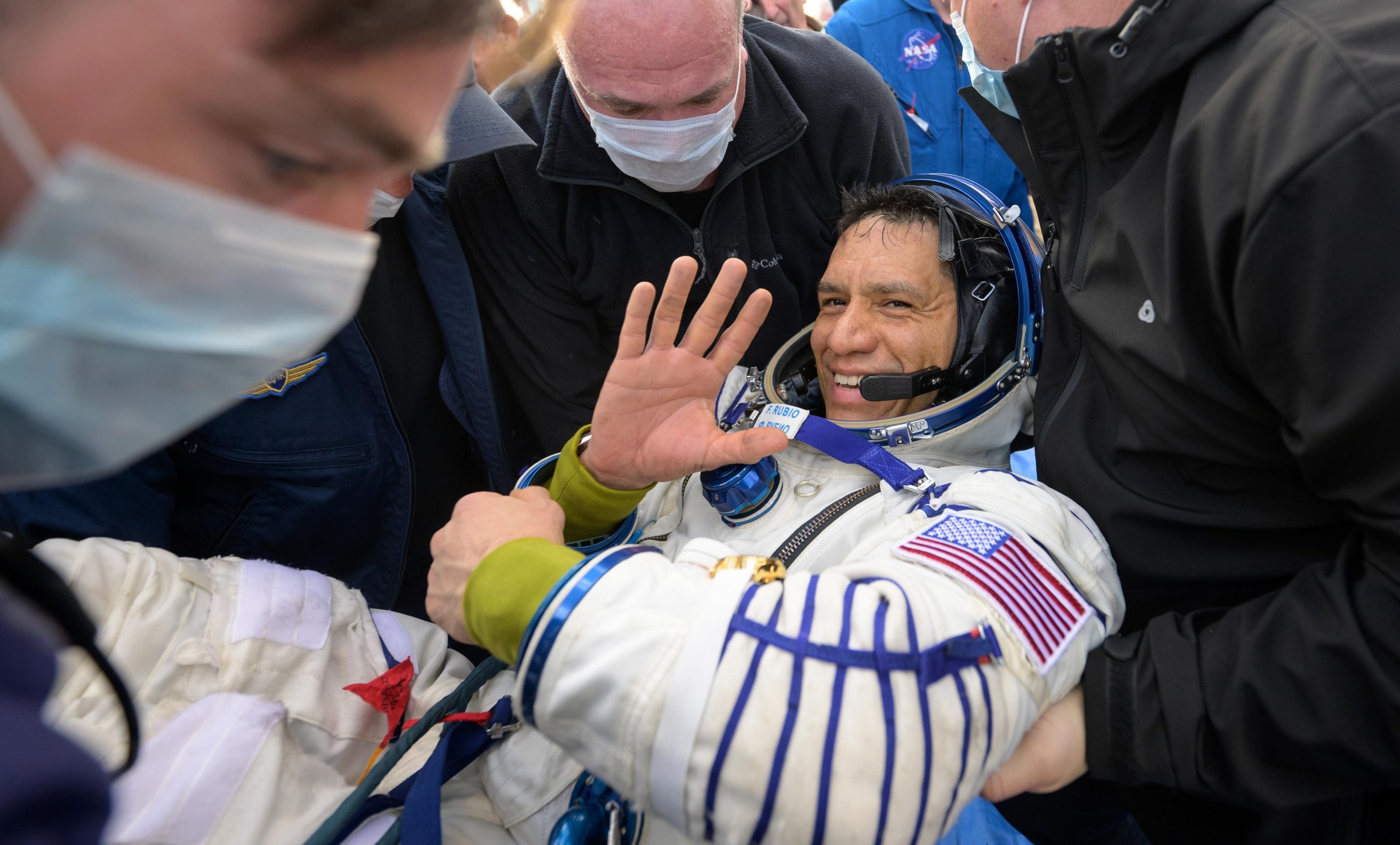
Researchers discovered that astronauts’ processing speed, working memory, and attention slowed down, but a few months in space did not result in lasting cognitive impairment.
In space, astronauts face unique stressors that the human body doesn’t encounter on Earth, including microgravity, increased radiation, and demanding workloads. To investigate how spaceflight affects cognitive performance, researchers studied data from 25 professional astronauts. The findings revealed that during their time aboard the International Space Station (ISS), astronauts took longer to complete tasks related to processing speed, working memory, and attention. However, a six-month stay in space did not lead to any lasting cognitive impairments after they returned to Earth.
Cognitive Challenges in Space
Living in space places immense strain on the human body. Astronauts face exposure to radiation, altered gravity, demanding working conditions, and disrupted sleep — all factors that could potentially affect their cognitive abilities. Despite these challenges, they must perform highly complex tasks where even small errors can have serious consequences.
Surprisingly, little is known about how astronauts’ cognitive performance might change during space missions. To address this, researchers in the United States studied 25 astronauts who spent an average of six months aboard the International Space Station (ISS). This research represents the largest dataset of cognitive performance measurements from professional astronauts ever published.
“We show that there is no evidence of any significant cognitive impairment or neurodegenerative decline in astronauts spending six months on the ISS,” said Dr Sheena Dev, a researcher at NASA’s Behavioral Health and Performance Laboratory and first author of the Frontiers in Physiology study. “Living and working in space was not associated with widespread cognitive impairment that would be suggestive of significant brain damage.”
Analyzing Cognitive Performance in Space
Astronauts underwent a series of tests developed to assess a range of cognitive domains using 10 subtests. For each of these tests, the researchers measured speed and accuracy at five time points: pre-mission, early and late flight respectively, as well as at 10 and 30 days after landing.
The results showed that responses to tasks assessing processing speed, working memory, and attention were slower than on Earth, but they were no less accurate. These changes, however, did not persist equally long. “Slowed performance on attention, for example, was only observed early during the mission while slowed performance on processing speed did not return to baseline levels until after the mission ended and crew were back on Earth,” Dev pointed out.
Overall, astronauts’ cognitive performance was stable, and the researchers did not find evidence that would suggest damage to the central nervous system during a six-month space mission.
Understanding Stress and Cognitive Impacts
The results showed that some cognitive domains were more susceptible to being impacted than others. “Even on Earth, processing speed, working memory, and attention are cognitive domains that can show temporary changes when an individual is under stress. Other domains, such as memory, are less vulnerable to stressors. For example, if you happen to have a really busy day but couldn’t get much sleep the night before, you might feel like it’s hard to pay attention or that you need more time to complete tasks,” explained Dev.
Astronauts are exposed to these stressors, too, but additional stressors that are unique to space also take their toll. “We found that the most vulnerable domains while astronauts are aboard the ISS are the same as those that are more susceptible to stressors on Earth,” Dev said.
Preparing for Future Challenges
The researchers said that their study can help them understand which changes in cognitive performance might be expected when humans go to extreme environments. What the study didn’t show, however, is why those changes happened, the researchers cautioned. It also didn’t set out to assess whether astronauts’ operational performance suffered. “It could be that even in areas with observed declines, astronauts were still able to compensate and effectively complete their tasks,” Dev said.
Once astronauts start traveling deeper into space – to the moon or Mars, for example – this data from the low Earth orbit can also provide a comparison that can help detect cognitive changes brought about by increased radiation exposure and extended communication delays more quickly, the researchers concluded.
Reference: “Cognitive performance in ISS astronauts on 6-month low earth orbit missions” by Sheena I. Dev, Alaa M. Khader, Sydney R. Begerowski, Steven R. Anderson, Gilles Clément and Suzanne T. Bell, 20 September 2024, Frontiers in Physiology.
DOI: 10.3389/fphys.2024.1451269
Never miss a breakthrough: Join the SciTechDaily newsletter.
Follow us on Google and Google News.
2 Comments
What happens to you brain that makes you wanna become an astronaut for a living?
I think that’s an excellent question. “To go where no man has gone before.”? Uh, yeah, no thanks. One wrong move, one innocent “oops” or one unforeseen problem and poof! You become frozen space poop! No thanks I’ll take my chances right here on Earth. Even knowing all the obstacles we may face on a daily basis, life is already challenging enough. I dont need to add any more “unknowns” into the equation. .