
Close Menu
    Facebook X (Twitter) Instagram
    SciTechDaily
    • Biology
    • Chemistry
    • Earth
    • Health
    • Physics
    • Science
    • Space
    • Technology
    Facebook X (Twitter) Pinterest YouTube RSS
    SciTechDaily
    Home»Biology»Is Immortality in Our Reach? Unveiling Sea Anemone Secrets
    Biology

    Is Immortality in Our Reach? Unveiling Sea Anemone Secrets

    By University of ViennaAugust 21, 2024No Comments4 Mins Read
    Facebook Twitter Pinterest Telegram LinkedIn WhatsApp Email Reddit
    Share
    Facebook Twitter LinkedIn Pinterest Telegram Email Reddit
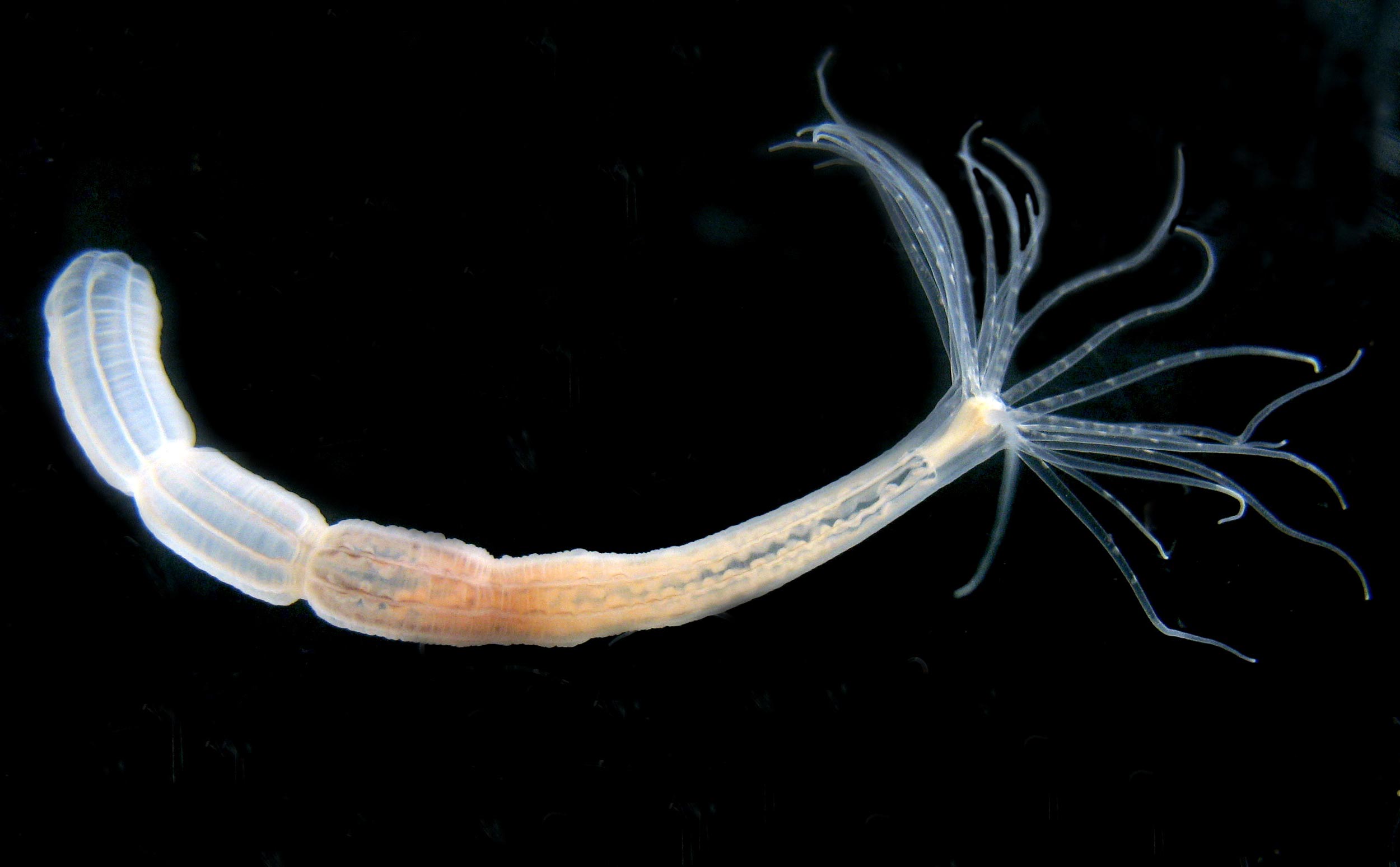
    Single Nematostella Polyp
    Scientists have found stem cells in sea anemones that could explain their seemingly eternal life, a discovery that might also impact our understanding of human aging and disease. (A single Nematostella polyp.) Credit: Yulia Kraus

    Researchers have discovered cells in a sea anemone that might explain its potential immortality. These cells, regulated by ancient genes, offer insights into regeneration and aging processes that could illuminate human health and longevity.

    The study reveals how these genes, active in humans for forming reproductive cells, also confer regenerative abilities on cnidarians, a group of animals including sea anemones.

    Discovering Immortality in Sea Anemones

    The sea anemone Nematostella vectensis is potentially immortal. Using molecular genetic methods, developmental biologists led by Ulrich Technau from the University of Vienna have now identified possible candidates for multipotent stem cells in the sea anemone for the first time. These stem cells are regulated by evolutionary highly conserved genes, which in humans are usually only active in the formation of egg and sperm cells, but give ancient animal phyla such as cnidarians a high degree of regenerative capacity to even escape aging. The results are currently being published in Science Advances and could also provide insights into the human aging process in the future.

    “We live as long as our stem cells” is a somewhat bold but essentially accurate statement. Stem cells contribute to the constant renewal of various cells and tissues in humans, e.g. blood cells, skin, or hair. If stem cells lose this ability or their number decreases in the course of life, the body ages or develops diseases. Stem cells are therefore of great interest for biomedical research.
    Sea Anemone Nematostella vectensis Laser Scanning Microscope Picture
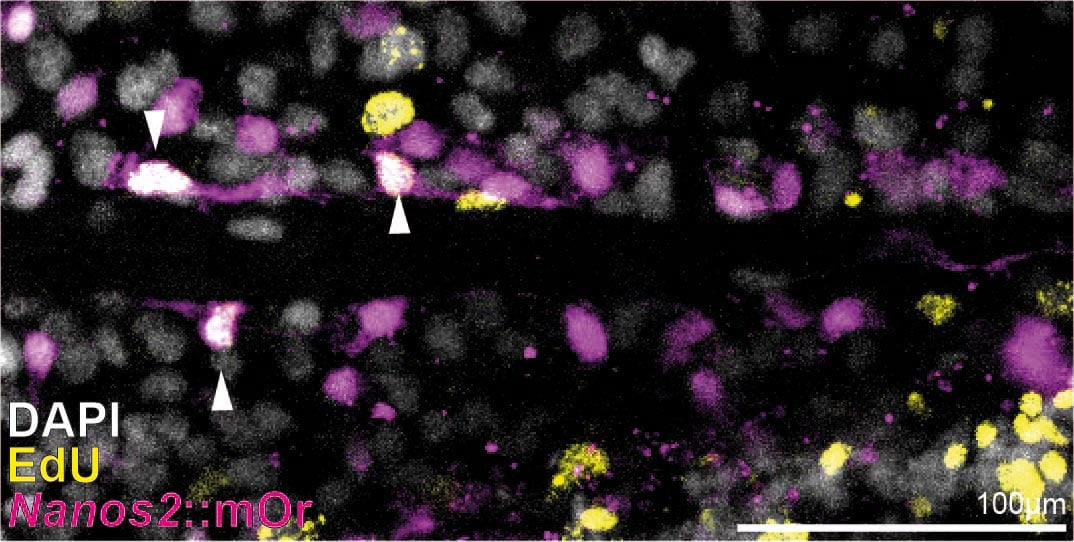
    Laser scanning microscope picture of the body of the sea anemone Nematostella vectensis.The red fluorscence (Nanos2) marks the transgenic putative stem cells, white (DAPI) are all cell nuclei and yellow (EdU) those cells that are actively engaged in DNA-synthesis, hence in the cell cycle like some of the stem cells. Credit: Andreas Denner and Ulrich Technau

    Regeneration in the Animal Kingdom

    While humans and most vertebrates can only regenerate parts of certain organs or limbs, other animal groups have far stronger regeneration mechanisms. This ability is made possible by pluripotent or multipotent stem cells, which can form (differentiate) almost all cell types of the body. The sea anemone Nematostella vectensis is also highly regenerative: it can reproduce asexually by budding and also shows no signs of aging, which makes it an interesting subject for stem cell research. However, researchers have not yet been able to identify any stem cells in these animals.

    Using the new “Single Cell Genomics” method, Technau and his team could identify cells of a complex organism based on their specific transcriptome profiles and determine from which stem cells they have developed. “By combining single-cell gene expression analyses and transgenesis, we have now been able to identify a large population of cells in the sea anemone that form differentiated cells such as nerve cells and glandular cells and are therefore candidates for multipotent stem cells,” explains first author Andreas Denner from the University of Vienna. They have remained undiscovered until now due to their tiny size.

    Gene Conservation Across Species

    These potential stem cells express the evolutionarily highly conserved genes nanos and piwi, which enable the development of germ cells (sperm and egg cells) in all animals, including humans. By specifically mutating the nanos2 gene using the CRISPR gene scissors, the scientists were also able to prove that the gene is necessary for the formation of germ cells in sea anemones. It has also been shown in other animals that this gene is essential for the production of gametes.

    This proves that this gene function emerged around 600 million years ago and has been preserved to this day. In future studies, Ulrich Technau and his team now want to investigate which special properties of the sea anemone’s stem cells are responsible for its potential immortality.

    Reference: “Nanos2 marks precursors of somatic lineages and is required for germline formation in the sea anemone Nematostella vectensis” by Andreas Denner, Julia Steger, Alexander Ries, Elizaveta Morozova-Link, Josefine Ritter, Franziska Haas, Alison G. Cole and Ulrich Technau, 16 August 2024, Science Advances.
    DOI: 10.1126/sciadv.ado0424

    Never miss a breakthrough: Join the SciTechDaily newsletter.
    Follow us on Google and Google News.

    Aging Anti-Aging Longevity Marine Biology Popular Regenerative Biology Stem Cells University of Vienna
    Share. Facebook Twitter Pinterest LinkedIn Email Reddit

    Related Articles

    Unusual “Time-Travel” Creature Can Age in Reverse, Astonishing Scientists

    Unlocking Immortality: T Cells as the New Fountain of Youth

    Turning Back the Clock: Genetic Engineers Rewire Cells for an 82% Increase in Lifespan

    New Potential for Reversing Aging: Scientists Discover Changes in Aging Stem Cells

    Life-Extending Effects: How Serotonin, Dopamine, and the Smell of Food Affect Aging

    Scientists Discover Small Proteins Regulate the Aging Process

    Microbes Turn Back the Clock: New Research Discovers Their Potential To Reverse Aging in the Brain

    Scientists Develop New Gene Therapy Strategy to Delay Aging and Extend Lifespan

    Synergistic Cellular Pathways Identified That Extend Lifespan by 500%

    Leave A Reply Cancel Reply

    • Facebook
    • Twitter
    • Pinterest
    • YouTube

    Don't Miss a Discovery

    Subscribe for the Latest in Science & Tech!

    Trending News

    Scientists Finally Uncover How a “Forever Chemical” Causes Birth Defects

    Scientists Uncover the Earliest Brain Changes That May Predict Alzheimer’s Decades Before Symptoms

    Surprising New Study Challenges a Century-Old Theory of Habit Formation

    Scientists Turn Seawater Into Drinking Water Without Toxic Brine

    Vitamin D Drug Shows Surprising Promise Against One of the Deadliest Cancers

    NASA’s X-59 Sonic Boom Killer Is Ready for Its Biggest Test Yet

    The Best Exercise Combination for Longevity, According to a 30-Year Study

    Popular Weight-Loss Drug Found To Slow Biological Aging in Landmark Human Trial

    Follow SciTechDaily
    • Facebook
    • Twitter
    • YouTube
    • Pinterest
    • Newsletter
    • RSS
    SciTech News
    • Biology News
    • Chemistry News
    • Earth News
    • Health News
    • Physics News
    • Science News
    • Space News
    • Technology News
    Recent Posts
    • The Probiotic Breakthrough for Natural Anxiety Relief and Better Mental Health
    • Animal vs. Plant Protein: Scientists Found a Surprising Nutritional Difference
    • Tiny Genetic Change Turns Female Mice Into Males, Scientists Discover
    • Scientists Discover Strange New Spider Species That Disguises Itself as a Fungus
    • This Simple Drink Could Help Calm the Inflammation Behind Many Diseases
    Copyright © 1998 - 2026 SciTechDaily. All Rights Reserved.
    • Science News
    • About
    • Contact
    • Editorial Board
    • Privacy Policy
    • Terms of Use

    Type above and press Enter to search. Press Esc to cancel.