
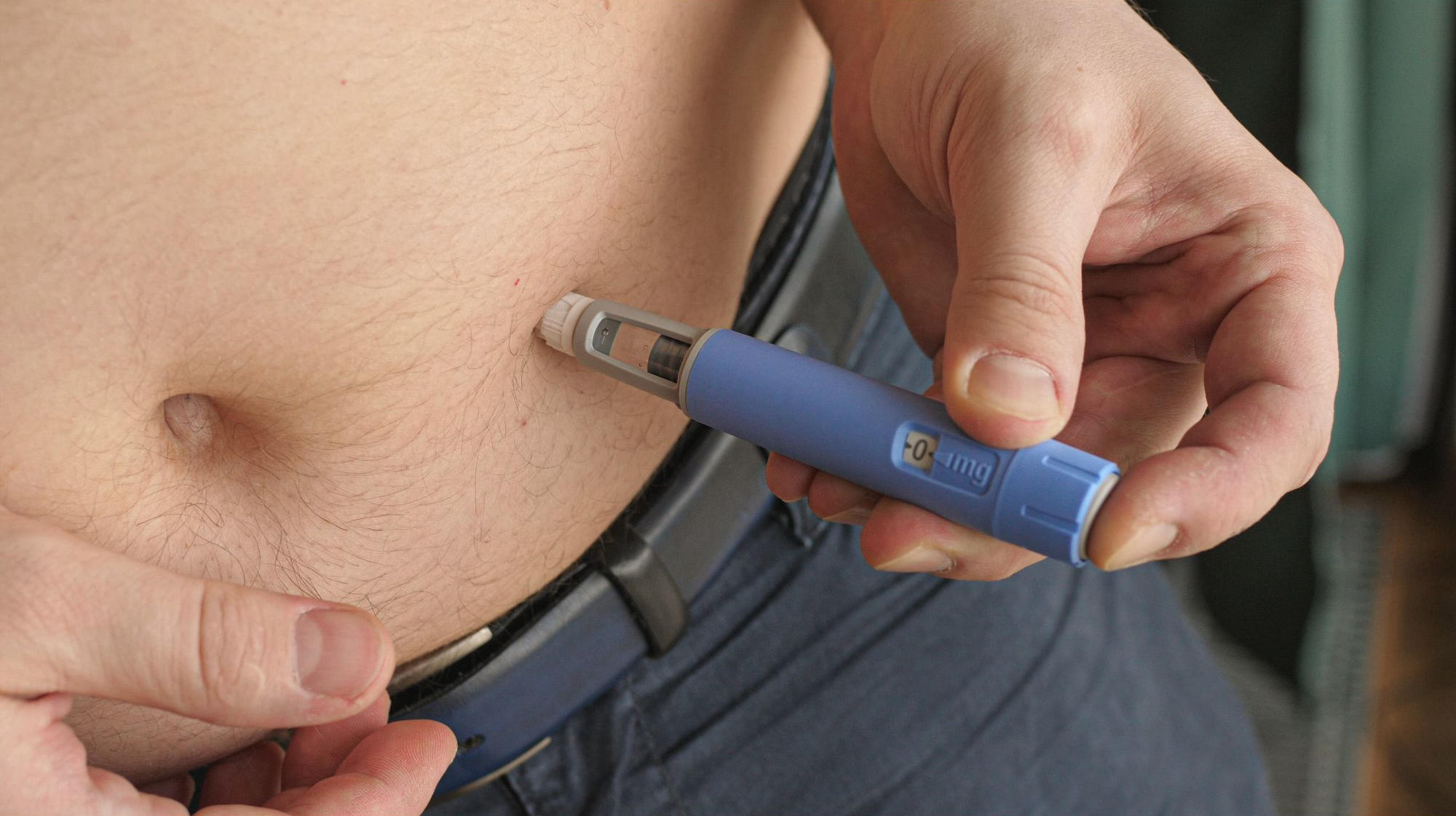
Ozempic’s surge in popularity for weight loss has sparked new concerns over its potential effects on muscle mass and strength.
In mouse studies, the drug reduced lean mass primarily by shrinking organs like the liver rather than skeletal muscle. However, researchers found some muscles weakened even without shrinking, raising questions about functional loss, especially in older adults.
Side Effects of Ozempic and Lean Mass Loss
The widely used diabetes and weight-loss medication Ozempic has seen a rapid rise in popularity, and with it, mounting questions about its potential side effects. One concern is the reduction of “lean mass” (body weight that is not fat), which has led to speculation that the drug could be lowering muscle mass and strength.
A recent study in mice found that muscle size did not decrease as much as expected, yet some muscles still became weaker. This finding underscores the need for clinical trials to better understand the drug’s full impact in people.
“If we want to really help the individuals who may be losing muscle mass, then we need to know that they’re actually losing muscle mass,” says Katsu Funai, PhD, associate professor of nutrition and integrative physiology in the University of Utah College of Health and the senior author on the study. “We have data in mice that suggest that things are not as straightforward as they might seem.”
The results appear in Cell Metabolism.

Weight Loss Effects Beyond Muscles
In the mouse study, Ozempic use led to a roughly 10% drop in lean mass. Most of this loss came not from skeletal muscle, but from other tissues such as the liver, which decreased in size by nearly half. Researchers note that more work is needed to determine if these organ changes also occur in humans and whether they carry any health risks.
“Loss of mass in metabolically active organs, such as the liver, is expected as part of healthy weight loss,” says Ran Hee Choi, PhD, research instructor in nutrition and integrative physiology at U of U Health and co-first author on the study. In both mice and humans, weight gain and loss can affect the size of organs like the liver without affecting their function. “It’s unlikely that the observed lean mass loss represents a serious adverse effect,” says Takuya Karasawa, PhD, postdoctoral researcher in the U of U Molecular Medicine Program and co-first author on the study.
Some skeletal muscles did shrink, on average by about 6%, but this was not enough to account for the overall drop in lean mass. Other muscles remained the same size.
The researchers point out that some muscle reduction may simply be a return to normal levels. When a person gains fat, their skeletal muscle often grows as well because more muscle is needed to move the extra weight. Losing fat can therefore also reduce muscle size without harming day-to-day physical function.
Muscle Strength Decline Despite Size Maintenance
Interestingly, when the researchers tested the amount of force the mice’s muscles could exert, they found that, for some muscles, strength decreased as the mice lost weight, even when the size of the muscle stayed roughly the same. For other muscles, strength was unchanged. It’s unknown how weight loss drugs affect this balance in people, the researchers say.
A potential loss of strength when taking Ozempic may be of particular concern for adults over the age of 60, who are at higher baseline risk for muscle loss and reduced mobility. “The loss of physical function is a strong predictor of not just quality of life but longevity,” Funai adds.
Caution Against Direct Human Extrapolation
The researchers caution against extrapolating their results directly into humans, because mice and humans gain and lose weight in different ways. In people, obesity is associated with lower physical activity, but mice don’t tend to become less active when they gain weight. And the mice in this study became overweight because they ate a high-fat diet, whereas people become overweight for a wide variety of reasons that include genetics, diet, sleeping patterns, and age.
Instead of drawing a one-to-one parallel with humans, the researchers say their results emphasize the need for more clinical studies. “There remains a significant need for validation in humans, especially concerning muscle strength,” Karasawa says.
A Call for Future Studies on Muscle Strength
Funai adds that clinical trials should check for changes in muscle strength, not just for Ozempic, but also for future weight-loss drugs. “There are many additional weight loss drugs that are in clinical trials and coming out in the next three to five years,” Funai says. “But with all those clinical trials, if they’re interested in measuring lean mass loss, they need to consider physical function.”
“Our findings are really interesting, but this is a preclinical model,” he adds. “We need these data in people.”
Reference: “Unexpected effects of semaglutide on skeletal muscle mass and force-generating capacity in mice” by Takuya Karasawa, Ran Hee Choi, Cesar A. Meza, Subhasmita Rout, Micah J. Drummond, Amandine Chaix and Katsuhiko Funai, 5 August 2025, Cell Metabolism.
DOI: 10.1016/j.cmet.2025.07.004
This study was supported by the National Institutes of Health, including the National Institute of Diabetes and Digestive and Kidney Diseases (grant numbers DK107397 and DK127979), the National Institute of General Medical Sciences (grant number GM144613), the National Institute on Aging (grant numbers AG074535, AG065993, AG076075, and AG086328), and the National Cancer Institute (grant number CA286584), as well as by the Grant-in-aid for Japan Society for Promotion of Science Fellows (grant number 24KJ2039). Content is solely the responsibility of the authors and does not necessarily represent the official views of the National Institutes of Health.
Never miss a breakthrough: Join the SciTechDaily newsletter.
Follow us on Google and Google News.