
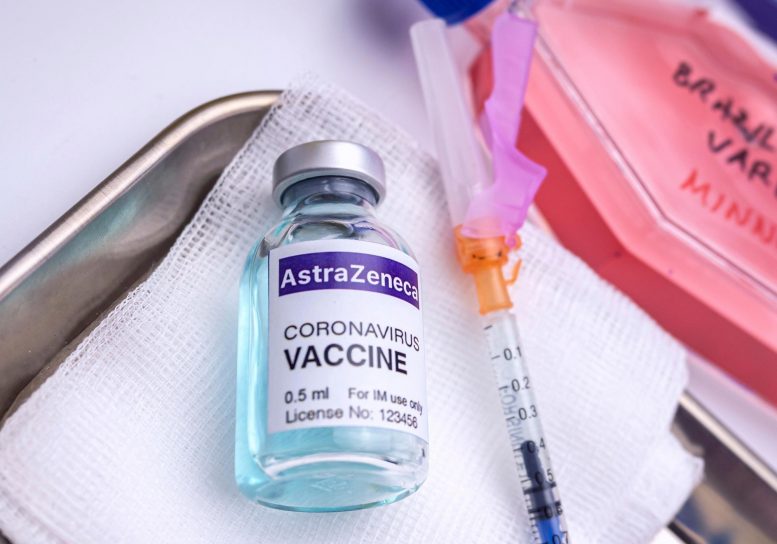
Large-Scale Clinical Trial Validates AstraZeneca Vaccine
Results from a large clinical trial in the United States and South America indicate that AstraZeneca’s COVID-19 vaccine, AZD1222, is well-tolerated and protects against symptomatic COVID-19 disease, including severe disease or hospitalization. The independent Data and Safety Monitoring Board (DSMB) overseeing the trial identified no safety concerns related to the vaccine. The United Kingdom-based global biopharmaceutical company AstraZeneca developed the vaccine and led the trial as regulatory sponsor.
The National Institute of Allergy and Infectious Diseases (NIAID), part of the National Institutes of Health, and the Biomedical Advanced Research and Development Authority (BARDA), part of the U.S. Department of Health and Human Services’ Office of the Assistant Secretary for Preparedness and Response, provided funding support for the trial through the federal COVID-19 response.
The placebo-controlled trial began in August 2020. The analysis is based on results from 32,449 adult volunteer participants enrolled across 88 sites in the United States, Chile, and Peru. One participant received a placebo for every two participants who received AZD1222, resulting in approximately 20,000 people receiving the investigational vaccine. The vaccine was administered as two doses of 5 x10¹⁰ viral particles four weeks apart.
AZD1222 demonstrated statistically significant vaccine efficacy of 78.9% in preventing symptomatic COVID-19 and 100% efficacy in preventing severe or critical disease and hospitalization. In participants 65 years and older, who comprised 20% of the trial population, vaccine efficacy against symptomatic COVID-19 was 79.9%.
The DSMB conducted a review of thrombotic events (blood clots) and cerebral venous sinus thrombosis (CVST) among participants and found no increased risk of these conditions in vaccinated participants.
Approximately 79% of participants were white, 22% were Hispanic, 8% were Black or African American, 4% were Native American, including American Indian/Alaska Native participants residing in the U.S., and 4% were Asian. Vaccine efficacy was consistent across ethnicity. Approximately 60% of participants of any age had underlying health conditions associated with an increased risk of developing severe COVID-19, such as diabetes, severe obesity, or cardiac disease.
Authorization and guidelines for use of the vaccine in the United States will be determined by the Food and Drug Administration and Centers for Disease Control and Prevention after a thorough review of the data by independent advisory committees. Today’s results build on data from multiple clinical trials of AZD1222 conducted worldwide. The World Health Organization has recommended use of the vaccine for prevention of COVID-19 in adults and it is currently available for use in more than 70 countries. The European Commission has granted a conditional marketing authorization for the vaccine in the European Union.
The current trial defined symptomatic COVID-19 as having SARS-CoV-2 infection and at least one respiratory symptom (pneumonia, shortness of breath or low oxygen requiring supplemental oxygen) or at least two of the following symptoms: fever, new or worsening cough, muscle pain, fatigue, vomiting and/or diarrhea, and loss of smell and/or loss of taste. Severe or critical COVID-19 was defined as having SARS-CoV-2 infection and any of the following: clinical signs of severe systemic illness, respiratory failure (defined as needing high-flow oxygen, noninvasive ventilation, mechanical ventilation or extracorporeal membrane oxygenation, known as ECMO), evidence of shock, significant acute renal, hepatic or neurologic dysfunction, or admission to an intensive care unit or death.
AZD1222 was developed by Oxford University’s Jenner Institute and Oxford Vaccine Group and then licensed to AstraZeneca for further development. It is a viral vector-based vaccine that uses a safe, non-replicating chimpanzee adenovirus to deliver the genetic code of a protein found on the surface of SARS-CoV-2 (called the spike protein) to human cells so that the cells can make the protein. Adenoviruses can cause the common cold in humans, but the virus has been modified so that it cannot replicate and cause disease. The technology is based on a vaccine that Oxford previously was developing for Middle East respiratory syndrome coronavirus (MERS-CoV). AZD1222 can be stored, transported, and handled at 36 to 46 degrees Fahrenheit or 2 to 7 degrees Celsius (normal refrigeration temperatures) for at least six months.
A DSMB formed by NIH monitored the trial to ensure participant safety and the validity and integrity of the data. The same DSMB is overseeing other ongoing Phase 3 vaccine clinical trials as part of the federal COVID-19 response effort. Representatives from AstraZeneca, NIAID and BARDA receive recommendations from the DSMB.
Sites that are part of the COVID-19 Prevention Network (CoVPN) enrolled volunteers in the clinical trial. The CoVPN is composed of existing NIAID-supported clinical research networks with infectious disease expertise and was designed for efficient and thorough evaluation of vaccine candidates and monoclonal antibodies for the prevention of COVID-19. CoVPN investigators Ann R. Falsey, M.D., professor of medicine, University of Rochester School of Medicine in New York, and Magdalena E. Sobieszczyk, M.D., associate professor of medicine at Columbia University Medical Center in New York, are coordinating investigators for the trial.
Participants will continue to be followed as part of the trial for approximately two years following their second injection. More details about the trial are available at PreventCovid.org and at clinicaltrials.gov under identifier NCT04516746.
Never miss a breakthrough: Join the SciTechDaily newsletter.
Follow us on Google and Google News.