
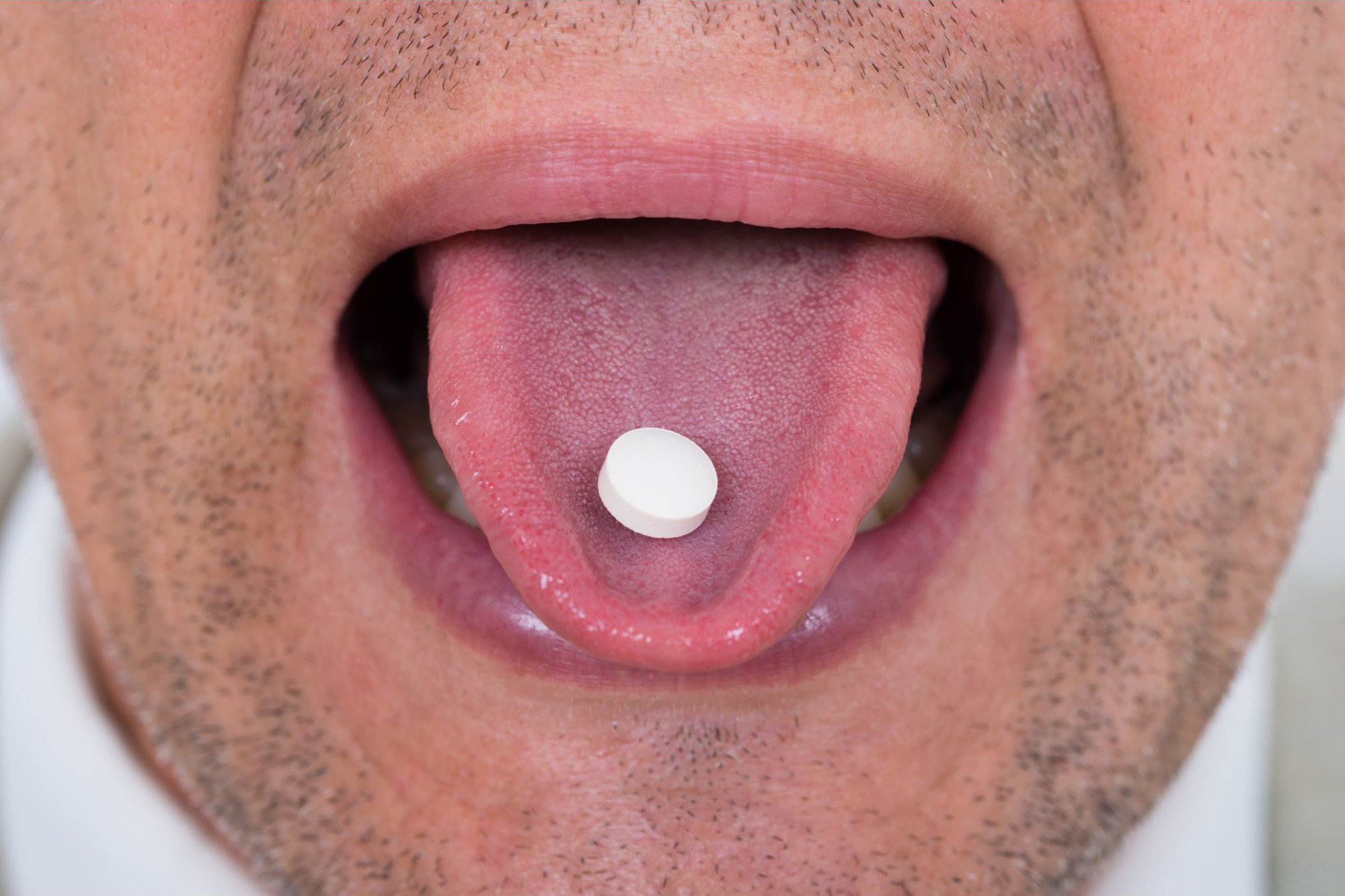
The procedure for taking essential yet bitter medicine looks promising.
Many people, particularly children and the elderly, struggle with swallowing pills. Liquid medications often taste extremely bitter, leading to rejection. In short, strong bitterness is a major reason why individuals, especially children, avoid taking their medications, risking their health and sometimes their lives.
A team of scientists at the Monell Chemical Senses Center has discovered the first temporary, universal taste blocker effective in humans. Their research is published in the British Journal of Pharmacology.
“Remarkably, and unlike our experience with blockers of bitter taste receptors, the taste-nerve blocker we tested worked for every subject and every bitter compound we tested,” said first author Linda J. Flammer, PhD, Monell Senior Research Associate and Director of the Corporate Partners Program. “I have never seen this before.”
Past Efforts and the Novel Approach
Until now, efforts to block bitterness in foods and medicines have focused on finding blockers for bitter taste receptors on the tongue. Because different medications activate distinct sets of bitter taste receptors, targeting specific receptors may only suppress bitterness for certain, but not all, bitter-tasting compounds. “There is a clear need to develop bitter blockers that are able to suppress the bitterness of many medications,” said co-author Carol Christensen, PhD, Monell Alumnus Faculty Member. “Although humans have 25 different bitter receptors, our ongoing research suggests only a handful of bitter receptors may be responsible for most of the bitterness of medicines.”
Taste cells in the mouth that express the TAS2R family of taste receptors are stimulated by sweet, bitter, and savory compounds, and transmit signals to nerve fibers by releasing adenosine triphosphate (ATP), a cell’s main source of energy. In turn, ATP activates a receptor called P2X2/P2X3 on the receiving nerve cells. These nerves send information to the brain about the taste of foods and medications.
The team used an inhibitor of P2X2/P2X3 receptors, called AF-353, to block taste-nerve transmission and reduce the bitterness signal caused by medications and other taste compounds. Several blockers of P2X2/P2X3 receptors have been identified, with some tested in clinical trials to treat chronic cough; however, a side effect in these trials was taste disturbance. The Monell team capitalized on the “side effect” of these compounds to create an oral treatment that enhances the palatability of medicines.
Clinical Implications and Findings
A key finding of the study is that rinsing the mouth with AF-353 significantly reduced the bitterness of two important medicines that treat common chronic diseases: Praziquantel for parasites and Tenofovir Alafenamide (TAF) for hepatitis B and HIV.
“AF-353 is the first universal bitter taste blocker that has been identified,” said Monell Faculty Member Peihua Jiang, PhD. “In addition to bitter taste, it also affects savory, salt, sweet, and sour tastes. However, AF-353 only blocks taste. Other oral sensations like the tingle from carbonation were not affected.”
The researchers conducted both human sensory taste testing and mouse behavioral experiments to determine the breadth, strength, and duration of the blocking effects. The results of the human and rodent studies were similar in the breadth and duration of AF-353’s action.
The topical application of AF-353 directly into the mouth may improve compliance of many important medications, especially those that are life-saving for children in developing countries. “In people, the blocking effect lasted 60 to 90 minutes, when their taste was restored to normal,” said Flammer.
“We are now looking for taste blockers that act faster and allow taste to return to normal sooner,” said Jiang.
Reference: “Topical application of a P2X2/P2X3 purine receptor inhibitor suppresses the bitter taste of medicines and other taste qualities” by Linda J. Flammer, Hillary Ellis, Natasha Rivers, Lauren Caronia, Misgana Y. Ghidewon, Carol M. Christensen, Peihua Jiang, Paul A. S. Breslin and Michael G. Tordoff, 14 May 2024, British Journal of Pharmacology.
DOI: 10.1111/bph.16411
This work was supported by the Bill & Melinda Gates Foundation (INV-037008 and INV-042630). The behavioral work was performed at the Monell Behavioral and Physiological Phenotyping Core, which is supported, in part, by the National Institutes of Health (NIH) NIDCD Core Grant 1P30DC011735-01. Research infrastructure was provided in part by NIH Grant G20OD020296.
Never miss a breakthrough: Join the SciTechDaily newsletter.
Follow us on Google and Google News.
1 Comment
Taste blockers have been patented by McDonald’s a long time ago…