
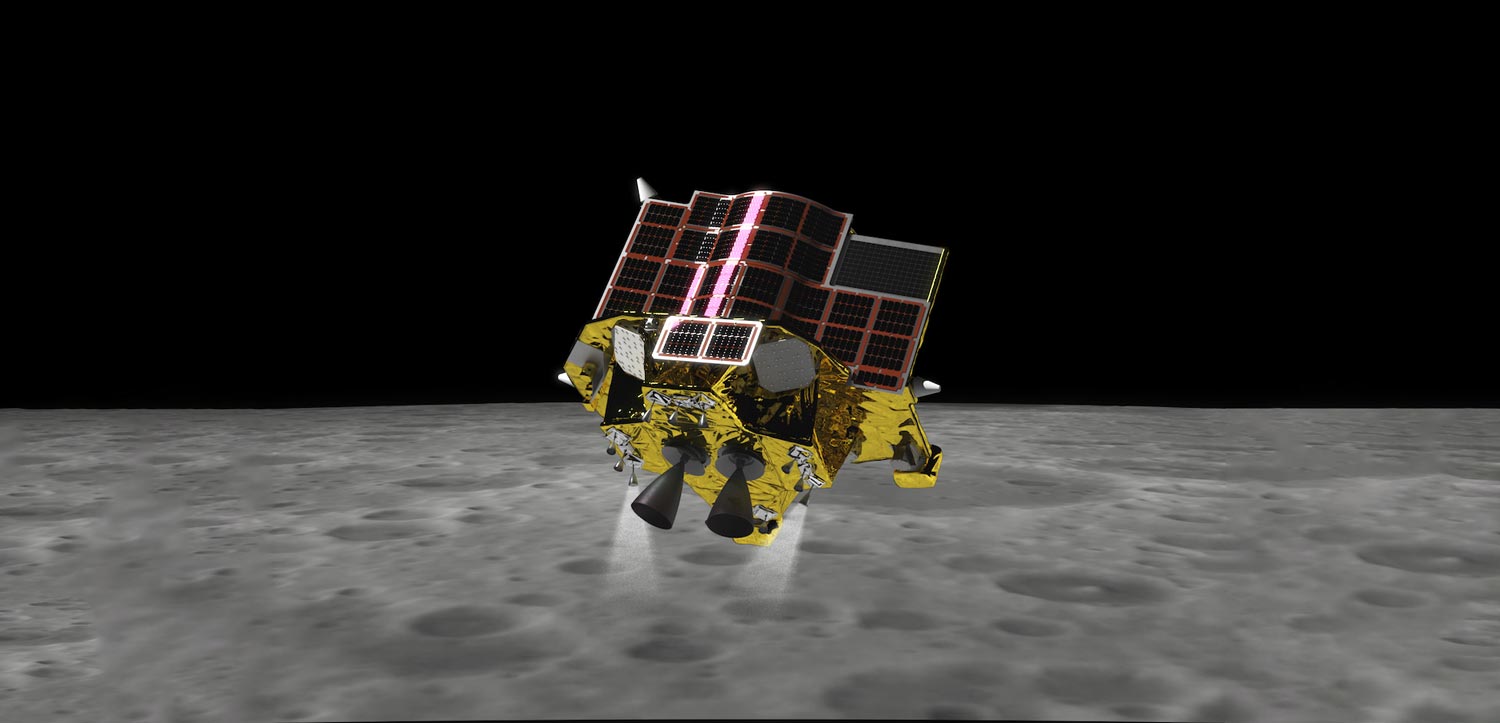
Japan’s SLIM lunar landing highlights its advanced space technology and global leadership in space exploration, despite challenges, enhancing its position in international lunar research and collaboration.
Japan landed its Smart Lander for Investigating the Moon, or SLIM, craft on the surface of the Moon on January 20, 2024. Despite a power issue with the lander, the event holds both political and technical importance. It’s Japan’s first lunar landing – making it only the fifth country in the world to successfully land on the Moon. This is a significant achievement and solidifies Japan’s position as a leader in space technology.
While the craft landed successfully on the lunar surface and deployed its rovers, SLIM’s solar cells were not functioning properly – meaning that the craft could likely only operate for a few hours.
I’m a scholar of international affairs who studies space. Like NASA and other space agencies, the Japan Aerospace Exploration Agency, or JAXA, wants to advance research and technology by demonstrating new techniques and collecting scientific data. The landing is also a part of something bigger – a growing global interest in lunar activity.
Precision technology
Japan’s achievement isn’t only symbolic – Japan is demonstrating a number of new technologies with the lander. The name, Smart Lander for Investigating the Moon, refers to the spacecraft’s new precision-landing technology.
This technology could assist future landings by allowing spacecraft to land in relatively small areas amid rocky or uneven terrain, rather than having to find large clearings. This ability will be particularly important in the future as countries focus on very specific areas of interest at the lunar south pole.
SLIM’s landing technology allowed it to detect and avoid potential obstacles.
The lander also carried two small rovers, each of which will demonstrate a new technology for moving on the Moon.
Lunar Excursion Vehicle 1 includes a camera, as well as scientific equipment, and uses a hopping mechanism to maneuver on the Moon.
Lunar Excursion Vehicle 2, developed in a partnership among government, industry, and academia, is a sphere small enough to fit in the palm of your hand. Once on the surface, its two halves separate slightly, allowing it to roll around.
SLIM is designed to land within a 328-foot (100-meter) zone, far smaller than previous lunar landers which have had landing zones spanning multiple kilometers.
SLIM used a vision-based navigation system that took images of the lunar surface. Its system rapidly compared these images to crater patterns on lunar maps that JAXA developed with data from previous missions.
As countries identify areas that are most likely to hold useful resources, such as water in the form of ice, precision landing technology will allow agencies to avoid nearby hazards and reach these areas without incident.
International relations back on Earth
There is a geopolitical element to these activities. China, India and Japan – the three nations that have successfully landed on the Moon since 2000 – engage in regional competition across a number of areas, including space. In addition to regional considerations, these accomplishments help to establish nations as leaders on a global scale – capable of something that few nations have ever done.
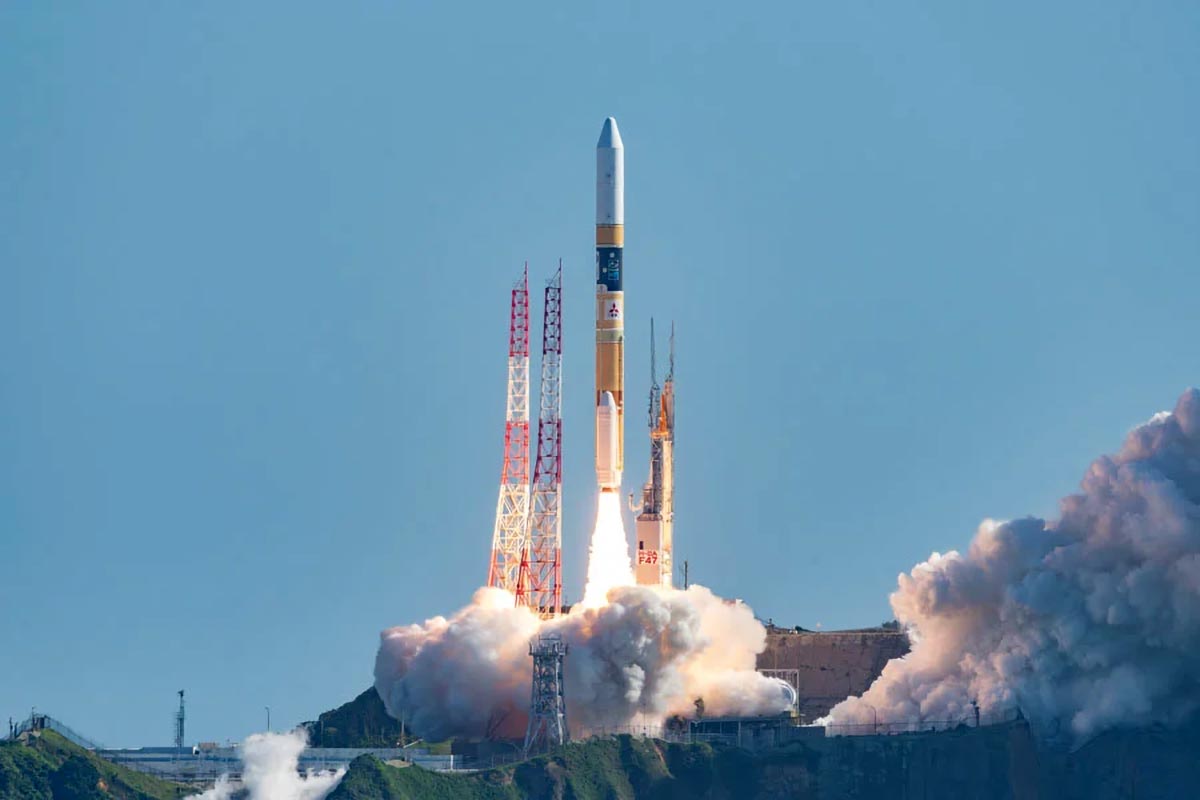
Japan’s launch comes only six months after India’s Moon landing and just weeks after a failed attempt by a U.S. company, Astrobotic.
Both Russia and the private company iSpace made unsuccessful landing attempts in 2023. Japan’s success in landing on the Moon – even with solar panel issues shortening the timeline for the mission – demonstrates that JAXA is a major player in this global endeavor.
Despite recent setbacks, such as NASA announcing delays to its next Artemis mission, the U.S. is still a clear leader in space and lunar exploration. NASA has multiple spacecraft orbiting the Moon right now, and it’s already successfully launched the SLS rocket, which is capable of taking humans back to the Moon.
NASA is developing very large and complex systems internally – like the Gateway space station, planned to orbit near the Moon, and the infrastructure for the Artemis human Moon missions. It’s not uncommon for these large and complex efforts to experience some delays.
NASA has also turned many smaller-scale efforts over to commercial entities lately – like in the Commercial Lunar Payload Services program that supported Astrobotic’s attempt. This is a new approach that involves some risk, but provides the opportunity for commercial innovation and growth of the lunar economy while giving NASA the ability to focus on big, complex aspects of the mission.
With regard to the Moon, JAXA has partnered with the U.S. and taken on a very important component of the Artemis missions – the development of a pressurized lunar rover. This is a new and complex technology that will be critical to human missions on the Moon in the coming years.
Written by Mariel Borowitz, Associate Professor of International Affairs, Georgia Institute of Technology.
Adapted from an article originally published in The Conversation.
Never miss a breakthrough: Join the SciTechDaily newsletter.
Follow us on Google and Google News.