
Close Menu
    Facebook X (Twitter) Instagram
    SciTechDaily
    • Biology
    • Chemistry
    • Earth
    • Health
    • Physics
    • Science
    • Space
    • Technology
    Facebook X (Twitter) Pinterest YouTube RSS
    SciTechDaily
    Home»Space»Juno Spacecraft Image Shows Crescent Jupiter with the Great Red Spot
    Space

    Juno Spacecraft Image Shows Crescent Jupiter with the Great Red Spot

    By SciTechDailyJanuary 16, 2017No Comments1 Min Read
    Facebook Twitter Pinterest Telegram LinkedIn WhatsApp Email Reddit
    Share
    Facebook Twitter LinkedIn Pinterest Telegram Email Reddit
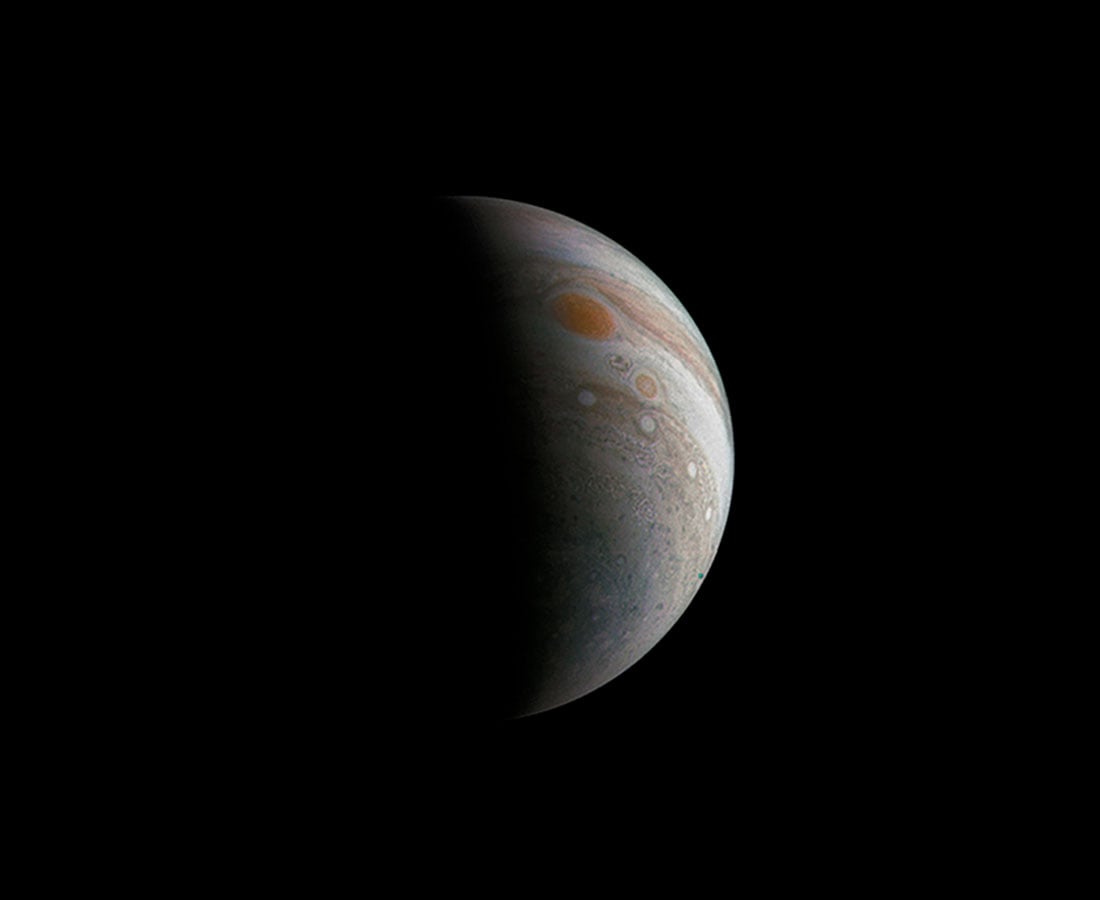
    Crescent Jupiter with the Great Red Spot
    Jupiter and the iconic Great Red Spot. The image also shows a series of storms shaped like white ovals, known informally as the ‘string of pearls.’ Below the Great Red Spot, a reddish long-lived storm known as Oval BA is visible. Credit: NASA/JPL-Caltech/SwRI/MSSS/Roman Tkachenko

    Using data from Juno’s JunoCam instrument, citizen scientist Roman Tkachenko created this image of a crescent Jupiter and the iconic Great Red Spot.

    The image also shows a series of storms shaped like white ovals, known informally as the ‘string of pearls.’ Below the Great Red Spot, a reddish long-lived storm known as Oval BA is visible.

    The image was taken on December 11, 2016 at 2:30 p.m. PST (5:30 p.m. EST), as the Juno spacecraft performed its third close flyby of Jupiter. At the time the image was taken, the spacecraft was about 285,100 miles (458,800 kilometers) from the planet.

    Never miss a breakthrough: Join the SciTechDaily newsletter.
    Follow us on Google and Google News.

    Astronomy Juno Spacecraft Jupiter Planetary Science Popular
    Share. Facebook Twitter Pinterest LinkedIn Email Reddit

    Related Articles

    Juno Views a Storm on the Southern Edge of Jupiter’s Northern Polar Region

    Juno Spacecraft Completes Flyby of Jupiter and Its Great Red Spot

    Astronomers Review First Science Results from NASA’s Juno Mission

    Juno Mission Prepares for Jupiter Flyby

    Juno Images Provide an Unprecedented View of Jupiter

    A Billion or More Jupiter-Like Worlds Could Be Orbiting Stars in the Milky Way

    First In-orbit View from NASA’s Juno Spacecraft

    Juno Spacecraft in Orbit Around Jupiter

    Hubble Telescope Views Vivid Auroras in Jupiter’s Atmosphere

    Leave A Reply Cancel Reply

    • Facebook
    • Twitter
    • Pinterest
    • YouTube

    Don't Miss a Discovery

    Subscribe for the Latest in Science & Tech!

    Trending News

    Don’t Miss: A Brilliant Venus and Glowing Harvest Moon Light Up the Sky

    New Twist on the Einstein Problem Reveals Unexpected Physics

    JWST Captures Stunning Evidence of How Supermassive Black Holes Feed

    Early Exercise May Permanently Change How Much Energy the Body Uses To Move

    New Molecule Wipes Out Aggressive Lymphoma Tumors in Mice in Just 11 Days

    The Human Family Tree May Need a Major Rewrite

    Scientists Find a Surprising Cancer-Fighting Effect in Dark Sweet Cherries

    New AI Detects Hidden Warning Signs of Solar Eruptions Hours Before They Emerge

    Follow SciTechDaily
    • Facebook
    • Twitter
    • YouTube
    • Pinterest
    • Newsletter
    • RSS
    SciTech News
    • Biology News
    • Chemistry News
    • Earth News
    • Health News
    • Physics News
    • Science News
    • Space News
    • Technology News
    Recent Posts
    • Africa’s Giant Herbivores Were Disappearing Millions of Years Before Humans Could Hunt Them
    • This Utah Mountain Is Hiding Enough Ice To Fill 600 Olympic Pools
    • Vagus Nerve Stimulation Could Unlock the Brain’s Hidden Learning Potential
    • Your Mother’s Age May Leave a Biological Mark That Lasts for Generations
    • Women Who Ate More Antioxidants Had Strikingly Lower Rates of Cervical Cancer
    Copyright © 1998 - 2026 SciTechDaily. All Rights Reserved.
    • Science News
    • About
    • Contact
    • Editorial Board
    • Privacy Policy
    • Terms of Use

    Type above and press Enter to search. Press Esc to cancel.