
Close Menu
    Facebook X (Twitter) Instagram
    SciTechDaily
    • Biology
    • Chemistry
    • Earth
    • Health
    • Physics
    • Science
    • Space
    • Technology
    Facebook X (Twitter) Pinterest YouTube RSS
    SciTechDaily
    Home»Space»Juno Views a Storm on the Southern Edge of Jupiter’s Northern Polar Region
    Space

    Juno Views a Storm on the Southern Edge of Jupiter’s Northern Polar Region

    By SciTechDailyAugust 4, 2017No Comments2 Mins Read
    Facebook Twitter Pinterest Telegram LinkedIn WhatsApp Email Reddit
    Share
    Facebook Twitter LinkedIn Pinterest Telegram Email Reddit
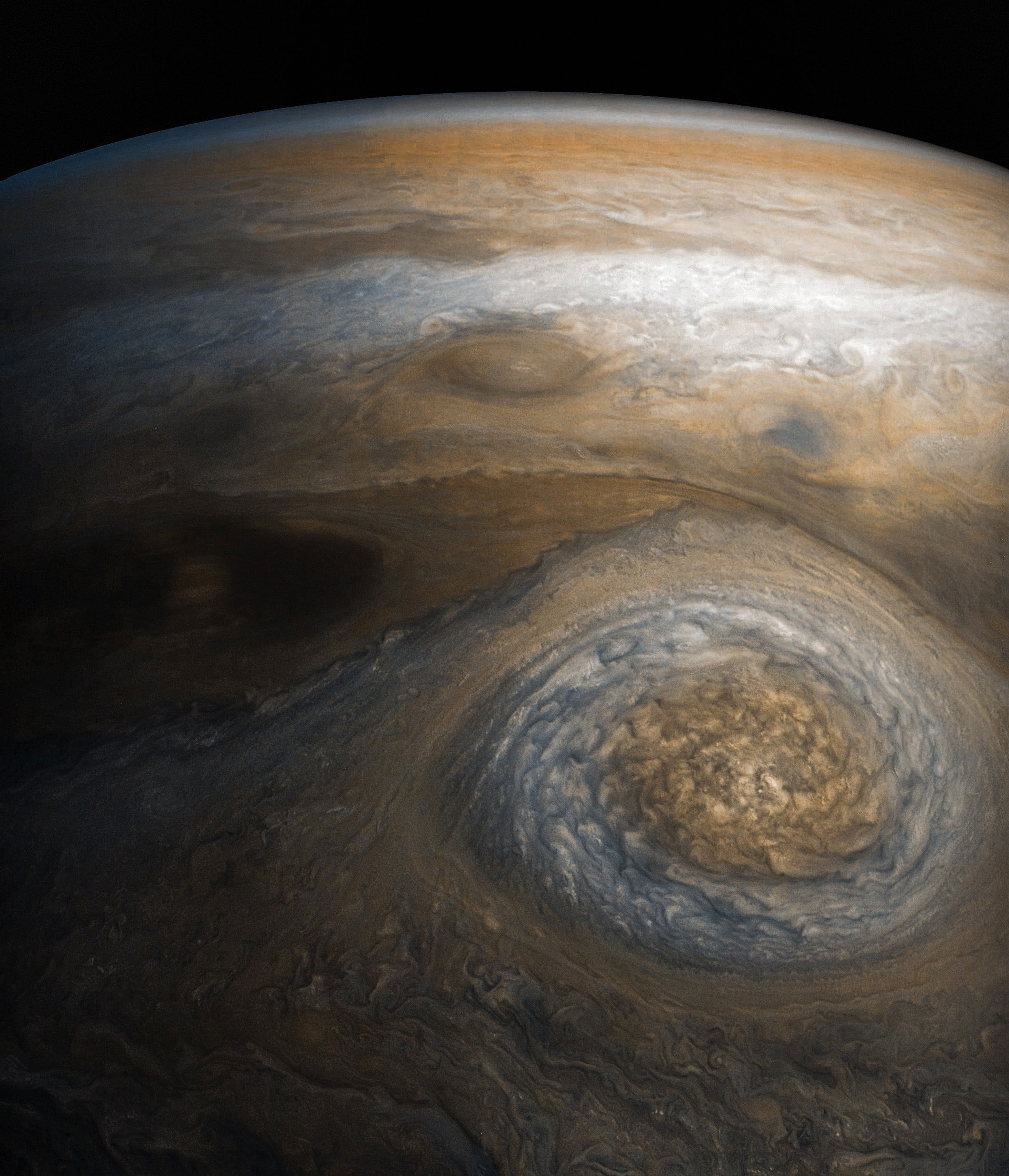
    Juno Spacecraft Views a Storm on Jupiter
    The image shows an anticyclonic storm on Jupiter named North North Temperate Little Red Spot 1 (NN-LRS-1), which has been tracked since at least 1993 and is the third largest anticyclonic oval on the planet. The storm has a pale reddish core and its color varies between red and off-white. Credit: NASA/JPL-Caltech/SwRI/MSSS/Gerald Eichstädt/Seán Doran

    NASA’s Juno Spacecraft viewed a storm at the southern edge of Jupiter’s northern polar region as it performed its seventh close flyby of Jupiter.

    This storm is a long-lived anticyclonic oval named North North Temperate Little Red Spot 1 (NN-LRS-1); it has been tracked at least since 1993, and may be older still. An anticyclone is a weather phenomenon where winds around the storm flow in the direction opposite to that of the flow around a region of low pressure. It is the third largest anticyclonic oval on the planet, typically around 3,700 miles (6,000 kilometers) long. The color varies between red and off-white (as it is now), but this JunoCam image shows that it still has a pale reddish core within the radius of maximum wind speeds.

    Citizen scientists Gerald Eichstädt and Seán Doran processed this image using data from the JunoCam imager. The image has been rotated so that the top of the image is actually the equatorial regions while the bottom of the image is of the northern polar regions of the planet.

    The image was taken on July 10, 2017 at 6:42 p.m. PDT (9:42 p.m. EDT), as the Juno spacecraft performed its seventh close flyby of Jupiter. At the time the image was taken, the spacecraft was about 7,111 miles (11,444 kilometers) from the tops of the clouds of the planet at a latitude of 44.5 degrees.

    JunoCam’s raw images are available for the public to peruse and process into image products at: www.missionjuno.swri.edu/junocam

    Never miss a breakthrough: Join the SciTechDaily newsletter.
    Follow us on Google and Google News.

    Astronomy Juno Spacecraft Jupiter Planetary Science Popular
    Share. Facebook Twitter Pinterest LinkedIn Email Reddit

    Related Articles

    Juno Spacecraft Completes Flyby of Jupiter and Its Great Red Spot

    Astronomers Review First Science Results from NASA’s Juno Mission

    Juno Spacecraft Image Shows Crescent Jupiter with the Great Red Spot

    Juno Mission Prepares for Jupiter Flyby

    Juno Images Provide an Unprecedented View of Jupiter

    A Billion or More Jupiter-Like Worlds Could Be Orbiting Stars in the Milky Way

    First In-orbit View from NASA’s Juno Spacecraft

    Juno Spacecraft in Orbit Around Jupiter

    Hubble Telescope Views Vivid Auroras in Jupiter’s Atmosphere

    Leave A Reply Cancel Reply

    • Facebook
    • Twitter
    • Pinterest
    • YouTube

    Don't Miss a Discovery

    Subscribe for the Latest in Science & Tech!

    Trending News

    Scientists Recreate a Nuclear Fireball and Uncover Fallout’s Hidden Chemistry

    These Tiny Gut Particles Could Be Accelerating Aging Throughout the Body

    Doctors Changed One Thing and Weight Gain Stopped

    Magnetic Fields May Solve a Longstanding Binary Star Mystery

    The Probiotic Breakthrough for Natural Anxiety Relief and Better Mental Health

    Animal vs. Plant Protein: Scientists Found a Surprising Nutritional Difference

    According to Scientists, This Simple Dietary Change Is Linked to Lower Depression Scores

    Researchers Discover a Hidden Vitamin D Problem That Persists Year-Round

    Follow SciTechDaily
    • Facebook
    • Twitter
    • YouTube
    • Pinterest
    • Newsletter
    • RSS
    SciTech News
    • Biology News
    • Chemistry News
    • Earth News
    • Health News
    • Physics News
    • Science News
    • Space News
    • Technology News
    Recent Posts
    • Mini Brain Organoids Expose Hidden Biological Differences in Alzheimer’s Disease
    • Scientists Recommend Doing This To Reduce Anxiety During Pregnancy
    • Scientists Reveal What Happened When 12 People Were Trapped Together in Antarctica for 10 Months
    • Buried for 1.7 Billion Years: These Ancient Fossils May Rewrite the Story of Complex Life
    • NASA Spots Giant Ocean Swell Signaling a Potential El Niño Comeback
    Copyright © 1998 - 2026 SciTechDaily. All Rights Reserved.
    • Science News
    • About
    • Contact
    • Editorial Board
    • Privacy Policy
    • Terms of Use

    Type above and press Enter to search. Press Esc to cancel.