
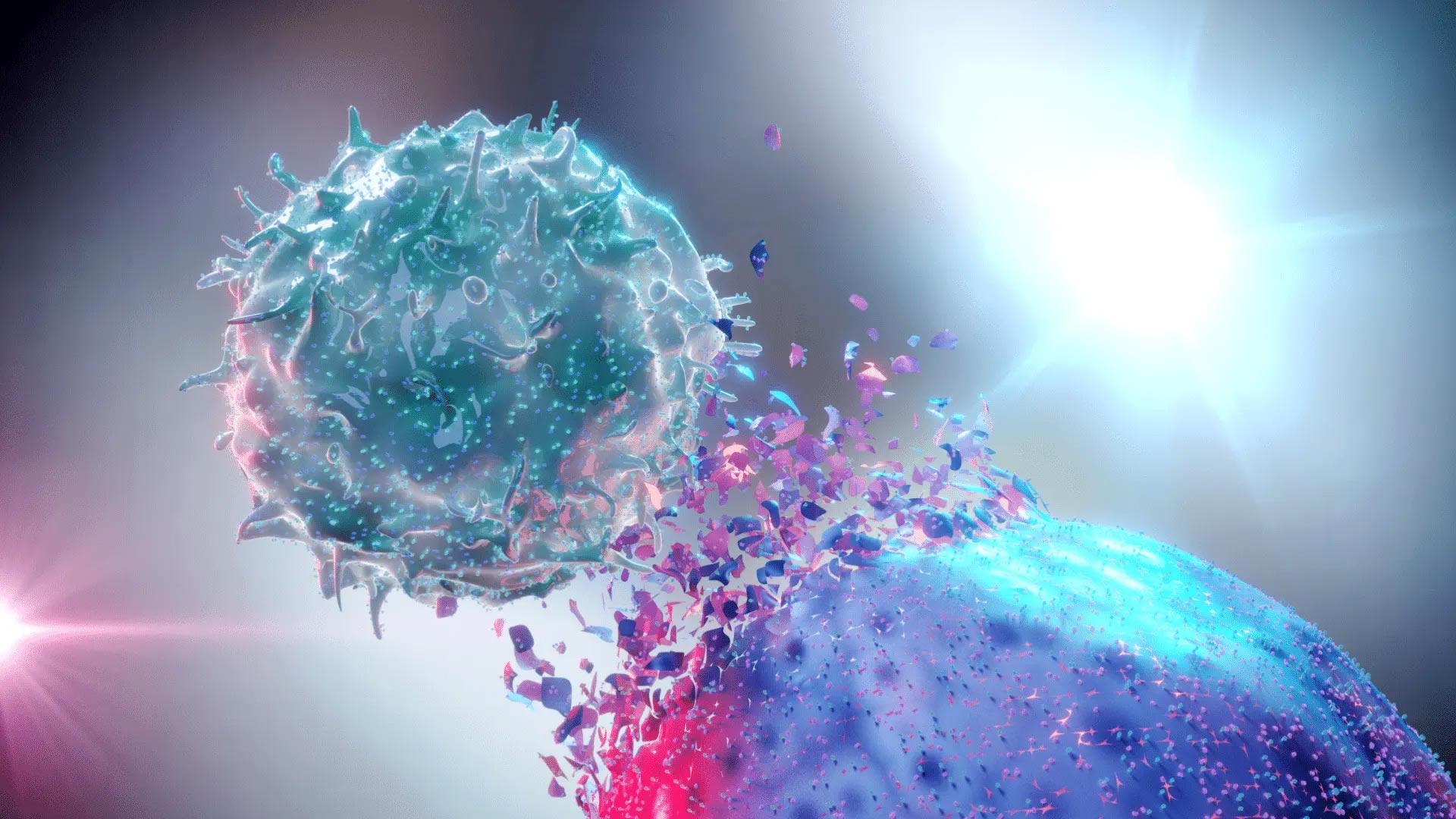
A study on fasting and the ketogenic diet uncovers a newfound weakness in pancreatic tumors, making them more susceptible to an existing cancer drug.
Scientists at UC San Francisco have found a way to eliminate pancreatic cancer in mice by combining a high-fat ketogenic diet with a targeted cancer therapy.
The therapy works by blocking the cancer cells’ ability to metabolize fat, effectively cutting off their only source of energy while the mice remain on the ketogenic diet. As a result, the tumors stop growing.
The discovery, recently published in the journal Nature, came as researchers were investigating how the body sustains itself on fat during periods of fasting.
“Our findings led us straight to the biology of one of the deadliest cancers, pancreatic cancer,” said Davide Ruggero, PhD, Goldberg-Benioff Endowed Professor and American Cancer Society Research Professor in the Departments of Urology and Cellular Molecular Pharmacology at UCSF and senior author of the paper.
Ruggero’s team first uncovered how a protein known as eukaryotic translation initiation factor (eIF4E) changes the body’s metabolism to switch to fat consumption during fasting. The same switch also occurs, thanks to eIF4E, when an animal is on a ketogenic diet.
They found that a new cancer drug called eFT508, currently in clinical trials, blocks eIF4E and the ketogenic pathway, preventing the body from metabolizing fat. When the scientists combined the drug with a ketogenic diet in an animal model of pancreatic cancer, the cancer cells starved.
“Our findings open a point of vulnerability that we can treat with a clinical inhibitor that we already know is safe in humans,” Ruggero said. “We now have firm evidence of one way in which diet might be used alongside pre-existing cancer therapies to precisely eliminate a cancer.”
Burning different fuels in the engine of the cell
Humans can survive for weeks without food, in part because the body burns stored fat.
During fasting, the liver converts fats into ketone bodies to use in place of glucose, the body’s normal source of energy. Ruggero’s team found that eIF4E in the liver became more active, even as the liver paused its other metabolic activity, suggesting that this factor was involved in making ketone bodies, a process called ketogenesis.
“Fasting has been part of various cultural and religious practices for centuries, often believed to promote health,” said Haojun Yang, PhD, post-doctoral researcher in Ruggero’s lab and first author of the study. “Our finding that fasting remodels gene expression provides a potential biological explanation for these benefits.”
By tracking how different metabolic pathways changed during fasting, the scientists discovered that eIF4E was activated by the presence of free fatty acids, which are released by fat cells early in fasting, so the body has something to consume.
“The metabolite that the body uses to make energy is also being used as a signal molecule during fasting,” Ruggero said. “To a biochemist, seeing a metabolite act like a signal was the coolest thing.”
These same changes in the liver – ketone body production from burning fat, along with a rise in eIF4E activity – also occurred when laboratory animals were given a ketogenic diet consisting mostly of fat.
That’s when the lightbulb went off.
“Once we could see how the pathway works, we saw the opportunity to intervene,” Ruggero said.
The Achilles’ heel of pancreatic cancer
The scientists first treated pancreatic cancer with a cancer drug called eFT508 that disables eIF4E, intending to block tumor growth. Yet, the pancreatic tumors continued to grow, sustained by other sources of fuel like glucose and carbohydrates.
Knowing that pancreatic cancer can thrive on fat, and that eIF4E is more active during fat burning, the scientists first placed the animals on a ketogenic diet, forcing the tumors to consume fats alone, and then put them on the cancer drug. In this context, the drug cut off the cancer cells’ only sustenance – and the tumors shrank.
Ruggero, along with Kevan Shokat, PhD, UCSF professor of cellular and molecular pharmacology, developed eFT508 in the 2010s, and it showed some promise in clinical trials. But now, there’s a much more powerful way to use it.
“The field has struggled to firmly link diet with cancer and cancer treatments,” Ruggero said. “But to really connect these things productively, you need to know the mechanism.”
Different diet-drug combinations will be needed to treat more forms of cancer.
“We expect most cancers to have other vulnerabilities,” Ruggero said. “This is the foundation for a new way to treat cancer with diet and personalized therapies.”
Reference: “Remodelling of the translatome controls diet and its impact on tumorigenesis” by Haojun Yang, Vincenzo Andrea Zingaro, James Lincoff, Harrison Tom, Satoshi Oikawa, Juan A. Oses-Prieto, Quinn Edmondson, Ian Seiple, Hardik Shah, Shingo Kajimura, Alma L. Burlingame, Michael Grabe and Davide Ruggero, 14 August 2024, Nature.
DOI: 10.1038/s41586-024-07781-7
The work was partially funded by the NIH (grants R35CA242986, DK125281, and R01GM137109).
Disclosures: Davide Ruggero is a shareholder of eFFECTOR Therapeutics, Inc., and a member of its scientific advisory board.
Never miss a breakthrough: Join the SciTechDaily newsletter.
Follow us on Google and Google News.
1 Comment
This was well covered in Dr. Patrick Soon`s interview by Tucker Carlson:
https://tuckercarlson.com/tucker-show-patrick-soon