
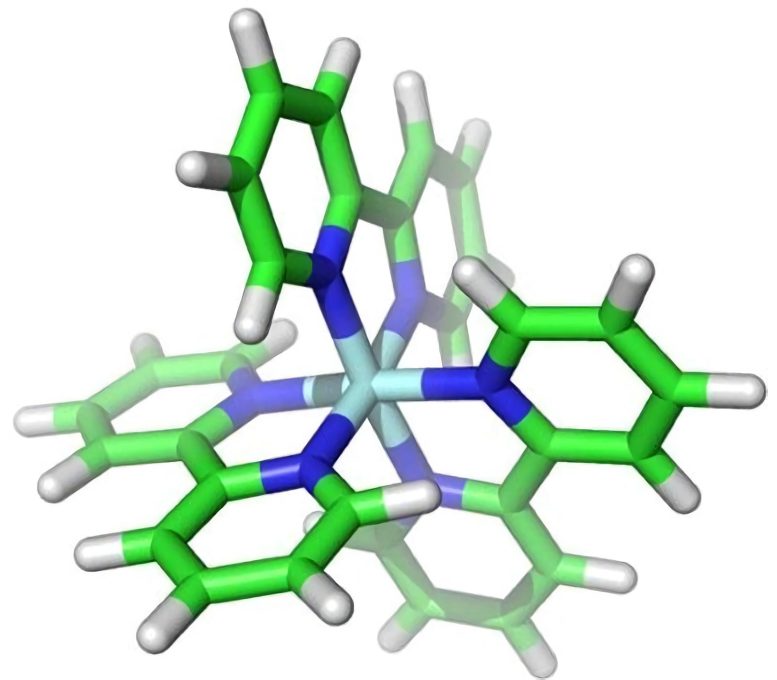
Using the LCLS X-ray laser, researchers have demonstrated the ability to manipulate and study ultrafast energy transfers using a technique called X-ray absorption spectroscopy.
The way electrons move within and between molecules, transferring energy as they go, plays an important role in many chemical and biological processes, such as the conversion of sunlight to energy in photosynthesis and solar cells. But the fastest steps in this energy transfer have eluded detection.
In a paper published this month in The Journal of Physical Chemistry A, researchers have demonstrated that they can manipulate and study these ultrafast energy transfers with SLAC’s X-ray laser, the Linac Coherent Light Source.
The technique provides new insight into the rapid switching of magnetic properties and the movement of electric charges in a range of samples.
Surprisingly, researchers discovered that the electron movements they observed don’t fit current models very well – possibly a sign of a previously unknown step in this electron-transfer process, said Marco Cammarata of the University of Rennes, France, who was a key researcher in the experiments.
“If this is the case, it would be a very important result to understand,” Cammarata said, and could lead to revisions in existing theories and models. The results produced “more interesting data than expected,” he said, given that the iron-containing compound used in the experiments had been so extensively studied.
In the LCLS experiment, researchers hit a stream of liquid containing a dissolved iron compound with quick pulses of optical laser light. This excited the molecules in the compound, rearranging their electrons and changing their magnetic properties.
A few quadrillionths of a second later they hit the same sample with ultrashort pulses from the LCLS’s X-ray laser beam to record those changes.
The way X-rays of various wavelengths are absorbed by a sample can be used to understand its electronic properties and molecular geometries. This technique, called X-ray absorption spectroscopy, has been extensively used at synchrotron light sources. But this was the first time it has been successfully demonstrated using the LCLS X-ray laser.
The experiments were conducted in 2010, and the technique has since found use in several LCLS experiments.
By varying the time between the two laser pulses and the wavelength of the X-ray pulse, the researchers were able to see how the first pulse changed the electronic and structural properties of the sample.
With its intense, ultrabright X-ray pulses, the LCLS collects data on processes that occur a thousand times faster than can be studied using even the most advanced synchrotrons, Cammarata said, providing a new window into this ultrafast realm.
The results at LCLS suggest a formerly unknown stage in the energy transfer process, as the sample compound transitioned from its original, stable state to a new, mostly stable or “metastable” state.
Cammarata said he has been working with collaborators at LCLS and at the FLASH X-ray laser at Germany’s DESY lab to improve the synchronization of the visible and X-ray lasers used in these experiments. They are also refining the system that delivers the stream of dissolved samples into the path of the lasers.
Such enhancements could for the first time allow researchers to identify the earliest light-triggered changes in gaseous, liquid and solid specimens.
“New experimental data are needed to develop theoretical models to explain the processes we observe,” Cammarata said, noting that follow-up research is continuing.
Henrik Lemke, an LCLS instrument scientist and lead author of the paper, said additional improvements in X-ray laser performance and instrumentation may reveal processes that occur on an even shorter time scale. X-ray lasers “open the field” for studying the interplay between magnetic and electronic charge states observed using other X-ray sources, he said. This information may help scientists understand and tailor the function of many chemical, biological and technological processes.
The experiments were carried out with the X-ray Pump Probe instrument at the LCLS. It uses ultrashort laser pulses to “pump” or excite a reaction in a sample, followed by X-ray laser pulses that “probe” and resolve the resulting changes in the sample.
Reference: “Femtosecond X-ray Absorption Spectroscopy at a Hard X-ray Free Electron Laser: Application to Spin Crossover Dynamics” by Henrik T. Lemke, Christian Bressler, Lin X. Chen, David M. Fritz, Kelly J. Gaffney, Andreas Galler, Wojciech Gawelda, Kristoffer Haldrup, Robert W. Hartsock, Hyotcherl Ihee, Jeongho Kim, Kyung Hwan Kim, Jae Hyuk Lee, Martin M. Nielsen, Andrew B. Stickrath, Wenkai Zhang, Diling Zhu and Marco Cammarata, 2 January 2013, The Journal of Physical Chemistry A.
DOI: 10.1021/jp312559h
In addition to scientists from SLAC and the University of Rennes, the experiments also involved researchers from the Stanford PULSE Institute, European X-ray Free-Electron Laser (XFEL) in Hamburg, Germany, Argonne National Laboratory and Northwestern University in Illinois, Technical University of Denmark, Korea Advanced Institute of Science and Technology (KAIST) and Inha University in South Korea.
Never miss a breakthrough: Join the SciTechDaily newsletter.
Follow us on Google and Google News.