

Close Menu
    Facebook X (Twitter) Instagram
    SciTechDaily
    • Biology
    • Chemistry
    • Earth
    • Health
    • Physics
    • Science
    • Space
    • Technology
    Facebook X (Twitter) Pinterest YouTube RSS
    SciTechDaily
    Home»Science»Evidence Against the Hypothesis That a Comet Impact Wiped Out Prehistoric Humans
    Science

    Evidence Against the Hypothesis That a Comet Impact Wiped Out Prehistoric Humans

    By University of Royal Holloway LondonJanuary 30, 2013No Comments2 Mins Read
    Facebook Twitter Pinterest Telegram LinkedIn WhatsApp Email Reddit
    Share
    Facebook Twitter LinkedIn Pinterest Telegram Email Reddit
    Asteroid Impact Explosion Planet Earth Artist's Impression
    Research published in the journal Geophysical Monograph Series suggests that comet explosions were not responsible for the demise of the Clovis culture, a prehistoric human culture in North America, 13,000 years ago.

    New research provides evidence against the hypothesis that a large comet impact or airburst caused the termination of the Clovis culture.

    Comet explosions did not end the prehistoric human culture, known as Clovis, in North America 13,000 years ago, according to research published in the journal Geophysical Monograph Series.

    Researchers from Royal Holloway, together with Sandia National Laboratories and 13 other universities across the United States and Europe, have found evidence that rebuts the belief that a large impact or airburst caused a significant and abrupt change to the Earth’s climate and terminated the Clovis culture. They argue that other explanations must be found for the apparent disappearance.
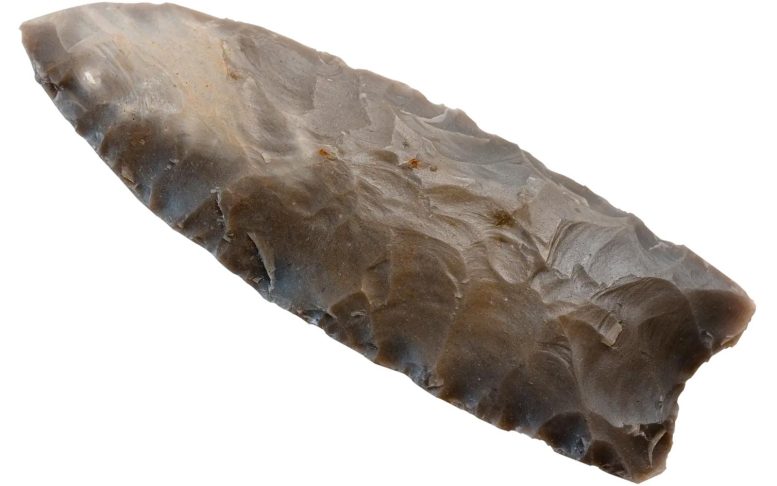
    Prehistoric Human Stone Tool
    The Clovis culture is named after the town in New Mexico, where distinct stone tools were found in the 1920s and 1930s. Credit: University of Royal Holloway London

    Clovis is the name archaeologists have given to the earliest well-established human culture in the North American continent. It is named after the town in New Mexico, where distinct stone tools were found in the 1920s and 1930s.

    Researchers argue that no appropriately sized impact craters from that time period have been discovered, and no shocked material or any other features of impact have been found in sediments. They also found that samples presented in support of the impact hypothesis were contaminated with modern material and that no physics model can support the theory.

    “The theory has reached zombie status,” said Professor Andrew Scott from the Department of Earth Sciences at Royal Holloway. “Whenever we are able to show flaws and think it is dead, it reappears with new, equally unsatisfactory, arguments.

    “Hopefully new versions of the theory will be more carefully examined before they are published.”

    Reference: “Arguments and Evidence Against a Younger Dryas Impact Event” by M. Boslough, K. Nicoll, V. Holliday, T. L. Daulton, D. Meltzer, N. Pinter, A. C. Scott, T. Surovell, P. Claeys, J. Gill, F. Paquay, J. Marlon, P. Bartlein, C. Whitlock, D. Grayson and A.J.T. Jull, 1 January 2012, Geophysical Monograph Series.
    DOI: 10.1029/2012GM001209

    Never miss a breakthrough: Join the SciTechDaily newsletter.
    Follow us on Google and Google News.

    Earth Science Geophysics Royal Holloway Sandia National Laboratory University of London
    Share. Facebook Twitter Pinterest LinkedIn Email Reddit

    Related Articles

    Want To Be Happy? Stoic Secrets To Overcome Modern Stress

    15 Miles in Diameter – Asteroid That Formed Earth’s Largest Crater Bigger Than Previously Believed

    New Study Traces the Impact of Volcanic Activity on Climate Change

    Earth’s Geomagnetic Field Intensity is Double the Historical Average

    Interplanetary Dust Particles Can Deliver Water and Organics to Terrestrial Planets

    High Resolution Maps Reveal Larger than Thought Gravitational Variations on Earth

    Researchers Study Flow Batteries Containing Metal-Based Ionic Liquids (MetILs)

    MIT Researchers Use Mathematical Model to Predict Speed of Spreading Valleys

    Sandia Chemists Use MOFs to Remove Radioactive Gas from Nuclear Fuel

    Leave A Reply Cancel Reply

    • Facebook
    • Twitter
    • Pinterest
    • YouTube

    Don't Miss a Discovery

    Subscribe for the Latest in Science & Tech!

    Trending News

    New Study Reveals Why Ozempic Works Better for Some People Than Others

    Climate Change Is Altering a Key Greenhouse Gas in a Way Scientists Didn’t Expect

    New Study Suggests Gravitational Waves May Have Created Dark Matter

    Scientists Discover Why the Brain Gets Stuck in Schizophrenia

    Scientists Engineer “Tumor-Eating” Bacteria That Devour Cancer From Within

    Even “Failed” Diets May Deliver Long-Term Health Gains, Study Finds

    NIH Scientists Discover Powerful New Opioid That Relieves Pain Without Dangerous Side Effects

    Collapsing Plasma May Hold the Key to Cosmic Magnetism

    Follow SciTechDaily
    • Facebook
    • Twitter
    • YouTube
    • Pinterest
    • Newsletter
    • RSS
    SciTech News
    • Biology News
    • Chemistry News
    • Earth News
    • Health News
    • Physics News
    • Science News
    • Space News
    • Technology News
    Recent Posts
    • JWST Reveals a “Forbidden” Planet With a Baffling Composition
    • New Research Challenges 30-Year-Old Theory of Eye Development
    • The Protein “Sabotaging” Aging Muscle Recovery Could Be Key to Surviving Aging
    • This Diet–Gut Interaction Could Transform Fat Into a Calorie-Burning Machine
    • Why Some People Reach 100: New Study Reveals Key Biological Differences
    Copyright © 1998 - 2026 SciTechDaily. All Rights Reserved.
    • Science News
    • About
    • Contact
    • Editorial Board
    • Privacy Policy
    • Terms of Use

    Type above and press Enter to search. Press Esc to cancel.