
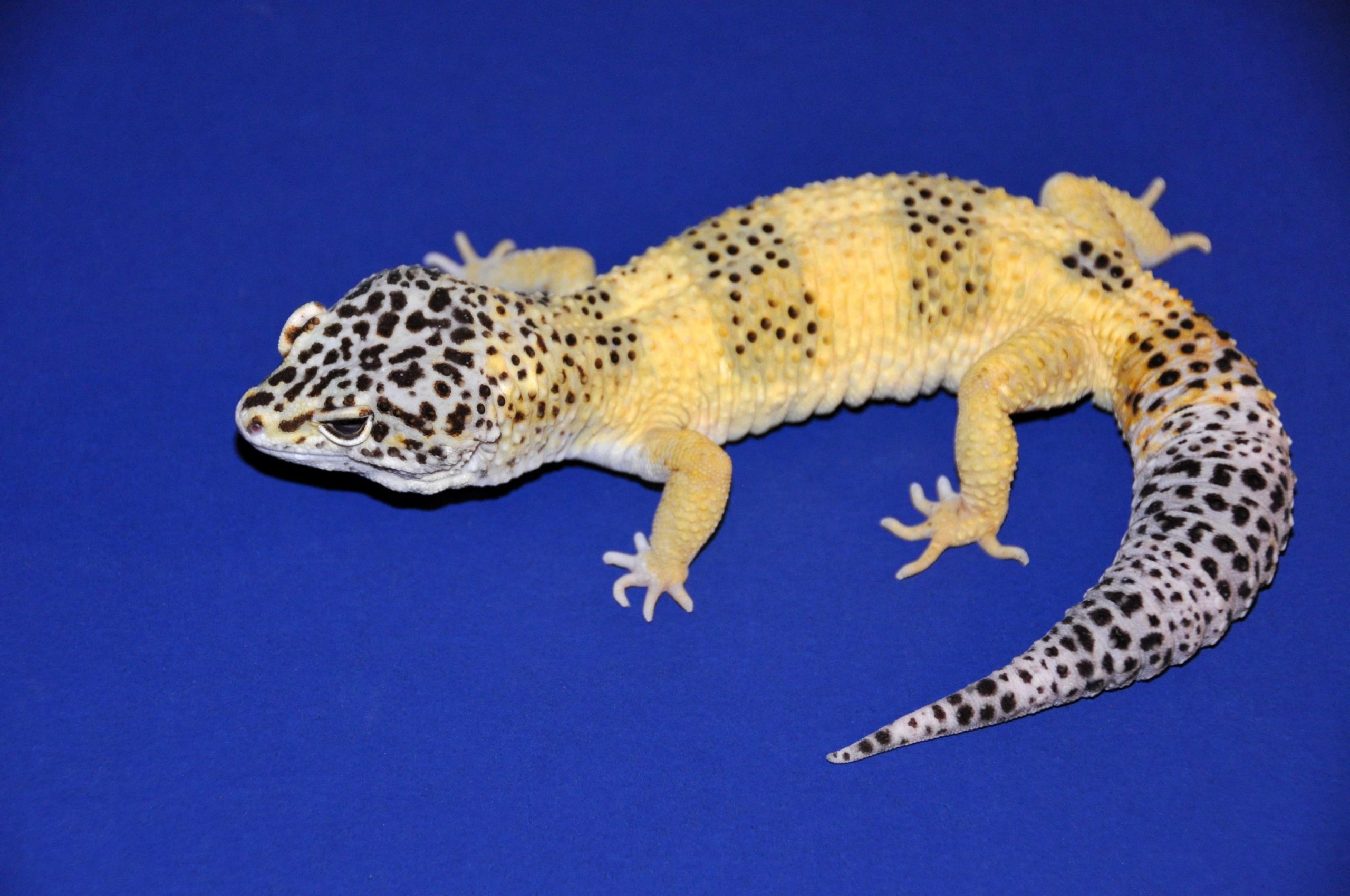
Scientists have traced the striking Lemon Frost gecko coloration and associated tumor risk to the SPINT1 gene, known for its role in human melanoma.
The leopard gecko’s name was Mr. Frosty, and he was hard to miss.
Yellow bands striped his back, and uncommonly white skin peeked out from speckles on his head and tail. “It’s this really striking coloration pattern,” says Howard Hughes Medical Institute Investigator Leonid Kruglyak, a geneticist at the University of California, Los Angeles (UCLA).
A California reptile shop began breeding Mr. Frosty in 2016 and produced a colony of lemon-yellow lizards. The color variety was known as Lemon Frost — with their bold bands and snazzy spots, the rare animals could fetch upwards of $2,000.
But the gaudy geckos had one problem. Roughly 80 percent develop bulbous white skin tumors within the first five years of life. In some individuals, these tumors can become massive, making it difficult for the animals to move and potentially causing infection if ruptured. Kruglyak and his colleagues suspected a genetic root — possibly a single mutation in a single gene. “It seemed likely that the same thing that was giving the geckos such unusual coloration was also causing the tumors,” he says.
Now, using a variety of genetic analyses, his team has traced the tumors and coloring to a gene implicated in skin cutaneous melanoma, a deadly cancer in humans, the team reports June 24, 2021 in the journal PLOS Genetics.
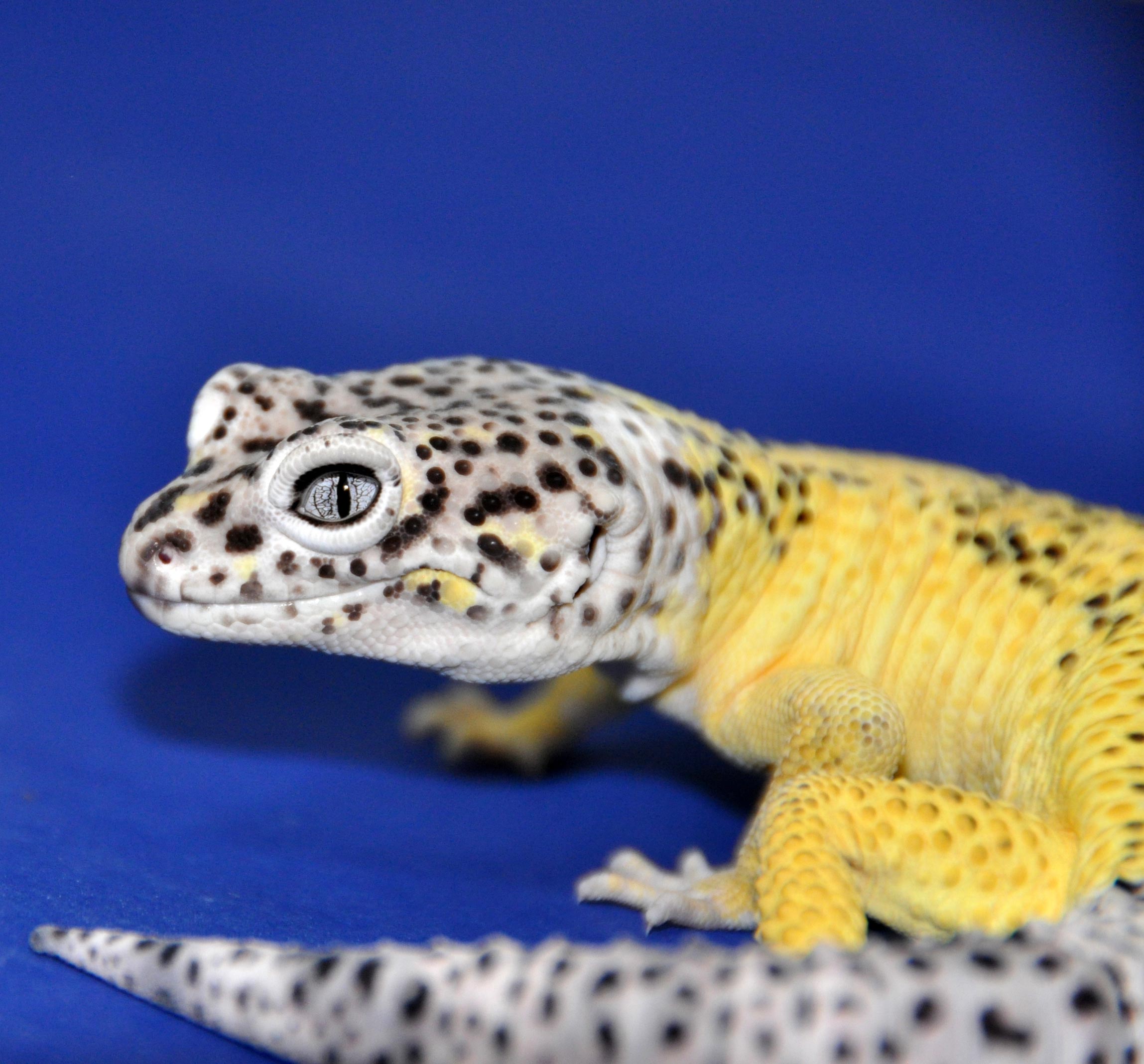
“To identify the genetic basis of this trait in reptiles is really marvelous,” says Douglas Menke, a developmental geneticist at the University of Georgia who was not involved with the work. Genetic studies in reptiles are uncommon, he says, and those with biomedical relevance even rarer. Like mice and zebrafish studied in the lab, the leopard gecko could one day serve as a model for scientists researching melanoma, he says.
“It’s uncertain whether the leopard gecko will become the lab mouse of the reptile world,” he says. “But it’s certainly possible.”
A Colorful Collaboration
When UCLA postdoc Longhua Guo first came to Kruglyak’s lab, in 2017, he was looking for an interesting project. Inspiration struck when he happened upon a “species of the day” article online about leopard geckos. “The images immediately jumped out at me,” Guo says. “These animals have so many fascinating colors and patterns.”
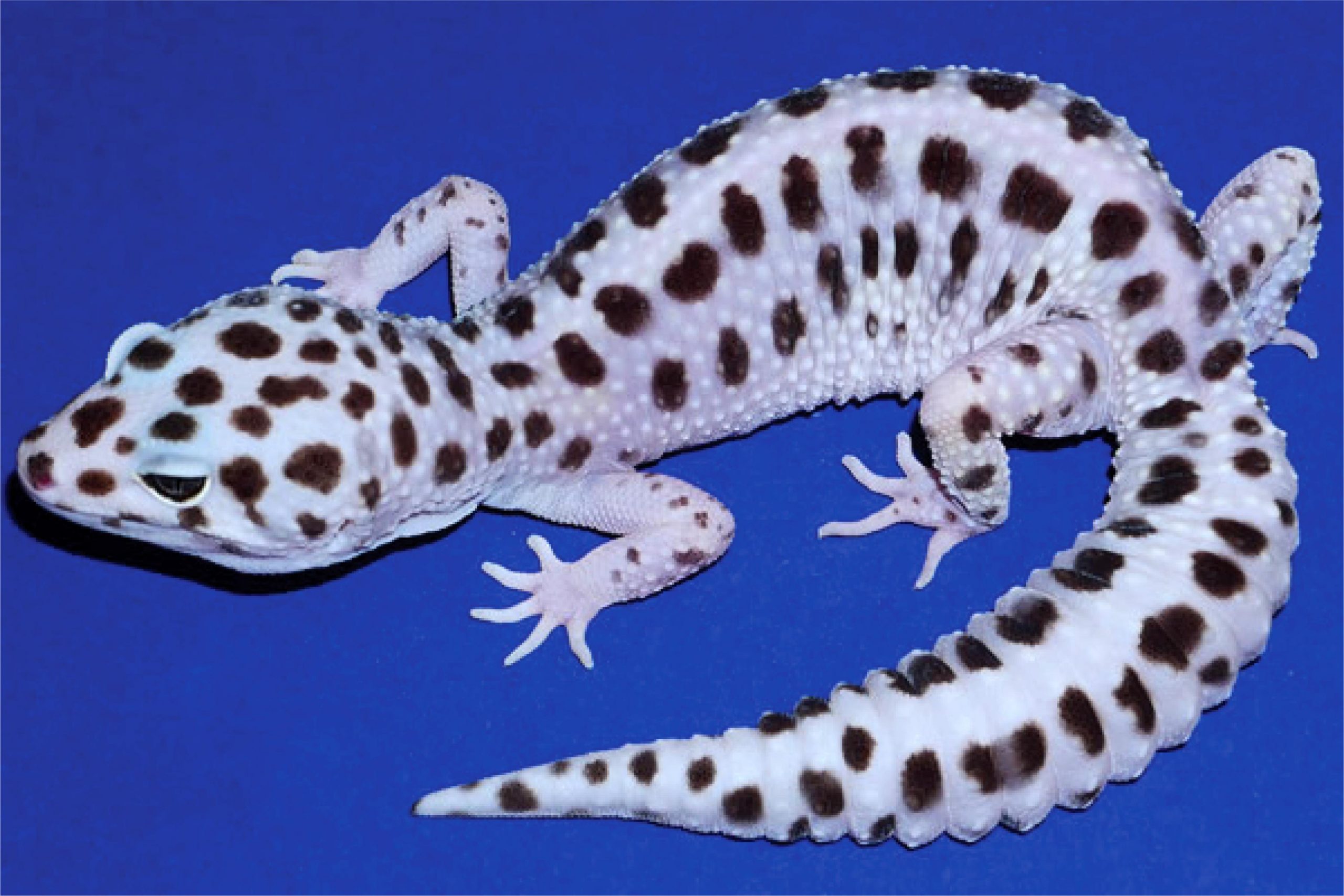
The geckos come in a variety of brilliant shades, with names like Sunburst Tangerine, Black Night, and Granite Snow, but scientists didn’t know much about the genetics behind the variants. “We have a very limited understanding of how the animals display this amazing variety of colors,” Kruglyak says. In fact, little is known about reptile genetics at all.
Lizards and snakes aren’t established laboratory animals like mice, and scientists haven’t developed extensive tools for studying them. The leopard gecko genome, for example, hasn’t been carefully spelled out, and no one has pinpointed which genes lie on which chromosomes.
In a meeting with Kruglyak, “Leonid was so excited and started doing calculations on animal numbers and laying out a mapping strategy,” Guo says. Still, if Guo and Kruglyak wanted to figure out which genes were behind which colors, they first needed gecko DNA. Guo pitched the idea to Steve Sykes, a reptile breeder in California. Sykes had hundreds of geckos, meticulous breeding records, and, it turned out, a passion for science. “It was a very lucky moment in my life,” Guo remembers. Sykes agreed to collaborate with the scientists and introduced them to Mr. Frosty and his colorful cousins.
Gene Hunters
The dazzling colors of many animals, including tropical fish, chameleons, and leopard geckos, come from cells called iridophores. Unlike human skin cells, which get their color from the chemical pigment melanin, iridophores produce colors via crystals. These crystals’ shape and structure affect how they bend and reflect light, producing a rainbow of possible colors. In leopard geckos, the arrangement of the crystals gives rise to white color.
Guo collected DNA from 500 of these lizards and then read the genetic “letters” of the animals’ genomes. The team was hunting for DNA regions that they could link to certain color varieties — in particular, the genetic signposts that occurred only in Lemon Frost animals.
Kruglyak’s lab isn’t a reptile lab, and his team had never before studied leopard geckos. But his research does focus on the genetic basis of a variety of traits in different organisms. He’s examined yeast strains with unusual metabolism and roundworms that are resistant to certain drugs. The gecko project offered a new twist on Kruglyak’s team’s specialty — mapping a particular trait to a specific region in the genome.
The SPINT1 Gene Connection
The researchers mapped the Lemon Frost trait to a region that contained a single gene, SPINT1. This gene had already been linked to cancer in humans and other animals. Without a functioning SPINT1 gene, both mice and zebrafish, for example, develop tumors. Scientists have also implicated the gene in human skin cutaneous melanoma.
Given the gene’s role in cancer, it’s a clear candidate for what’s causing tumors in Lemon Frost geckos, Kruglyak says. It’s possible that errors within the gene ramp up the production of white skin cells and the light-reflecting crystals within them, giving the geckos their characteristic bright coloring — and their tumors.
Next, Guo wants to pursue the genetic basis of even more lizard colors, including two varieties called Blizzard and Patternless, which lack all colors and patterns. He and Kruglyak don’t know if the work will uncover other findings potentially relevant to human health. That’s the thing with curiosity-driven research, Kruglyak says. Studying unusual phenomena out of pure curiosity can take scientists in surprising directions, and end up revealing new insights into important molecular pathways.
Besides, he adds, “How can you not love a story that starts with an animal named Mr. Frosty?”
Reference: “Genetics of white color and iridophoroma in ‘Lemon Frost’ leopard geckos” by Longhua Guo, Joshua Bloom, Steve Sykes, Elaine Huang, Zain Kashif, Elise Pham, Katarina Ho, Ana Alcaraz, Xinshu Grace Xiao, Sandra Duarte-Vogel and Leonid Kruglyak, 24 June 2021, PLOS Genetics.
DOI: 10.1371/journal.pgen.1009580
Never miss a breakthrough: Join the SciTechDaily newsletter.
Follow us on Google and Google News.