
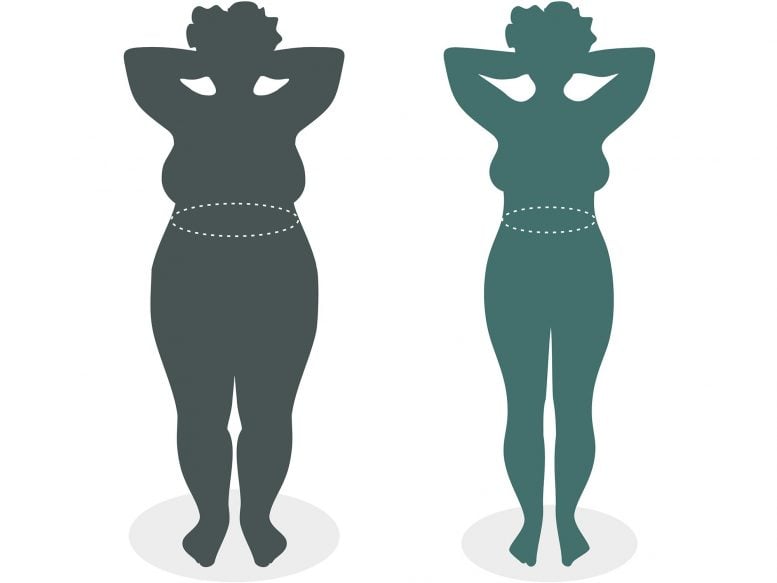
A compound given as a dietary supplement to overweight but otherwise healthy people in a clinical trial caused many of the patients to slim down, research by Oregon State University and Oregon Health & Science University showed.
The research, published in the Journal of Nutrition, analyzed the effects of 24 weeks of daily, 600-milligram doses of lipoic acid supplements on 31 people, with a similarly sized control group receiving a placebo.
“The data clearly showed a loss in body weight and body fat in people taking lipoic acid supplements,” said Balz Frei, director emeritus of OSU’s Linus Pauling Institute and one of the scientists on the study. “Particularly in women and in the heaviest participants.”
Produced by both plants and animals, lipoic acid sets up shop in cells’ mitochondria, where it’s normally attached to proteins involved in energy and amino acid metabolism. A specialized, medium-chain fatty acid, it’s unique in having two sulfur atoms at one end of the chain, allowing for the transfer of electrons from other sources.
The body generally produces enough lipoic acid to supply the enzymes whose proper function requires it. When taken as a dietary supplement, lipoic acid displays additional properties that might be unrelated to the function in the mitochondria. They include the stimulation of glucose metabolism, antioxidant defenses, and anti-inflammatory responses – making it a possible complementary treatment for people with diabetes, heart disease, and age-related cognitive decline.
“Scientists have been researching the potential health benefits of lipoic acid supplements for decades, including how it might enhance healthy aging and mitigate cardiovascular disease,” said Alexander Michels, another Linus Pauling Institute scientist involved with the study. “In both rodent models and small-scale human clinical trials, researchers at the LPI have demonstrated the beneficial effects of lipoic acid on oxidative stress, lipid metabolism, and circadian rhythm.”
The OSU/OHSU project addressed two issues commonly ignored by previous human trials, said Tory Hagen, a professor of biochemistry and biophysics in the OSU College of Science and the study’s corresponding author.
“Many existing clinical studies using lipoic acid have focused on volunteers with pre-existing conditions like diabetes, making it difficult to determine if lipoic acid supplements simply act as a disease treatment or have other beneficial health effects,” said Hagen, principal investigator and Helen P. Rumbel Professor for Healthy Aging Research at the institute. “Another issue is the formulation of the supplement. Many previous studies have used the S form of lipoic acid, which is a product of industrial synthesis and not found in nature. We only used the R form of lipoic acid – the form found in the body naturally.”
Contrary to what was expected by the researchers, decreased levels of triglycerides – a type of fat, or lipid, found in the blood – were not seen in all the participants taking lipoic acid.
“The effect of lipoic acid supplements on blood lipids was limited,” said Gerd Bobe, another LPI scientist who collaborated on the study. “But people who lost weight on lipoic acid also reduced their blood triglyceride levels – that effect was clear.”
Other effects of the lipoic acid supplements were measurable as well.
“By the end of the study, some markers of inflammation declined,” Hagen said. “The findings also suggest that lipoic acid supplementation provides a mild reduction in oxidative stress. It is not a perfect panacea, but our results show that lipoic acid supplements can be beneficial.”
Identifying which patients will benefit the most from lipoic acid supplementation, and how much they need, is important for both clinical and economic reasons, he added.
“Lipoic acid supplements are often quite expensive,” he said. “So understanding how we can maximize benefits with smaller amounts of the supplement is something we are interested in pursuing.”
Reference: “A Randomized Controlled Trial of Long-Term (R)-α-Lipoic Acid Supplementation Promotes Weight Loss in Overweight or Obese Adults without Altering Baseline Elevated Plasma Triglyceride Concentrations” by Gerd Bobe, Alexander J Michels, Wei-Jian Zhang, Jonathan Q Purnell, Clive Woffendin, Cliff Pereira, Joseph A Vita, Nicholas O Thomas, Maret G Traber, Balz Frei and Tory M Hagen, 21 July 2020, The Journal of Nutrition.
DOI: 10.1093/jn/nxaa203
In addition to Hagen, Michels, Frei and Bobe, other Oregon State researchers collaborating on the research were Wei-Jian Zhang, Nicholas Thomas, Maret Traber and Cliff Pereira. Clive Woffendin of OHSU’s Oregon Clinical and Translational Research Institute, Jonathan Purnell of the OHSU School of Medicine and Joseph Vita of Boston University completed the group.
Never miss a breakthrough: Join the SciTechDaily newsletter.
Follow us on Google and Google News.
14 Comments
Lipoic acid “helped” many people to loose hair.
What is loose hair? Should be lose, duh!
No need to be horrible to people sheila!!
I’ve been taking 600 mg of alpha lipoic acid twice a day for over 5 yrs now. It was prescribed for me by my pain management Dr to help treat chronic back pain. Not only has it NOT helped my pain, but it certainly has NOT helped me lose weight! I finally stopped taking it a week ago.
R-Alpha Lipoic Acid gave me HORRIBLE hot flashes and I was taking it for years! Did nothing for body fat or anything else!
Why would you continue using something that didn’t or made worse side effects. If taking for pain and it done nothing why continue taking it for several more years. Sounds idiotic. And the pain must not of been that bad to continue to take something that done nothing.🤦🏼♂️
Have you been taking the R type or the S type? Because the article states the difference between the two.
Wow kodiak that’s pretty harsh
Patti/ Thanks for asking that QUESTION I would also like that ANSWER
John:read the article and you’ll get your ANSWER. Way to be an a**hole.
I’ve been taking about 600 mg of Alpha Lipoic Acid daily for several years now, for peripheral neuropathy related to diabetes. It works excellently to erase any pain symptoms in my feet or hands, and keeps them from returning. It is not related to the form discussed in this story, nor does it claim to affect my weight in any way.
If you can buy it OTC it won’t work. Just ask your doctor to prescribe you some Phentermine.
So many bitchy ppl here grow up!!
Asking questions are really pleasant thing if you are not understanding anything entirely, however this paragraph
provides good understanding even.