

By studying the Sun’s acoustic waves, scientists are uncovering its hidden dynamics, refining stellar models, and influencing research on exoplanets and nuclear fusion.
Scientists have developed a groundbreaking method using helioseismology to measure solar radiative opacity under extreme conditions. Published in Nature Communications, this innovative approach not only highlights gaps in our understanding of atomic physics but also confirms recent experimental findings. These advancements open up exciting new possibilities in both astrophysics and nuclear physics.
Probing the Sun’s Interior Through Sound Waves
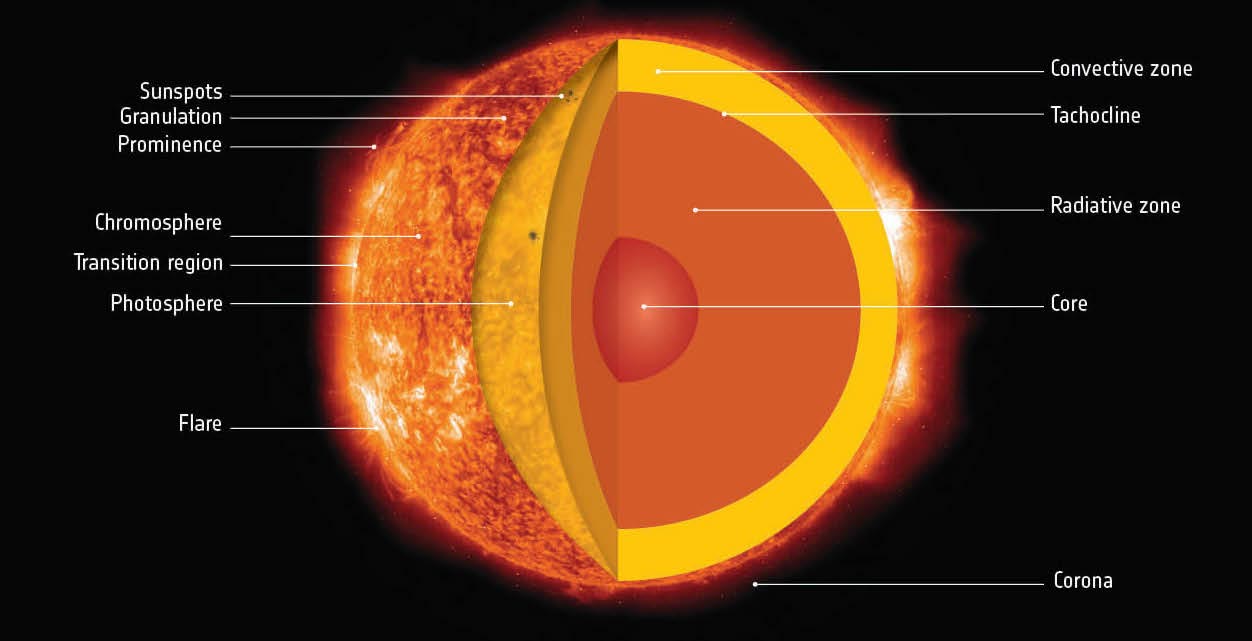
Helioseismology is the study of the Sun’s acoustic oscillations, which allows scientists to explore the inner structure of our star with remarkable precision. By analyzing these sound waves, researchers can determine key properties of the Sun’s plasma, including its density, temperature, and chemical composition. These insights are essential for understanding how the Sun functions and evolves over time. This approach essentially turns the Sun into a natural astrophysical laboratory, providing vital data to refine stellar models and deepen our knowledge of star formation and evolution across the Universe.
New Insights into Solar Radiative Opacity
In a recent international study led by Gaël Buldgen of the University of Liège, scientists applied helioseismic techniques to independently measure how high-energy radiation is absorbed by the solar plasma in the Sun’s deeper layers. This groundbreaking research offers new insights into solar radiative opacity—a critical factor in understanding how matter and radiation interact under the extreme conditions within the Sun’s core.
The findings align with observations from prestigious institutions like Sandia National Laboratories and ongoing research at Livermore National Laboratory, while also highlighting gaps in our understanding of atomic physics. Notably, the study revealed discrepancies among theoretical predictions from research teams at Los Alamos National Laboratory, Ohio State University, and the CEA Paris-Saclay research center in France, underscoring the need for further investigation.
Unprecedented Precision in Stellar Modeling
The scientific team used advanced numerical tools developed at ULiège, drawing on the university’s expertise in helioseismology and stellar modeling. “By detecting the Sun’s acoustic waves with unparalleled precision, we can reconstruct our star’s internal properties, in much the same way as we would deduce the characteristics of a musical instrument from the sounds it produces,” explains Gaël Buldgen.
The precision of helioseismic measurements is exceptional: they allow us to estimate the mass of a cubic centimeter of matter inside the Sun with an accuracy surpassing that of a high-precision kitchen scale without ever seeing or touching the matter. Helioseismology, developed at the end of the twentieth century, has played a major role in advancing fundamental physics. In particular, it has contributed to major discoveries, such as neutrino oscillations, which the 2015 Nobel Prize recognized. These advances demonstrated that solar models were not to blame for the origin of this phenomenon. Still, adjustments were needed with the revision of the solar chemical composition in 2009, confirmed in 2021. This revision caused a crisis in solar models, which no longer agreed with the helioseismic observations.
To meet this challenge, advanced tools have been developed at the University of Liège, initially as part of doctoral work, and then enriched through international collaborations in Birmingham and Geneva. These tools have made it possible to revisit the internal thermodynamic conditions of the Sun and to reopen an issue that the scientific community had somewhat neglected. At the same time, the work carried out in 2015 by James Bailey at Sandia National Laboratory highlighted the crucial role of radiative opacity. The first experimental measurements were first met with some skepticism, as they revealed significant differences with theoretical predictions.

Guiding Future Experiments and Research
Today’s helioseismic measure provides valuable confirmation and makes it possible to specify the temperature, density, and energy regimes in which these experiments should be concentrated in order to better reproduce solar conditions. In addition, the Z Machine experiments, although extremely valuable, have prohibitive energy and financial costs. Helioseismic measurements, on the other hand, offer an economical and complementary alternative while guiding experimentalists toward optimal windows for their laboratory measurements.
The implications of this research extend far beyond stellar modeling. It improves the accuracy of the theoretical models used to estimate the age and mass of stars and exoplanets, thereby contributing to our understanding of galactic evolution and stellar populations.
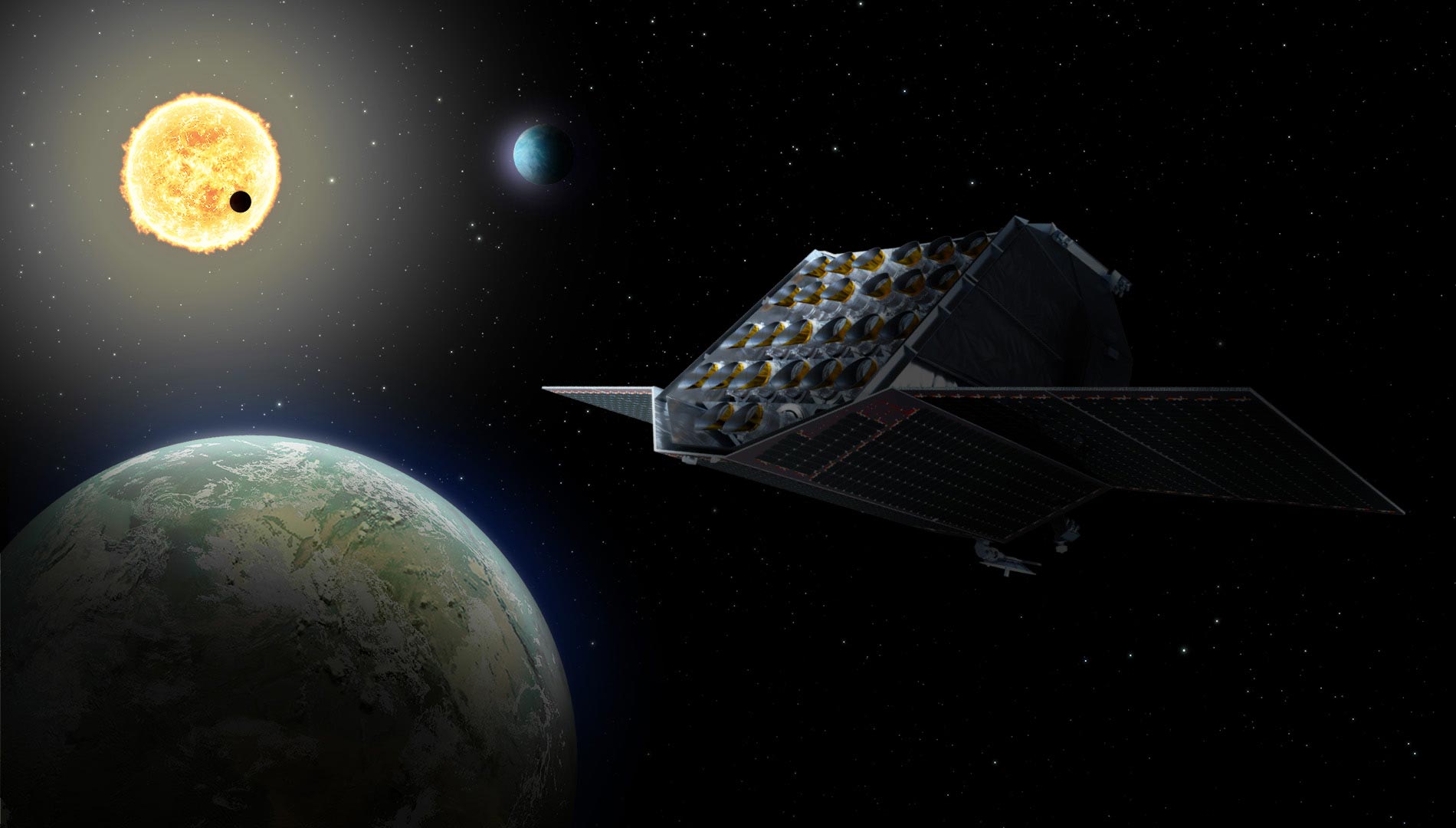
“The Sun is our great calibrator of stellar evolution, our preferred laboratory for finding out whether we are on the right track, or not. These results are even more important as we prepare to launch the PLATO satellite in 2026, one of the objectives of which is to accurately characterize solar-type stars to find habitable terrestrial planets. What’s more, these results have resonances in nuclear fusion, as the Sun remains the only stable nuclear fusion reactor in our solar system. Improving our understanding of the Sun’s internal conditions directly impacts fusion energy research, a key issue in the development of clean energy solutions,” adds Gaël Buldgen.
Refining Atomic Models for Stellar Evolution
The results highlight the need to improve existing atomic models to resolve the discrepancies between experimental observations and theoretical calculations. These advances should redefine our understanding of stellar evolution and the physical processes that govern the structure and evolution of stars. This research confirms the University of Liège’s position at the cutting edge of astrophysical science, demonstrating the key role of helioseismology in unlocking the mysteries of the cosmos.
Reference: “Helioseismic inference of the solar radiative opacity” by Gaël Buldgen, Jean-Christophe Pain, Philippe Cossé, Christophe Blancard, Franck Gilleron, Anil K. Pradhan, Christopher J. Fontes, James Colgan, Arlette Noels, Jørgen Christensen-Dalsgaard, Morgan Deal, Sergey V. Ayukov, Vladimir A. Baturin, Anna V. Oreshina, Richard Scuflaire, Charly Pinçon, Yveline Lebreton, Thierry Corbard, Patrick Eggenberger, Peter Hakel and David P. Kilcrease, 27 January 2025, Nature Communications.
DOI: 10.1038/s41467-024-54793-y
Never miss a breakthrough: Join the SciTechDaily newsletter.
Follow us on Google and Google News.
1 Comment
Scientists are using helioseismology to study the Sun’s acoustic waves, uncovering its hidden dynamics and refining My Theda Care stellar models. This method helps measure solar radiative opacity under extreme conditions, as reported in Nature Communications.