
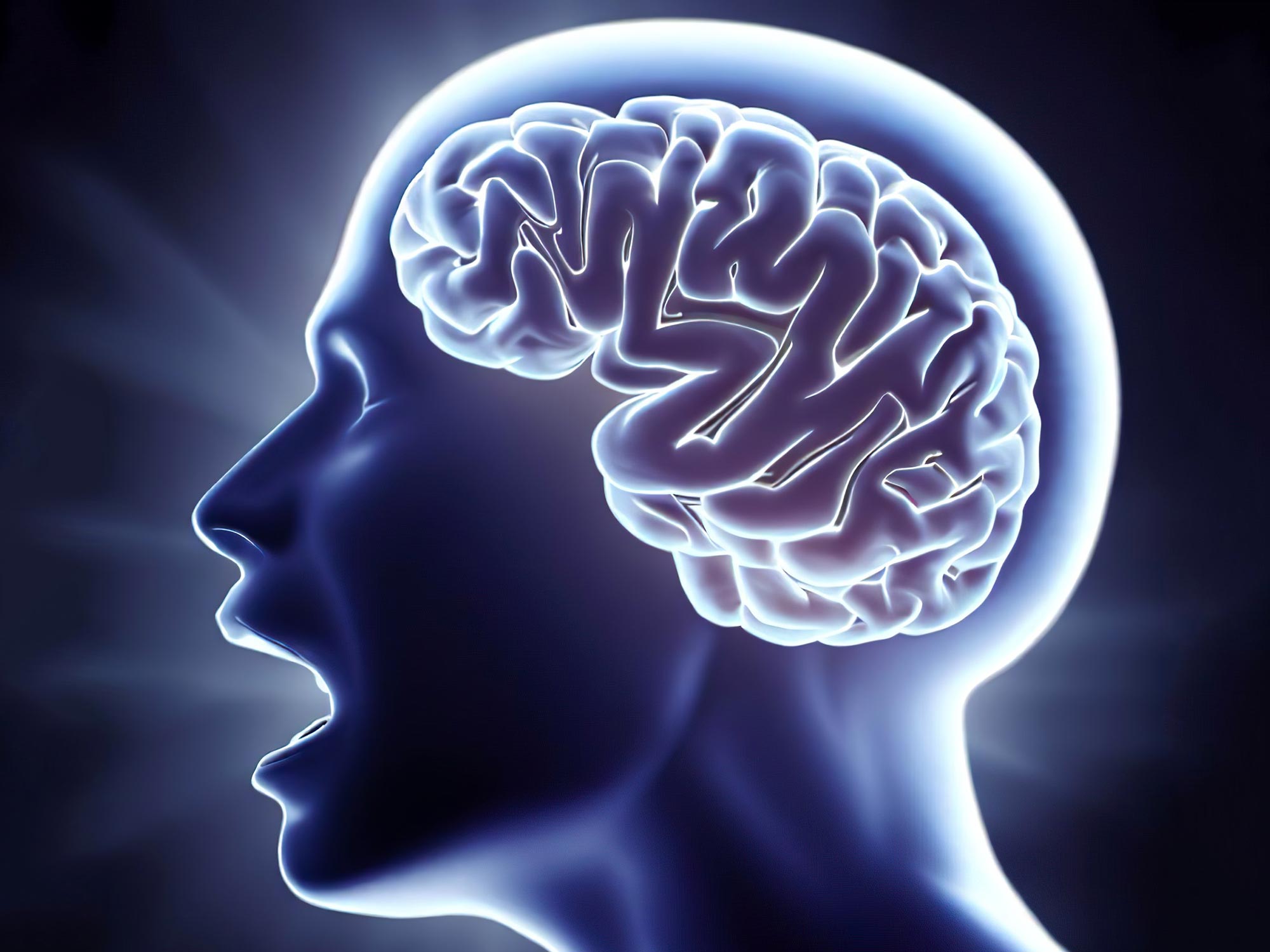
Scientists are developing a brain-computer interface to help patients with Broca’s aphasia regain speech.
- Broca’s aphasia occurs when damage to the frontal lobe disrupts a person’s ability to say what they intend, even though they know what they want to express.
- For the first time, scientists have identified brain regions outside the frontal lobe — specifically in the temporal and parietal cortices — that are involved in the intent to speak.
- This discovery is crucial for brain-computer interface (BCI) development, ensuring that only intended speech is decoded while protecting private thoughts that are not meant to be spoken.
Lost for Words: The Struggle of Broca’s Aphasia
Imagine seeing a furry, four-legged animal that meows. Mentally, you know what it is, but the word “cat” is stuck on the tip of your tongue.
This phenomenon, known as Broca’s aphasia or expressive aphasia, is a language disorder that affects a person’s ability to speak or write. While the current go-to treatment is speech therapy, scientists at Northwestern University are working toward a different, possibly more effective treatment: using a brain-computer interface (BCI) to convert brain signals into spoken words.
The first step in this process is determining where in the brain the BCI should record from to decode someone’s intended speech.
Currently, BCI devices are only used on individuals with paralysis from ALS or stroke in the brainstem, which leaves them unable to move or communicate. In these patients, BCIs record signals from the frontal lobe. But Broca’s aphasia, which most often affects people after a stroke or brain tumor, results from damage to the frontal lobe of the brain, where speech production and parts of language are processed. So, to help patients with Broca’s aphasia, scientists would likely need to record signals from other areas of the brain.

A Breakthrough Discovery: Speech Intent in New Brain Regions
In a new study, Northwestern Medicine scientists have, for the first time, identified specific brain regions outside the frontal lobe — in the temporal and parietal cortices — involved in the intent to produce speech. This opens the door to one day using a BCI to treat Broca’s aphasia.
“This is a small, but necessary step,” said corresponding author Dr. Marc Slutzky, professor of neurology and neuroscience at Northwestern University Feinberg School of Medicine. “We showed that these non-frontal areas indeed contain information about someone’s intent to produce speech that allowed us to distinguish when they were going to speak versus when they’re not speaking or are just thinking about something that they don’t want to say out loud.”
The study will be published today (February 13) in the Journal of Neural Engineering.
Ethical Considerations: Thought vs. Speech Decoding
These early findings will help scientists when they eventually design a BCI for patients with Broca’s aphasia to distinguish whether someone’s speech-related information is related to language production or language perception (including comprehension).
“It is critical to not be decoding the user’s thoughts that are not intended to be spoken aloud, both for that practical reason and for the ethical problems this could incur,” Slutzky said.
Study Conducted on Patients Without Language Deficits
While the goal is to one day work with patients with aphasia, this study was in patients who did not have language deficits.
The scientists recorded electrical signals from the surface of the cortex in nine patients (at Northwestern Memorial Hospital) with either epilepsy or brain tumors. The electrode arrays were either implanted in people with epilepsy as part of their seizure monitoring prior to surgery or placed on the brain temporarily in the operating room, while patients with tumors underwent awake brain surgery and mapping.
Then, patients either read words aloud from a monitor or were silent (at rest) while investigators recorded their brain signals (called electrocorticography or ECoG).
The next step in this research will be to decode what these patients actually said.
Reference: “Decoding speech intent from non-frontal cortical areas” by Prashanth Ravi Prakash, Tianhao Lei, Robert D Flint, Jason K Hsieh, Zachary Fitzgerald, Emily Mugler, Jessica Templer, Matthew A Goldrick, Matthew C Tate, Joshua Rosenow, Joshua Glaser and Marc W Slutzky, 13 February 2025, Journal of Neural Engineering.
DOI: 10.1088/1741-2552/adaa20
Other Northwestern authors include first author Prashanth Prakash; Tianhao Lei; Robert D. Flint; Jason K. Hsieh; Zachary Fitzgerald; Emily Mittag Mugler; Jessica Templer; Matthew A Goldrick; Matthew C Tate; Joshua M. Rosenow; and Joshua I. Glaser.
The research was funded by grants R01NS099210, R01NS112942, RF1NS125026, R21NS084069, F32DC015708 and R01NS094748 from the National Institute of Neurological Disorders and Stroke of the National Institutes of Health; Doris Duke Charitable Foundation; National Science Foundation grant #1321015; and Northwestern Memorial Foundation Dixon Translational Research Grant (supported in part by NIH grants UL1RR025741 and UL1TR000150).
Never miss a breakthrough: Join the SciTechDaily newsletter.
Follow us on Google and Google News.