

For years, rainforests were thought to be barriers to early human survival, but new evidence has shattered this assumption.
A groundbreaking study reveals that humans were thriving in the rainforests of Côte d’Ivoire 150,000 years ago — more than double the previous estimate. This discovery rewrites our understanding of early human adaptability and suggests that our ancestors lived in far more diverse environments than once believed.
Humans in Rainforests: An Ancient Connection
Rainforests are one of the world’s major biomes, but until recently, scientists believed humans only began inhabiting them in the not-so-distant past. However, new evidence now reveals that humans were living in African rainforests at least 150,000 years ago — the earliest known proof of rainforest habitation by our species.
Humans first emerged in Africa around 300,000 years ago, but many details about the environments in which we evolved remain unclear. Rainforests, in particular, have often been overlooked in these discussions, traditionally seen as difficult environments for early human survival.
Groundbreaking Discovery in Côte d’Ivoire
Now, a groundbreaking study published today (February 26) in Nature challenges this assumption. An international team of researchers has discovered that humans were living in the rainforests of present-day Côte d’Ivoire far earlier than previously thought. Their findings suggest that human evolution took place across a much wider range of habitats than once believed, reshaping our understanding of how our ancestors adapted to different environments.
The Origins of the Investigation
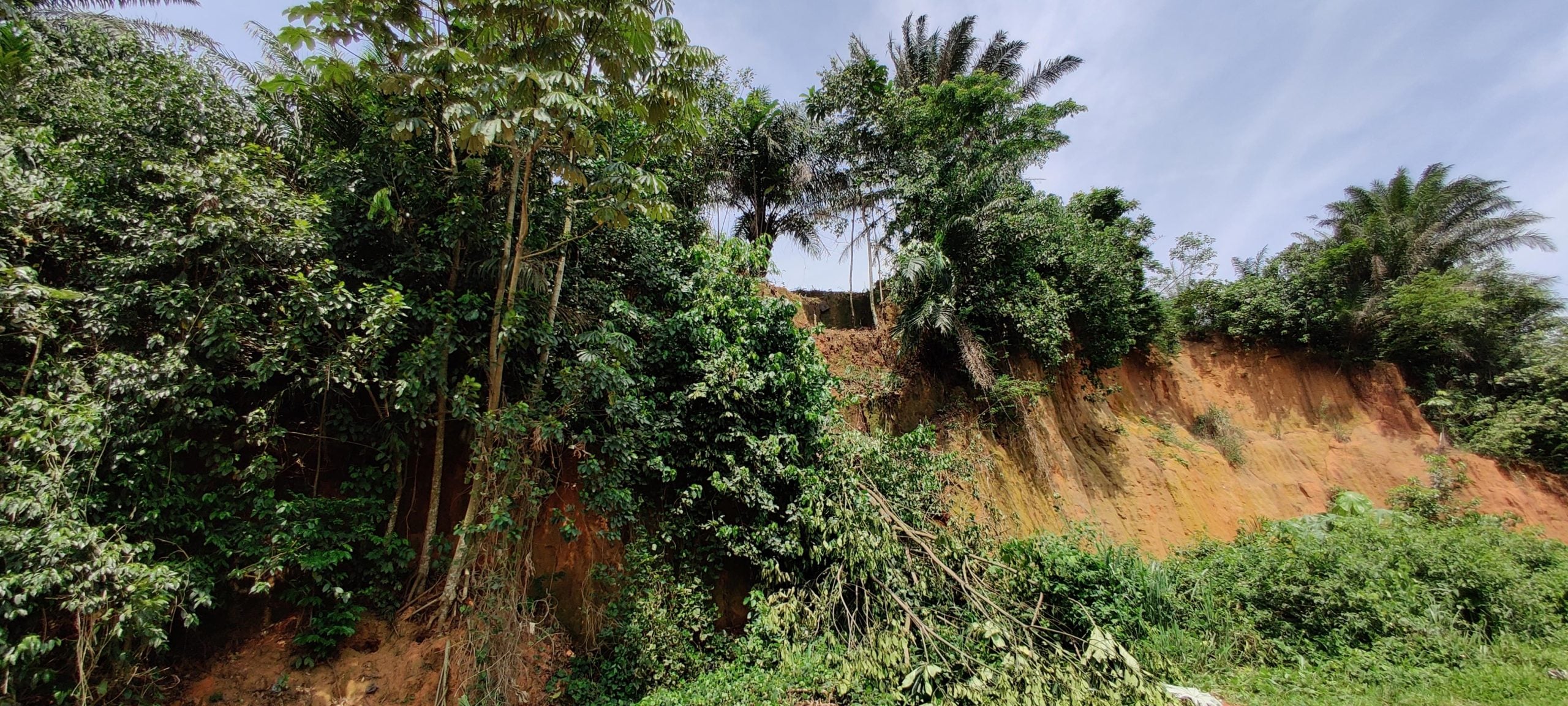
The story of this discovery begins in the 1980s, when the site was first investigated by co-author Professor Yodé Guédé of l’Université Félix Houphouët-Boigny on a joint Ivorian-Soviet mission. Results from this initial study revealed a deeply stratified site containing stone tools in an area of present-day rainforest. But the age of the tools – and the ecology of the site when they were deposited there – could not be determined.
“Several recent climate models suggested the area could have been a rainforest refuge in the past as well, even during dry periods of forest fragmentation,” explains Professor Eleanor Scerri, leader of the Human Palaeosystems research group at the Max Planck Institute of Geoanthropology and senior author of the study. “We knew the site presented the best possible chance for us to find out how far back into the past rainforest habitation extended.”
Cutting-Edge Methods Reveal a New Timeline
The Human Palaeosystems team therefore mounted a mission to re-investigate the site. “With Professor Guédé’s help, we relocated the original trench and were able to re-investigate it using state of the art methods that were not available thirty to forty years ago,” says Dr. James Blinkhorn, researcher at the University of Liverpool and the Max Planck Institute of Geoanthropology. The renewed study took place just in time, as the site has since been destroyed by mining activity.
“Before our study, the oldest secure evidence for habitation in African rainforests was around 18 thousand years ago and the oldest evidence of rainforest habitation anywhere came from southeast Asia at about 70 thousand years ago,” explains Dr. Eslem Ben Arous, researcher at the National Centre for Human Evolution Research (CENIEH), the Max Planck Institute of Geoanthropology and lead author of the study. “This pushes back the oldest known evidence of humans in rainforests by more than double the previously known estimate.”
Scientific Techniques Confirm the Findings
The researchers used several dating techniques, including Optically Stimulated Luminescence and Electron-Spin Resonance, to arrive at a date roughly 150 thousand years ago.
At the same time, sediment samples were separately investigated for pollen, silicified plant remains called phytoliths, and leaf wax isotopes. Analyses indicated the region was heavily wooded, with pollen and leaf waxes typical for humid West African rainforests. Low levels of grass pollen showed that the site wasn’t in a narrow strip of forest, but in a dense woodland.
The Start of More Exciting Discoveries
“This exciting discovery is the first of a long list as there are other Ivorian sites waiting to be investigated to study the human presence associated with rainforest,” says Professor Guédé joyfully.
“Convergent evidence shows beyond doubt that ecological diversity sits at the heart of our species,” says Professor Scerri. “This reflects a complex history of population subdivision, in which different populations lived in different regions and habitat types. We now need to ask how these early human niche expansions impacted the plants and animals that shared the same niche-space with humans. In other words, how far back does human alteration of pristine natural habitats go?”
Reference: “Humans in Africa’s wet tropical forests 150 thousand years ago” by Eslem Ben Arous, James A. Blinkhorn, Sarah Elliott, Christopher A. Kiahtipes, Charles D. N’zi, Mark D. Bateman, Mathieu Duval, Patrick Roberts, Robert Patalano, Alexander F. Blackwood, Khady Niang, Eugénie Affoua Kouamé, Edith Lebato, Emily Hallett, Jacopo N. Cerasoni, Erin Scott, Jana Ilgner, Maria Jesús Alonso Escarza, Francois Yodé Guédé and Eleanor M. L. Scerri, 26 February 2025, Nature.
DOI: 10.1038/s41586-025-08613-y
The research was funded by the Max Planck Society and the Leakey Foundation.
Never miss a breakthrough: Join the SciTechDaily newsletter.
Follow us on Google and Google News.
45 Comments
Very thought provoking.
What kind of humans could they talk communicate with each other. Good specifications
Talking doesnt make someone a human
The glory of our Creator,
All is possible we’re still here and thriving
The only thing this rewrites is how many more writers in agenda media there are who love to bask in their Nazi minds and refusal to acknowledge God that only will result in being marked as futile and stick that way like the fly tape they stand on.
Very interesting finding. I’d definitely love more details like how the tools indicate that humans inhabited the site?
Who else or what else would have used those tools? Other then humans?
Other hominins like chimps have tool industries too, but humans tend to have more elaborated ones.
If Homo erectus made it all the way across Asia to Java passing through an ending up in rainforests a million years ago, why is there any doubt that Homo sapiens was exploiting the ecosystem as well?
And maybe also Australia via Papua New Guinea?
Shrewd observation.
I’m pretty sure these dudes didn’t wipe their asses or wash their hands…
Am not sure if they used asses or donkeys for transport………..Or are asses donkeys and is it mules I am thinking of?
Even bears wipe their asses
Using rabbits I heard
They probably wiped better than you do… 😝
Zev Bronski’s latest book, Palinode – Keeper of Legends, discusses how one of the earliest human civilizations evolved from the Guatemalan rainforest.
They wore decent clothes and lived better than us within families, had trade and finance systems in place.
They found that monkeys also made the same tools it may not be humans. I don’t know who found or did the study but it’s out there animals made tools that they assume are human in the rainforest where they lived the monkeys
The lower levels had heavy tools like picks and Levallois reduction and small retouched tools.
“The Levallois technique (IPA: [lə.va.lwa]) is a name given by archaeologists to a distinctive type of stone knapping developed around 250,000 to 400,000[1] years ago during the Middle Palaeolithic period. It is part of the Mousterian stone tool industry, and was used by the Neanderthals in Europe and by modern humans in other regions such as the Levant.[2]” – Wikipedia
(The lower levels have uncertain estimates, but they fit with a 250,000 year period.)
Well, if you can get passed your evolutionary line of thinking you will see the earth us only about 6000 years old .
You mean all the sciences that use dating, such as geology, planetary physics, astronomy et cetera. Biology is just a consequence of having deep time (and a habitable planet).
Agreed
I’m agreeing with Bob.
Amen to that
It shows that all human ancestry come from Africa.Blacs are mother to all,inspite of being made the lowest humans
Well that went downhill pretty quick.
Define “lowest”, preferably in a non-racist sense. Africans have the highest diversity (as hominins evolved there), so it is the continent where humans will likely last longest if the conditions turn sour.
There is still more to learn. We can’t jump to conclusions.
This dovetails into my hypothesis that evolutonary habitats were ubiquitous spread about the earth… As man evolved and areas remained habitable socialital pressure for nomadic travel would be lax.
So interesting history of us Humans even in extreme climate conditions!
Rainforests appears on many continents, as do more temperate savannas.
ON. THE BACKSIDE OF PLANET EARTHS ONLY MOON WAS HALF OF A FLYING SAUCER AS YOU KNOW IT. STICKING OUT OF ITS SURFACE ((YES OUR ANCESTORS)) ALONG WITH VISITING REPTILIAN BEING S IDENTIFIED BY NEILL ARMSTRONG FIRST ASTRONAUT TO STEP. FOOT ON THE MOON WHEN THEY RETURNED TO EARTH AND DESCRIBED WHAT THEY EXPERIENCED THE BACKSIDE OF THE MOON WAS NUKED! NOW YOU KNOW WHY WE AREN’T WELCOME IN SPACE
Trump is one of those orange faced Reptilian visitors who is fascinated by whacking his little balls into holes on a patch of flat grass.
So any single men?
I found a stone that looks a lot like the one they’re holding up in this story almost The same Stone.
Ecological divergence would help explain the heterogenous African history, and align with our adaptability as well as set up conditions for out-of-Africa migration.
“human alteration of pristine natural habitats go?“ and theres the liberal B. S.
It’s pretty simple folks unless you really want to believe in a faith, i.e. business then listen up the complexities of life are way too drastic to have just been done for a big bang all right anyone with any mathematical background will tell you it’s impossible now take a look at all the planets around our universe. Have you noticed every one of them have a dominant element is different than earth ours happens to be gold you’re born and you have a passion for gold that’s because you’re meant to be a gold minor for the Anoki go to another planet and it’s made out of a diamond, yada yada yada someone and so forth.