
Close Menu
    Facebook X (Twitter) Instagram
    SciTechDaily
    • Biology
    • Chemistry
    • Earth
    • Health
    • Physics
    • Science
    • Space
    • Technology
    Facebook X (Twitter) Pinterest YouTube RSS
    SciTechDaily
    Home»Chemistry»Luminescent Sensor Identifies Valuable Rare Earth Element Terbium in Unexpected Locations
    Chemistry

    Luminescent Sensor Identifies Valuable Rare Earth Element Terbium in Unexpected Locations

    By U.S. National Science FoundationDecember 13, 2021No Comments2 Mins Read
    Facebook Twitter Pinterest Telegram LinkedIn WhatsApp Email Reddit
    Share
    Facebook Twitter LinkedIn Pinterest Telegram Email Reddit
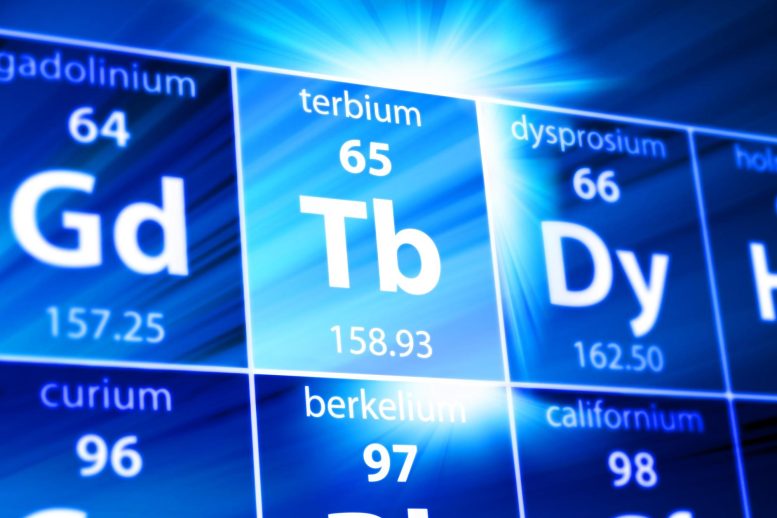
    Terbium Tb Periodic Table
    Researchers have created a luminescent sensor capable of detecting and measuring the presence of the rare earth element terbium.

    Protein-based sensor enables precise, eco-friendly terbium detection.

    Researchers funded by the U.S. National Science Foundation have developed a luminescent sensor that can detect and measure the presence of a rare earth element called terbium. The element is used in manufacturing devices like car batteries, smart phones, energy-efficient lighting, and X-ray equipment. 

    The scientists were successful in locating the element using a protein known for the strength and selectivity of its bond to rare earth metals — an approach that could be used to extract terbium from previously prohibitive environments.

    Researchers used the sensor to test samples from an acid mine waste treatment facility that had low levels of terbium and contained traces of other metals. The sensor performed as well as ICP-MS mass spectrometry, which has long been considered the industry standard.
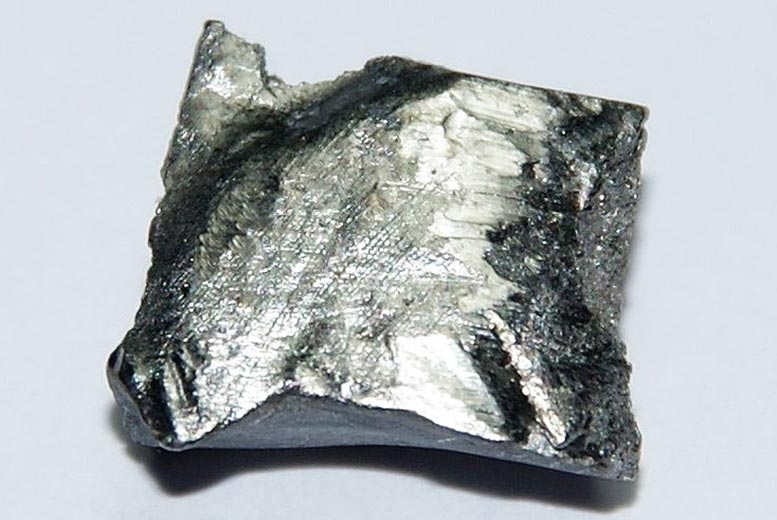
    Terbium
    A new sensor can detect the presence of a rare earth element called terbium. Credit: Wikimedia Commons

    This technological advance will aid in the creation of a domestic supply chain of terbium and other rare earth elements by locating and measuring these valuable materials in plentiful sources, the scientists said, including industrial waste and manufacturing byproducts like acid mine drainage and coal waste. 

    The techniques involved will also avoid or reduce some of the environmental concerns that arise in some rare earth element collection and detection practices. The portability, affordability and capability to operate in suboptimal environmental conditions will transform how rare earth metals are sustainably identified, sourced and managed, the researchers believe.

    Reference: “Probing Lanmodulin’s Lanthanide Recognition via Sensitized Luminescence Yields a Platform for Quantification of Terbium in Acid Mine Drainage” by Emily R. Featherston, Edward J. Issertell and Joseph A. Cotruvo Jr., 25 August 2021, Journal of the American Chemical Society.
    DOI: 10.1021/jacs.1c06360

    Never miss a breakthrough: Join the SciTechDaily newsletter.
    Follow us on Google and Google News.

    National Science Foundation Rare Earth Minerals Sensor
    Share. Facebook Twitter Pinterest LinkedIn Email Reddit

    Related Articles

    Revolutionizing Clean Energy: Transforming Rare Earth Element Extraction

    The Future of Petrochemicals: Chemical Looping and Core-Shell Catalysts

    Magnet Magic: How AI Is Revolutionizing Material Discovery

    New Hybrid Material Transforms Light: Revolutionizing Solar Energy, Medical Imaging, and Night Vision Technologies

    iPODs Transforms Microfluidic Testing for a Faster, Portable Future

    Photonic Cellulose Nanocrystal Sensor Revolutionizes Biomedical Monitoring

    Cerium’s Photocatalytic Superpower: Unlocking Titanium Dioxide’s Visible Light Absorption

    Tug-of-War Strategy Supercharges Chemical Separations

    New Sensor Can Detect Valuable Rare Earth Element in Waste Sources

    Leave A Reply Cancel Reply

    • Facebook
    • Twitter
    • Pinterest
    • YouTube

    Don't Miss a Discovery

    Subscribe for the Latest in Science & Tech!

    Trending News

    Largest-Ever Study Finds Medicinal Cannabis Ineffective for Anxiety, Depression, PTSD

    250-Million-Year-Old Egg Solves One of Evolution’s Biggest Mysteries

    Living With Roommates Might Be Changing Your Gut Microbiome Without You Knowing

    Century-Old Cleaning Chemical Linked to 500% Increased Risk of Parkinson’s Disease

    What if Your Memories Never Happened? Physicists Take a New Look at the Boltzmann Brain Paradox

    One of the Universe’s Largest Stars May Be Getting Ready To Explode

    Scientists Discover Enzyme That Could Supercharge Ozempic-Like Weight Loss Drugs

    Popular Sweetener Linked to DNA Damage – “It’s Something You Should Not Be Eating”

    Follow SciTechDaily
    • Facebook
    • Twitter
    • YouTube
    • Pinterest
    • Newsletter
    • RSS
    SciTech News
    • Biology News
    • Chemistry News
    • Earth News
    • Health News
    • Physics News
    • Science News
    • Space News
    • Technology News
    Recent Posts
    • Scientists Prove There Are Just Six Degrees of Separation in a Social Network
    • Bee Bacteria Could Fix a Major Flaw in Plant-Based Milk
    • Scientists Discover a Surprising Way To Make Bread Healthier and More Nutritious
    • Natural Compounds Boost Bone Implant Success While Killing Bacteria and Cancer Cells
    • After 60 Years, Scientists Uncover Unexpected Brain Effects of Popular Diabetes Drug Metformin
    Copyright © 1998 - 2026 SciTechDaily. All Rights Reserved.
    • Science News
    • About
    • Contact
    • Editorial Board
    • Privacy Policy
    • Terms of Use

    Type above and press Enter to search. Press Esc to cancel.