

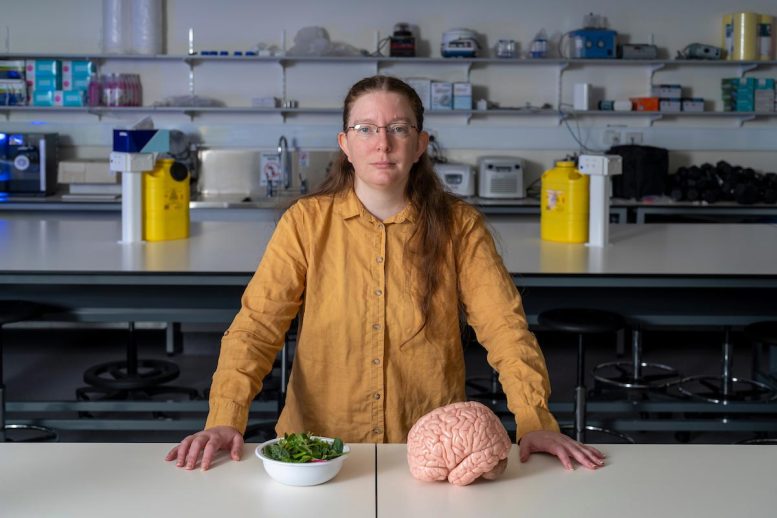
Consuming magnesium-rich foods such as spinach, nuts, and whole grains may safeguard against neurodegenerative diseases.
More magnesium in our daily diet leads to better brain health as we age, according to scientists from the Neuroimaging and Brain Lab at The Australian National University (ANU).
The researchers say increased intake of magnesium-rich foods such as spinach and nuts could also help reduce the risk of dementia, which is the second leading cause of death in Australia and the seventh biggest killer globally.
The study of more than 6,000 cognitively healthy participants in the United Kingdom aged 40 to 73 found people who consume more than 550 milligrams of magnesium each day have a brain age that is approximately one year younger by the time they reach 55 compared with someone with a normal magnesium intake of about 350 milligrams a day.
“Our study shows a 41 percent increase in magnesium intake could lead to less age-related brain shrinkage, which is associated with better cognitive function and lower risk or delayed onset of dementia in later life,” lead author and PhD researcher Khawlah Alateeq, from the ANU National Centre for Epidemiology and Population Health, said.
“This research highlights the potential benefits of a diet high in magnesium and the role it plays in promoting good brain health.”
It’s believed the number of people worldwide who will be diagnosed with dementia is expected to more than double from 57.4 million in 2019 to 152.8 million in 2050, placing a greater strain on health and social services and the global economy.
Potential Public Health Implications
“Since there is no cure for dementia and the development of pharmacological treatments have been unsuccessful for the past 30 years, it’s been suggested that greater attention should be directed towards prevention,” study co-author Dr. Erin Walsh, who is also from ANU, said.
“Our research could inform the development of public health interventions aimed at promoting healthy brain ageing through dietary strategies.”
The researchers say a higher intake of magnesium in our diets from a younger age may safeguard against neurodegenerative diseases and cognitive decline by the time we reach our 40s.
“The study shows higher dietary magnesium intake may contribute to neuroprotection earlier in the aging process and preventative effects may begin in our 40s or even earlier,” Ms. Alateeq said.
“This means people of all ages should be paying closer attention to their magnesium intake.
Gender Differences in Magnesium’s Benefits
“We also found the neuroprotective effects of more dietary magnesium appears to benefit women more than men and more so in post-menopausal than pre-menopausal women, although this may be due to the anti-inflammatory effect of magnesium.”
Participants completed an online questionnaire five times over a period of 16 months. The responses provided were used to calculate the daily magnesium intake of participants and were based on 200 different foods with varying portion sizes. The ANU team focused on magnesium-rich foods such as leafy green vegetables, legumes, nuts, seeds and wholegrains to provide an average estimation of magnesium intake from the participants’ diets.
The research is published in the European Journal of Nutrition.
Reference: “Dietary magnesium intake is related to larger brain volumes and lower white matter lesions with notable sex differences” by Khawlah Alateeq, Erin I. Walsh and Nicolas Cherbuin, 10 March 2023, European Journal of Nutrition.
DOI: 10.1007/s00394-023-03123-x
Never miss a breakthrough: Join the SciTechDaily newsletter.
Follow us on Google and Google News.
1 Comment
As usual, while the study might indicate-for long-term effects of the underlying causes of so much dementia, it fails to include anything about those underlying causes which need to be fully addressed before any significant amount of prevention can be achieved. Again (and again and again and again…) mainstream medicine consistently fails to recognize and factor-in the kind of very, very mild chronic food (minimally) allergy reactions that then renowned American immunologist Dr. Arthur F. Coca identified and reported on by 1935. To my lay victim experience of forty-two plus years, they alone can cause a high serum level of uric acid and all of the harms which that can cause, long-term (highly individual, many individual variables). On the ‘up’ side, the article does suggest that magnesium, like estrogen, is protective against uric acid.
Then, too, is the ignored officially (FDA in the US) approved food poisoning which can exacerbate Dr. Coca’s (my) kind of allergy reactions to change them from being practically harmless individual ones to becoming chronic and deadly dangerous ones, again, long-term. Seventy-nine years old now and already writing some on these matters for seventeen years and counting (updating as possible), to more than 3,000 intended professional recipients, I’m beginning to wonder if I’ll live long enough to see some professional individual, with the authority, qualifications and/or resources I don’t have, to recognize the factual natures of my repetitious comments, which often include disparate email messages to the researchers themselves (e.g., these)?