
Close Menu
    Facebook X (Twitter) Instagram
    SciTechDaily
    • Biology
    • Chemistry
    • Earth
    • Health
    • Physics
    • Science
    • Space
    • Technology
    Facebook X (Twitter) Pinterest YouTube RSS
    SciTechDaily
    Home»Health»Mediterranean Diet May Reduce Risk of Dementia by Up to 23%
    Health

    Mediterranean Diet May Reduce Risk of Dementia by Up to 23%

    By BMC (BioMed Central)March 20, 2023No Comments3 Mins Read
    Facebook Twitter Pinterest Telegram LinkedIn WhatsApp Email Reddit
    Share
    Facebook Twitter LinkedIn Pinterest Telegram Email Reddit
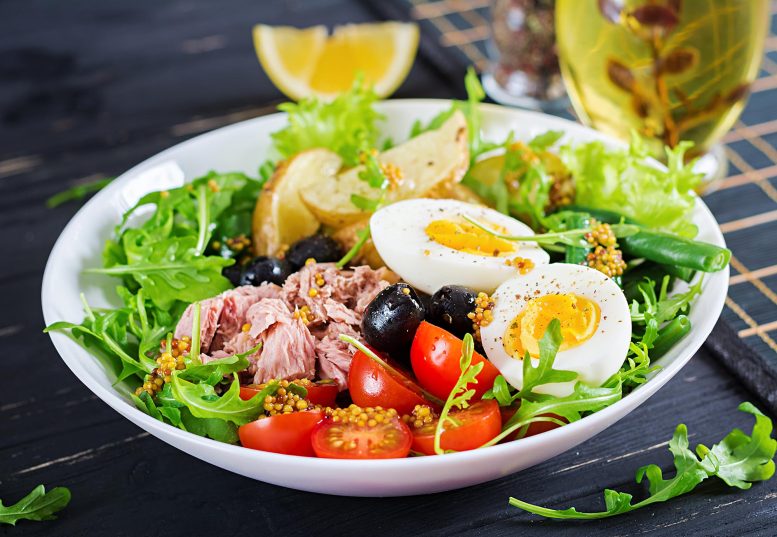
    Healthy Hearty Salad Tuna
    A study published in BMC Medicine suggests that consuming a Mediterranean-type diet, which includes foods such as seafood, fruit, and nuts, is associated with a reduced risk of dementia. Those who had a higher adherence to the diet had up to 23% lower risk for dementia compared to those with lower adherence to the diet.

    Mediterranean Diet Can Reduce Dementia Risk Regardless of Genetic Predisposition

    Consumption of a traditional Mediterranean-type diet – rich in foods such as seafood, fruit, and nuts – is associated with a reduced risk of dementia, reports a study published in the journal BMC Medicine. Individuals with a higher adherence to a Mediterranean diet had up to 23% lower risk for dementia compared with those who had lower adherence to a Mediterranean diet.

    Diet may be an important modifiable risk factor for dementia that could be targeted for disease prevention and risk reduction but previous studies exploring the impact of a Mediterranean diet have typically been limited to small sample sizes and low numbers of dementia cases. Oliver Shannon and colleagues analyzed data from 60,298 individuals from the UK Biobank who had completed a dietary assessment. The authors scored individuals using two measures for adherence to the Mediterranean diet. During the mean follow-up of 9.1 years there were 882 cases of dementia. The authors also considered each individual’s genetic risk for dementia by estimating their polygenic risk, a measure of all the different genes that are related to risk of dementia.

    The researchers found that participants with the highest adherence to the Mediterranean diet had a 23% lower risk of developing dementia in comparison with those with the lowest adherence score, equivalent to an absolute risk reduction of 0.55%. There was no significant interaction between the polygenic risk for dementia and adherence to a Mediterranean diet, which the authors suggest may indicate that the association of greater adherence to a Mediterranean diet and a reduced dementia risk remains, irrespective of the individual genetic risk for dementia. This finding was not consistent across all the sensitivity analyses and the authors propose further research is needed to assess the interaction between diet and genetics on dementia risk.

    The authors caution that their analysis is limited to individuals who self-reported their ethnic background as white, British, or Irish, as genetic data was only available based on European ancestry, and that further research is needed in a range of populations to determine the potential benefit. They conclude that, based on their data, a Mediterranean diet that has a high intake of healthy plant-based foods may be an important intervention to incorporate into future strategies to reduce dementia risk.

    For more on this research, see Mediterranean Diet Linked With Lower Risk of Dementia.

    Reference: “Mediterranean diet adherence is associated with lower dementia risk, independent of genetic predisposition: findings from the UK Biobank prospective cohort study” by Oliver M. Shannon, Janice M. Ranson, Sarah Gregory, Helen Macpherson, Catherine Milte, Marleen Lentjes, Angela Mulligan, Claire McEvoy, Alex Griffiths, Jamie Matu, Tom R. Hill, Ashley Adamson, Mario Siervo, Anne Marie Minihane, Graciela Muniz-Tererra, Craig Ritchie, John C. Mathers, David J. Llewellyn and Emma Stevenson, 14 March 2023, BMC Medicine.
    DOI: 10.1186/s12916-023-02772-3

    Never miss a breakthrough: Join the SciTechDaily newsletter.
    Follow us on Google and Google News.

    Dementia Food Science Mediterranean Diet Neuroscience Nutrition
    Share. Facebook Twitter Pinterest LinkedIn Email Reddit

    Related Articles

    This Everyday Food Was Linked to Better Brain Health

    Mediterranean Diet Linked With 23% Lower Risk of Dementia

    New Research: Does the Mediterranean Diet Really Decrease Your Risk of Dementia?

    Natural Compound in Basil May Protect Against Alzheimer’s Disease

    Bitter Brew: High Coffee Consumption Is Associated With Smaller Brain Volume

    Eating Just One Serving of Processed Meat a Day Could Increase Dementia Risk by 44%

    Omega-3 From Eating Fish May Protect Our Brains From Toxic Effects of Air Pollution

    The Combination of Foods You Eat Together May Raise Dementia Risk

    Simply Eating Walnuts May Slow Cognitive Decline In At-Risk Elderly

    Leave A Reply Cancel Reply

    • Facebook
    • Twitter
    • Pinterest
    • YouTube

    Don't Miss a Discovery

    Subscribe for the Latest in Science & Tech!

    Trending News

    Bone-Strengthening Discovery Could Reverse Osteoporosis

    Scientists Uncover Hidden Trigger Behind Stem Cell Aging

    Scientists Find Way to Reverse Fatty Liver Disease Without Changing Diet

    Could Humans Regrow Limbs? New Study Reveals Promising Genetic Pathway

    Scientists Reveal Eating Fruits and Vegetables May Increase Your Risk of Lung Cancer

    Scientists Reverse Brain Aging With Simple Nasal Spray

    Scientists Uncover Potential Brain Risks of Popular Fish Oil Supplements

    Scientists Discover a Surprising Way To Make Bread Healthier and More Nutritious

    Follow SciTechDaily
    • Facebook
    • Twitter
    • YouTube
    • Pinterest
    • Newsletter
    • RSS
    SciTech News
    • Biology News
    • Chemistry News
    • Earth News
    • Health News
    • Physics News
    • Science News
    • Space News
    • Technology News
    Recent Posts
    • Alzheimer’s Symptoms May Start Outside the Brain, Study Finds
    • Cancer’s Secret Weapon? Scientists Reveal How Tumors “Learn” To Survive Treatment
    • Millions Take This Popular Supplement – Scientists Discover a Concerning Link to Heart Failure
    • What Makes Rubber So Strong? Scientists Finally Solve 100-Year-Old Mystery
    • Scientists Decode Mysterious Magnetic “Maze Domains” To Boost EV Efficiency
    Copyright © 1998 - 2026 SciTechDaily. All Rights Reserved.
    • Science News
    • About
    • Contact
    • Editorial Board
    • Privacy Policy
    • Terms of Use

    Type above and press Enter to search. Press Esc to cancel.