
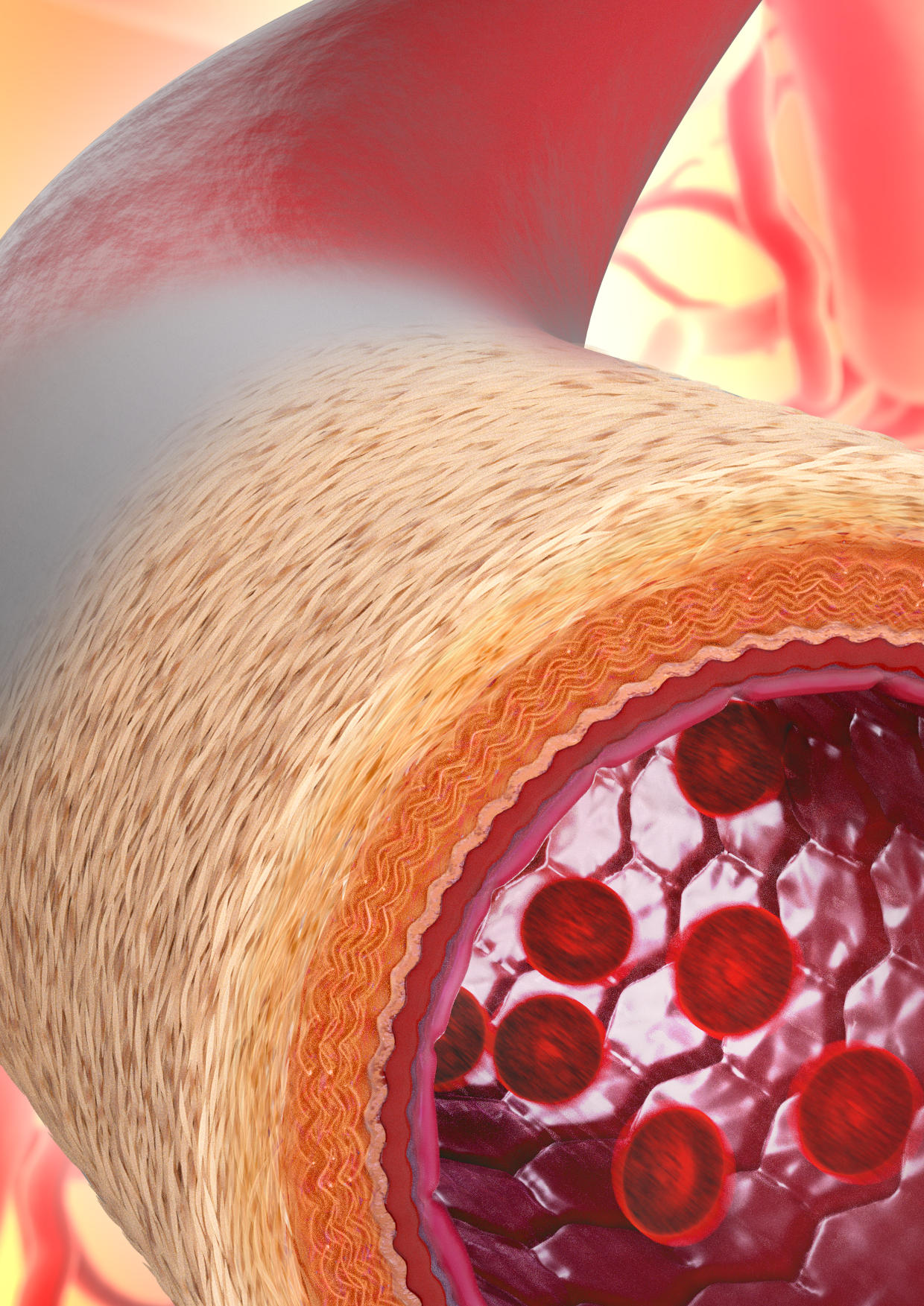
This is the first time scientists have observed vessels form with such a close resemblance to the complicated structure of naturally occurring blood vessels.
An international research collaboration headed by the University of Sydney has created technology that allows for the production of materials that mirror the structure of living blood vessels, with major implications for the future of surgery.
Preclinical research showed that once the manufactured blood vessel was transplanted into mice, the body accepted it and new cells and tissue began to develop in the appropriate locations, thereby converting it into a “living blood vessel.”
While others have attempted to create blood vessels with varying degrees of success in the past, senior author Professor Anthony Weiss from the Charles Perkins Centre noted that this is the first instance where scientists have observed the vessels develop with such a high degree of similarity to the complex structure of naturally occurring blood vessels.
“Nature converts this manufactured tube over time to one that looks, behaves, and functions like a real blood vessel,” said Professor Weiss. “The technology’s ability to recreate the complex structure of biological tissues shows it has the potential to not only manufacture blood vessels to assist in surgery but also sets the scene for the future creation of other synthetic tissues such as heart valves.”
Implications for Pediatric Surgery
Co-author Dr. Christopher Breuer of the Center for Regenerative Medicine at Nationwide Children’s Hospital and the Wexner Medical Center in Columbus, USA said he is excited about the potential of the research for children.
“Currently when kids suffer from an abnormal vessel, surgeons have no choice but to use synthetic vessels that function well for a short time but inevitably children need additional surgeries as they grow. This new technology provides the exciting foundation for the manufactured blood vessels that to continue to grow and develop over time.”
The technology was pioneered by lead author and bioengineer Dr. Ziyu Wang from the University of Sydney’s Charles Perkins Centre as part of his Ph.D. He expanded on previous research by Dr. Suzanne Mithieux, who is also affiliated with the Charles Perkins Centre.
Natural blood vessel walls are made up of concentric rings of elastin (a protein that provides vessels elasticity and the ability to stretch), much like nesting dolls. As a result, the rings are elastic, allowing blood vessels to change size in response to blood flow.
This new technology means that, for the first time, these important concentric elastin rings can develop naturally within the walls of implanted tubes.
Simplified and Efficient Manufacturing
Unlike current manufacturing processes for synthetic materials used for surgery, which can be lengthy, complex, and expensive, this new manufacturing process is swift and well-defined.
“These synthetic vessels are elegant because they are manufactured from just two naturally occurring materials that are well-tolerated by the body,” said Dr. Wang.
“Tropoelastin (the natural building block for elastin) is packaged in an elastic sheath which dissipates gradually and promotes the formation of highly organized, natural mimics of functioning blood vessels.”
The manufactured tube can also be safely stored in a sterile plastic bag until transplantation.
Reference: “Rapid Regeneration of a Neoartery with Elastic Lamellae” by Ziyu Wang, Suzanne M. Mithieux, Howard Vindin, Yiwei Wang, Miao Zhang, Linyang Liu, Jacob Zbinden, Kevin M. Blum, Tai Yi, Yuichi Matsuzaki, Farshad Oveissi, Reyda Akdemir, Karen M. Lockley, Lingyue Zhang, Ke Ma, Juan Guan, Anna Waterhouse, Nguyen T. H. Pham, Brian S. Hawkett, Toshiharu Shinoka, Christopher K. Breuer and Anthony S. Weiss, 19 September 2022, Advanced Materials.
DOI: 10.1002/adma.202205614
Ethics approval was obtained from the Sydney Local Health District, Australia and Nationwide Children’s Hospital, USA. Professor Anthony Weiss is the founding scientist of Elastagen Pty.Ltd., now sold to Allergan, Inc., an AbbVie company. The authors declare no other competing interests.
Never miss a breakthrough: Join the SciTechDaily newsletter.
Follow us on Google and Google News.
1 Comment
Uh, deceptive article maybe? People will quote the headline without actually reading and say “scientists can create life”!