
Close Menu
    Facebook X (Twitter) Instagram
    SciTechDaily
    • Biology
    • Chemistry
    • Earth
    • Health
    • Physics
    • Science
    • Space
    • Technology
    Facebook X (Twitter) Pinterest YouTube RSS
    SciTechDaily
    Home»Earth»Major Los Angeles Earthquake Threat May Be Posed by Overlooked Strand of the Southern San Andreas Fault
    Earth

    Major Los Angeles Earthquake Threat May Be Posed by Overlooked Strand of the Southern San Andreas Fault

    By American Association for the Advancement of ScienceMarch 25, 20212 Comments3 Mins Read
    Facebook Twitter Pinterest Telegram LinkedIn WhatsApp Email Reddit
    Share
    Facebook Twitter LinkedIn Pinterest Telegram Email Reddit
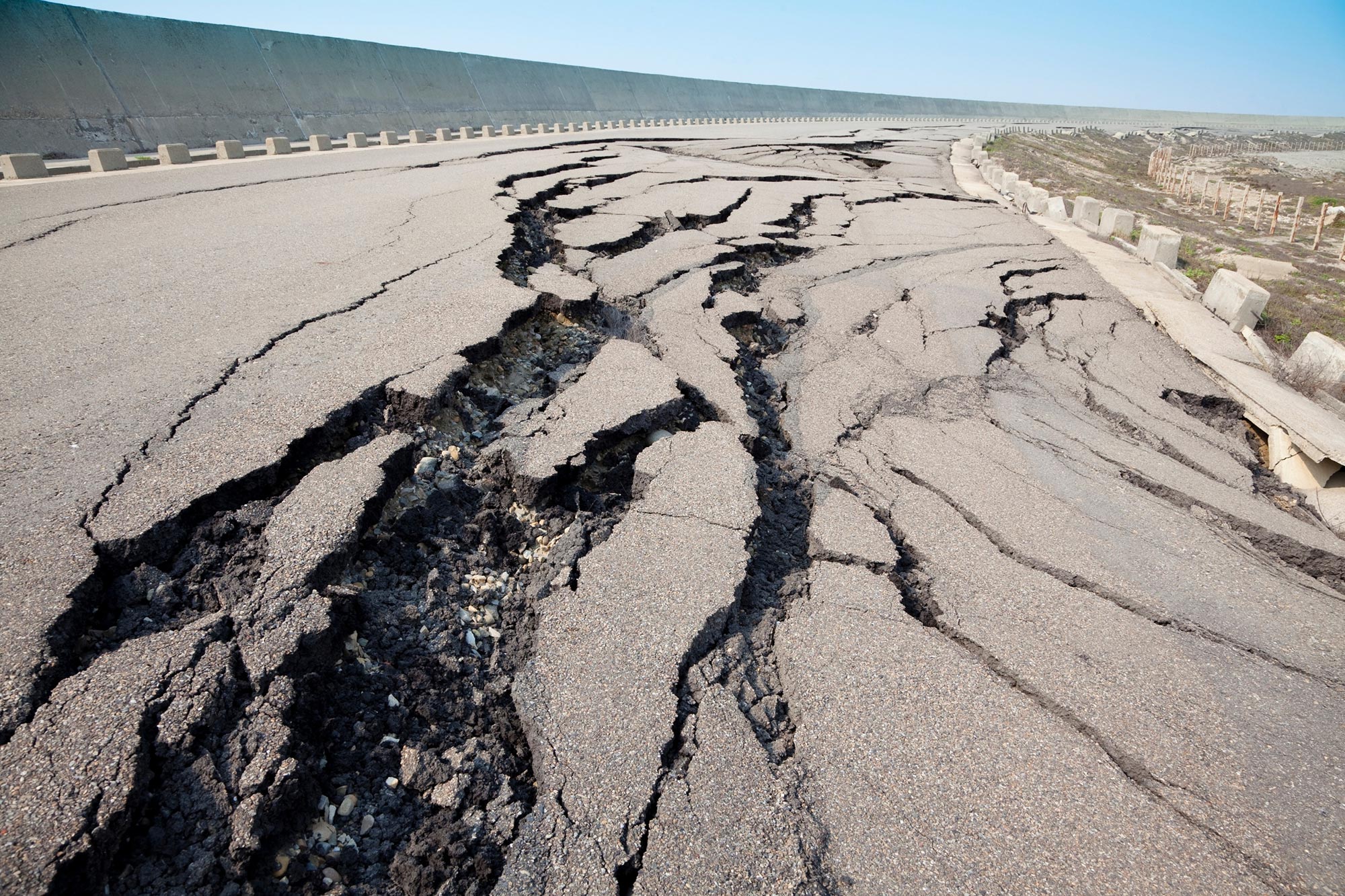
    Road Cracked From Earthquake
    A recent study determined the Mission Creek strand, which passes through major water and power infrastructure for the greater Los Angeles region, as the primary earthquake threat along the southern San Andreas fault.

    The Mission Creek strand may be Southern California’s most dangerous fault.

    Addressing uncertainties about where large earthquakes are most likely to occur along the southern San Andreas fault, which splits into multiple strands east of Los Angeles, a new study identifies a strand that has largely flown under the radar of public concern as the region’s greatest earthquake threat.

    The study determines that the Mission Creek strand, which passes through major water and power infrastructure for the greater Los Angeles region, may account for almost the entire slip rate of this portion of the fault, suggesting it may actually be the primary Pacific-North American plate boundary fault at this latitude.

    The San Andreas fault threatens large future earthquakes, since its southernmost section has not ruptured in almost 300 years and has accumulated significant strain. However, determining which of the region’s multiple fault strands carries the brunt of this strain has proven challenging due to limited resolution in slip rate models.
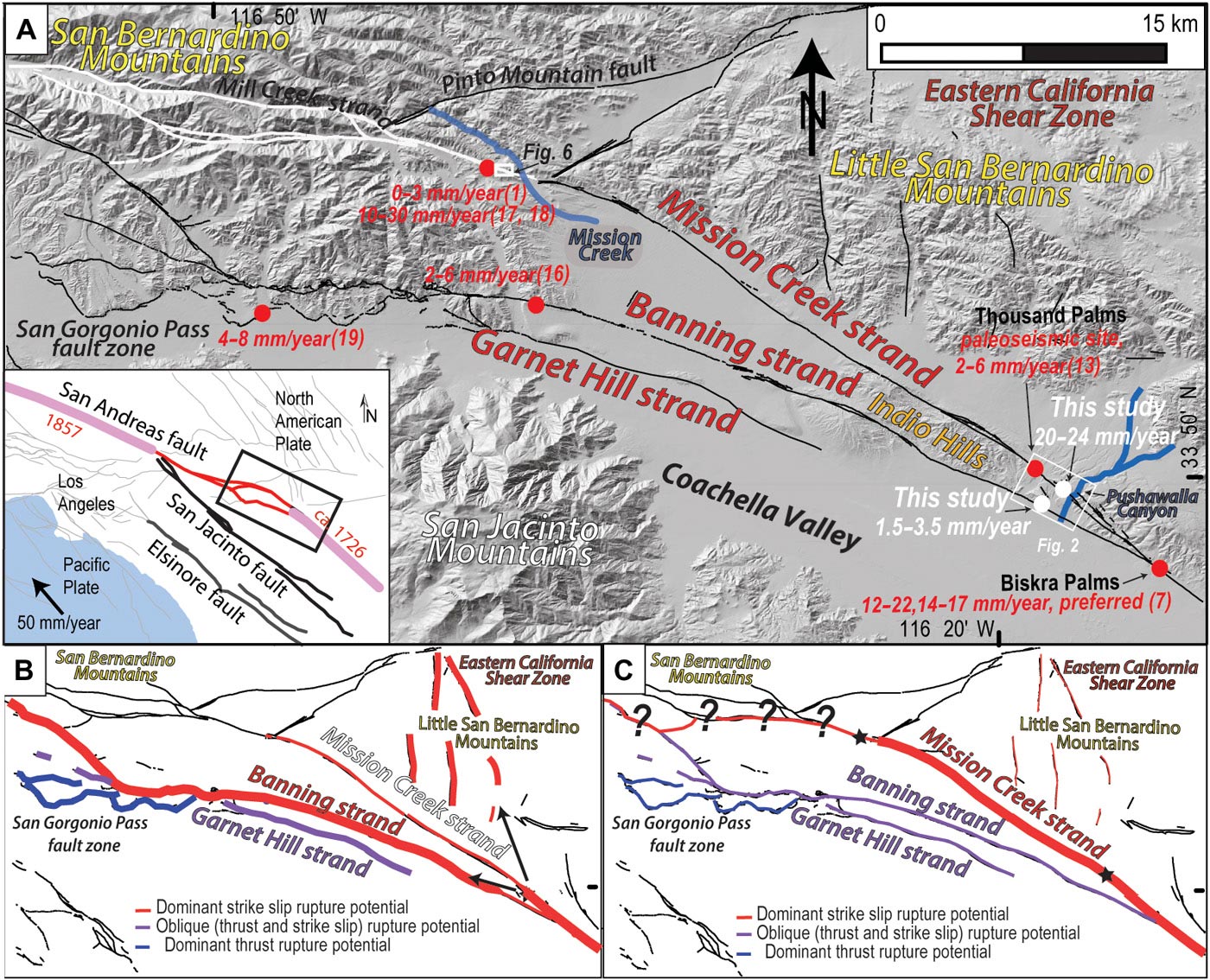
    Southern SAF Map
    Location map of study area on the southern SAF. Credit: Blisniuk et al., Science Advances.

    Reevaluating Earthquake Risk Models

    While existing estimates for a rupture in coming decades are higher for the Banning and Garnet Hill strands and the San Gorgonio Pass fault zone than for the Mission Creek strand, the relative risks for earthquakes along different strands has remained uncertain. To overcome the limitations of existing models, Kimberly Blisniuk and colleagues investigated the long-term deformation rates of the Mission Creek and Banning strands, calculating their fault-slip rates using cumulative records of fault motion preserved over time in nearby landforms.

    Based on field mapping conducted using lidar data, the researchers chose Pushawalla Canyon as the best site to conduct their slip rate measurements. Blisniuk et al. found evidence of geologically recent slips from the faults at these latitudes, including streams carved out from late Pleistocene rock and gullies in steep-walled canyons that likely date from the Holocene.

    The researchers determined that the Mission Creek strand accounts for about 21.5 millimeters per year of the San Andreas fault’s total 24.1 millimeters per year slip rate, while the Banning strand accounts for only about 2.5 millimeters per year of the slip rate. The findings indicate that the Mission Creek strand, which has received less attention for its earthquake risks than the Banning strand, Garnet Hill strand, and San Gorgonio Pass, maybe a greater hazard than previously thought.

    Reference: “A revised position for the primary strand of the Pleistocene-Holocene San Andreas fault in southern California” by Kimberly Blisniuk, Katherine Scharer, Warren D. Sharp, Roland Burgmann, Colin Amos and Michael Rymer, 24 March 2021, Science Advances.
    DOI: 10.1126/sciadv.aaz5691

    Never miss a breakthrough: Join the SciTechDaily newsletter.
    Follow us on Google and Google News.

    American Association for the Advancement of Science Earthquakes Popular Tectonic Plates
    Share. Facebook Twitter Pinterest LinkedIn Email Reddit

    Related Articles

    Quake-Ception – Groundbreaking Earthquake Discovery: Risk Models Overlook an Important Element

    Two of the Most Destructive Forces of Nature – Earthquakes and Tsunamis – May Be a Bigger Threat Than Thought

    Melting Glaciers Contribute to Alaska Earthquakes, Cause Land to Rise at 1.5 Inches per Year

    Using Google’s 10,000-km-Long Underwater Fiber-Optic Cable as a Seafloor Seismic Sensor

    New Supercomputer View of Seismic Hazards: Simulating 800,000 Years of California Earthquake History to Pinpoint Risks

    Strange Precariously Balanced Rocks Provide Earthquake Forecasting Clues

    Rare ‘Boomerang’ Earthquake Tracked by Scientists in the Ocean for the First Time

    New Clues to Deep Earthquakes Could Help Unravel One of the Most Mysterious Geophysical Processes on Earth

    Earthquakes Deform Gravity – New Algorithm Could Enable Early Warning Systems

    2 Comments

    1. just wondering on March 25, 2021 7:58 am

      map?

      Reply
      • Mike O'Neill on March 25, 2021 8:17 am

        A map has been added above.

        For more maps and figures, click on the DOI link at the bottom of the article to go to the study on Science Advances. There you can click the “Figures & Data” tab for more maps and photos.

        Reply
    Leave A Reply Cancel Reply

    • Facebook
    • Twitter
    • Pinterest
    • YouTube

    Don't Miss a Discovery

    Subscribe for the Latest in Science & Tech!

    Trending News

    Largest-Ever Study Finds Medicinal Cannabis Ineffective for Anxiety, Depression, PTSD

    250-Million-Year-Old Egg Solves One of Evolution’s Biggest Mysteries

    Living With Roommates Might Be Changing Your Gut Microbiome Without You Knowing

    Century-Old Cleaning Chemical Linked to 500% Increased Risk of Parkinson’s Disease

    What if Your Memories Never Happened? Physicists Take a New Look at the Boltzmann Brain Paradox

    One of the Universe’s Largest Stars May Be Getting Ready To Explode

    Scientists Discover Enzyme That Could Supercharge Ozempic-Like Weight Loss Drugs

    Popular Sweetener Linked to DNA Damage – “It’s Something You Should Not Be Eating”

    Follow SciTechDaily
    • Facebook
    • Twitter
    • YouTube
    • Pinterest
    • Newsletter
    • RSS
    SciTech News
    • Biology News
    • Chemistry News
    • Earth News
    • Health News
    • Physics News
    • Science News
    • Space News
    • Technology News
    Recent Posts
    • What Did Prehistoric Europeans Eat? Scientists Uncover Surprising Answers
    • Scientists Say This Overlooked Organ Could Hold the Key to Longer Life
    • Want Less Stress? Landmark Study Points to a Simple Habit
    • Scientists Reveal Eating Fruits and Vegetables May Increase Your Risk of Lung Cancer
    • AI Reveals Explosive Growth of Floating Algae Across the World’s Oceans
    Copyright © 1998 - 2026 SciTechDaily. All Rights Reserved.
    • Science News
    • About
    • Contact
    • Editorial Board
    • Privacy Policy
    • Terms of Use

    Type above and press Enter to search. Press Esc to cancel.