
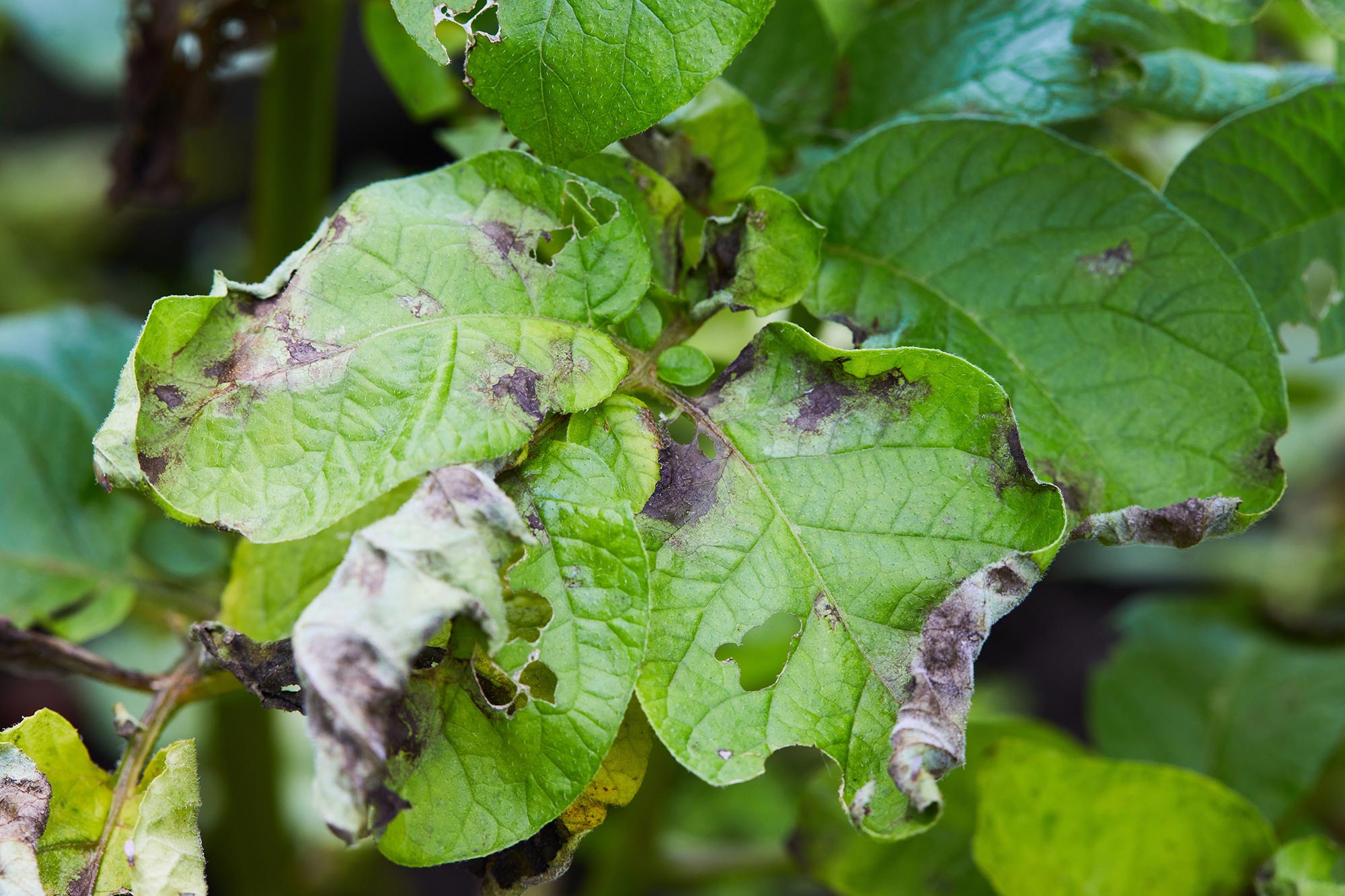
Text analytics revealed new insights into the spread of Phytophthora infestans, from its historical impact on the Irish potato famine to its modern presence. This approach offers a novel way to track and understand plant pathogens over time.
North Carolina State University researchers used text analytics on both historic and modern writing to reveal more information about the effects and spread of the plant pathogen – now known as Phytophthora infestans – that caused the 1840s Irish potato famine and that continues to vex breeders of potatoes and tomatoes.
The study examined keyword terms like “potato rot” and “potato disease” after digitizing historic farm reports, news accounts, and U.S. Patent Office agricultural records from 1843 to 1845 to show how the pathogen first spread across the northeast United States before causing the devastating famine in Ireland in 1845. The study also used text analysis to track social media feeds for the modern-day spread of late blight.
Insights From Historical Documents and Social Media
According to the researchers, textual analysis holds promise as a useful tool to help researchers track and visualize both historic and current plant diseases.
“We went back to original descriptions of the potato disease outbreaks in the United States because they occurred between 1843 and 1845, before outbreaks occurred in Europe,” says Jean Ristaino, William Neal Reynolds Distinguished Professor of Plant Pathology at North Carolina State University and corresponding author of a paper in Scientific Reports that describes the study. “We searched those descriptions by keywords, and by doing that we were able to recreate the original outbreak maps using location coordinates mentioned in the documents.
“We were also trying to learn what people were thinking about the disease at the time and where it came from.”
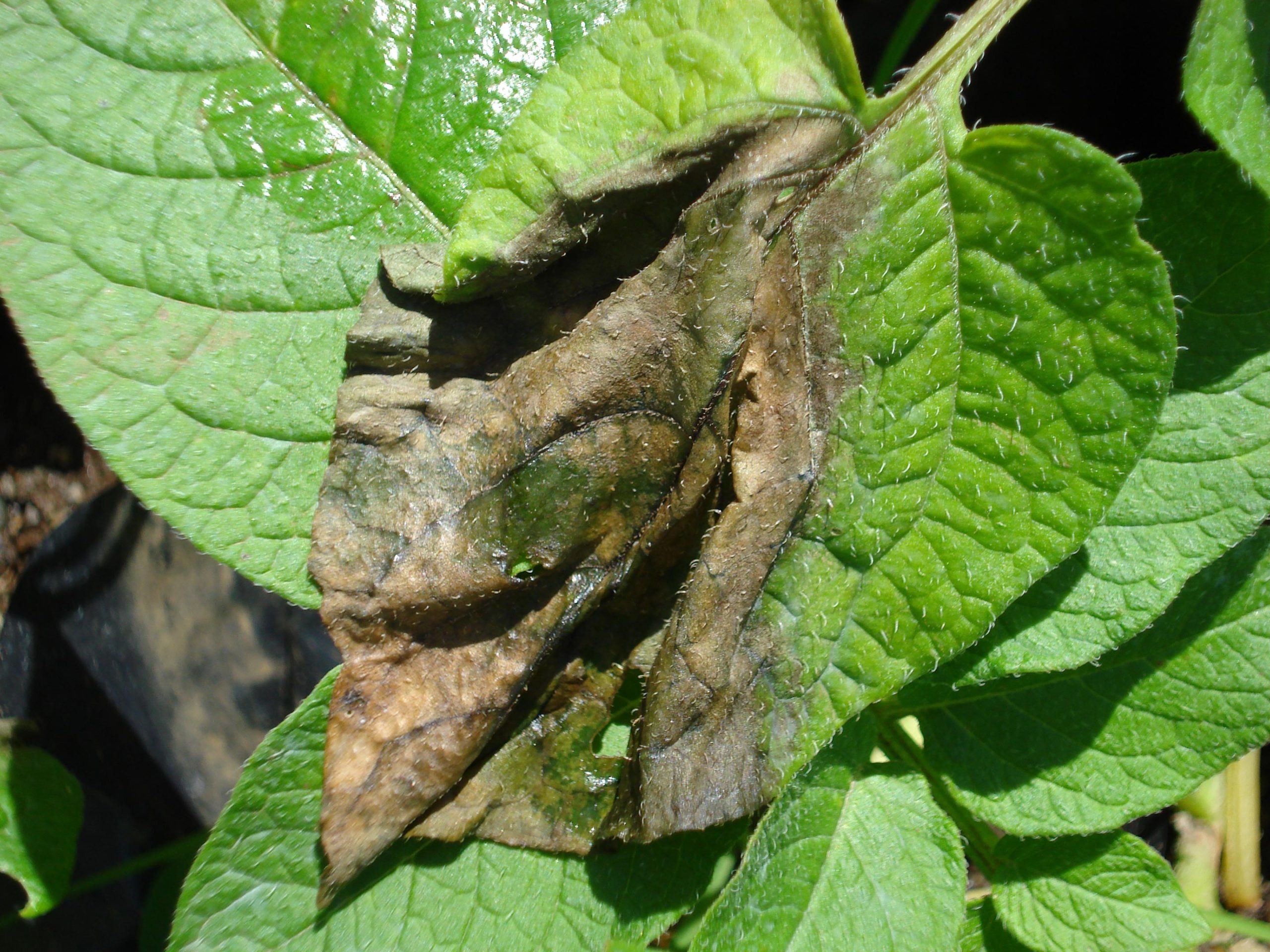
The analysis documents late blight disease on potatoes in five states – New York, Delaware, Massachusetts, New Jersey, and Pennsylvania – before it spread to the rest of the northeastern U.S. and into Canada between 1843 and 1845. The pathogen later wreaked havoc on Europe – especially Ireland.
The paper also examined tweets from 2012 to 2022 to learn more about modern spread of P. infestans. They mined tweets for both common and scientific names of the pathogen and were able to geolocate the sources.
“The social media mining was interesting because we found that most people talking about this disease are scientists in developed countries promoting their own work on Twitter (now X),” Ristaino said. “It was also interesting to note that states where the disease appeared all those many years ago still have the disease now.”
Discoveries and Future Directions
The study also used Google Ngram search terms to reveal a surprising finding. The researchers saw a spike in late blight disease reported in 1950s documents. Drilling down into the relevant academic literature cited in the documents, Ristaino saw evidence of a large late blight outbreak in tomatoes in the United States after World War II.
“That could have been the emergence of a new North American strain of the pathogen, known as U.S. 1, that became really widespread after that,” Ristaino said.
Ristaino added that she and her team plan to continue this type of work and expand the analytic tools to other plant diseases and pests.
Reference: “Reconstructing historic and modern potato late blight outbreaks using text analytics” by Ariel Saffer, Laura Tateosian, Amanda C. Saville, Yi-Peng Yang and Jean B. Ristaino, 15 February 2024, Scientific Reports.
DOI: 10.1038/s41598-024-52870-2
Co-authors Ariel Saffer, Laura Tateosian and Yi-Peng Yang are part of NC State’s Center for Geospatial Analytics. Amanda C. Saville, a research specialist in Ristaino’s lab, also co-authored the paper. Funding was provided by the Triangle Center for Evolutionary Medicine Seed Grant; the U.S. Dept. of Agriculture’s NIFA under grant number 2015-2370; and by the National Science Foundation PIPP Phase 1 grant number 2022-1191.
Never miss a breakthrough: Join the SciTechDaily newsletter.
Follow us on Google and Google News.