
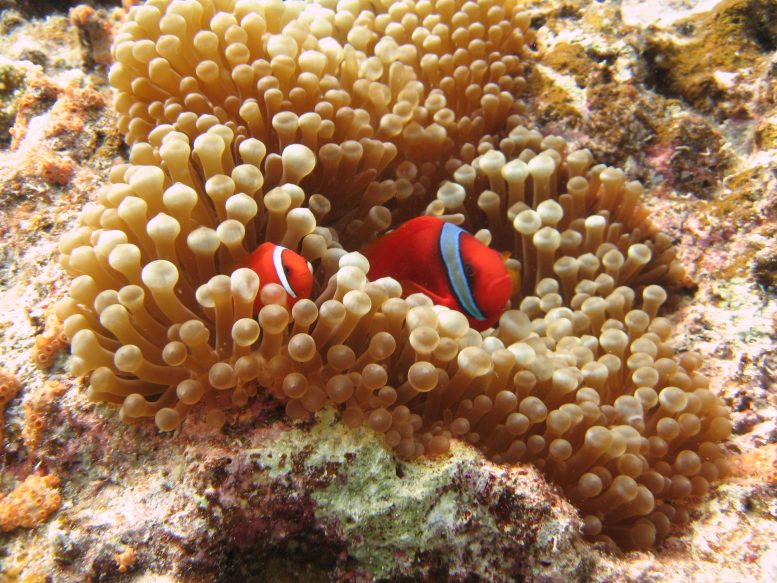
Molecular cloaking mechanism unveils the iconic partnership between anemonefish and anemones.
The symbiotic relationship between clownfish and sea anemones is one of the most well-known examples of mutualism in nature. Scientists have now solved a century-old mystery: how anemonefish avoid being stung by their hosts’ venomous tentacles.
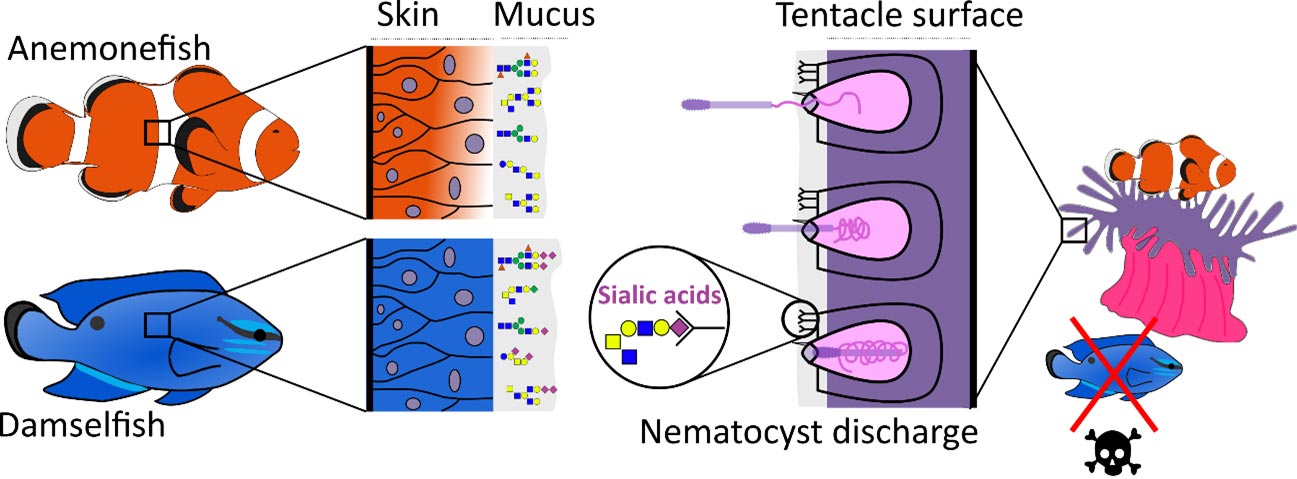
Researchers from the Okinawa Institute of Science and Technology (OIST), in collaboration with international partners, discovered that anemonefish have evolved to maintain exceptionally low levels of sialic acid in their skin mucus. This prevents the activation of nematocysts, the stinging cells of sea anemones.
The study, published in BMC Biology, also found that sea anemones lack these sugar compounds in their own mucus, likely to prevent self-stinging. This suggests that anemonefish have adopted a similar biochemical strategy, allowing them to live safely among their hosts.
Comparing symbiotic and non-symbiotic species
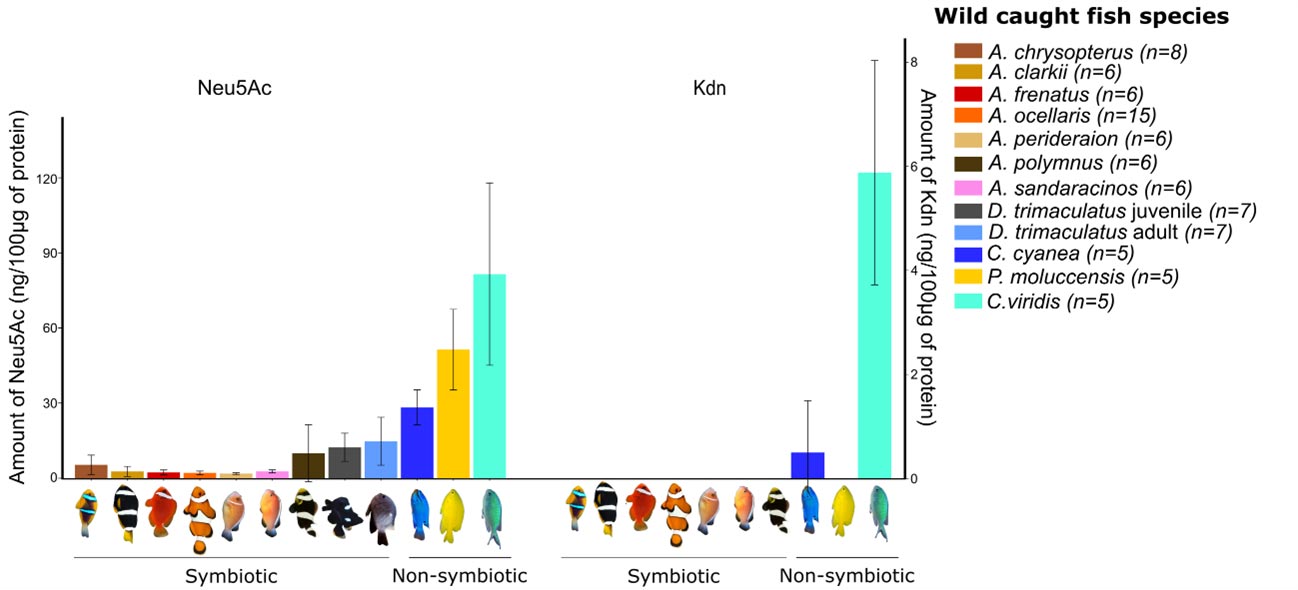
The study combined multiple approaches, including glycobiology (the study of sugars) and transcriptomics – the study of all RNA molecules produced by an organism’s genome to understand gene expression and regulation. The researchers measured and analyzed mucus samples from both anemonefish and non-symbiotic damselfish species, using advanced techniques to separate and analyze the components of a mixture (liquid chromatography).
Sialic acids are important sugar molecules naturally present in most living organisms that play important roles in cellular processes such as cell-cell interactions and protein communication. Previous studies have shown that these molecules can trigger the release of sea anemone stinging cells. Very interestingly, scientists found that while anemonefish maintain certain levels of sialic acid in their internal organs like the brain and gut, they have specifically evolved to have very low levels in their protective mucus layer compared to non-symbiotic damselfish.
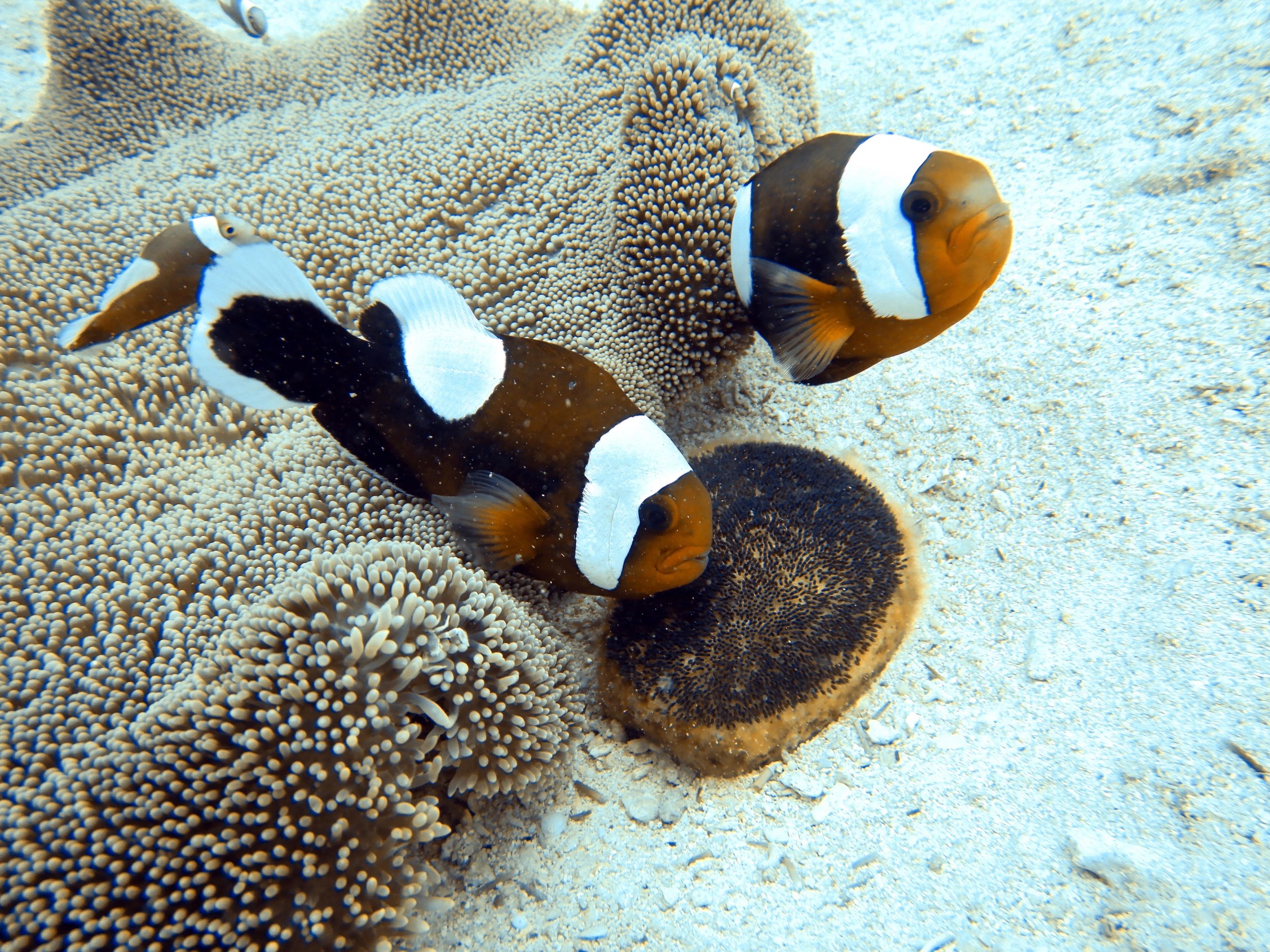
They also studied a unique case of the domino damselfish, which can live with anemones as juveniles. They found that these fish also show reduced sialic acid levels in their mucus during their juvenile stage, suggesting that different species have evolved similar adaptations for achieving symbiosis with sea anemones.
A particularly interesting finding was the correlation between sialic acid levels and the developmental stages of anemonefish. Young larvae, which are not yet ready to live with sea anemones, have normal sialic acid levels and get stung if they approach an anemone. However, when they metamorphose and develop their characteristic white stripes and bright orange coloring, their sialic acid levels drop, allowing them to safely enter the anemone.
“Our findings represent a major advancement because it’s one of the first studies to combine glycobiology with transcriptomic analysis to investigate this mechanism,” Dr. Natacha Roux, a researcher at Centre de Recherches Insulaires et Observatoire de l’Environnement (CRIOBE) and former researcher in OIST’s Computational Neuroethology Unit, elaborated.
Adapting for co-existence
The research team has two main hypotheses about how anemonefish maintain low sialic acid levels: either their mucus-producing cells express high levels of enzymes that cut sialic acid, or bacteria in their mucus microbiome are responsible for breaking it down. The second hypothesis is supported by previous observations that when anemonefish and sea anemones live together, their bacterial flora converge over time.
Prof. Vincent Laudet, head of OIST’s Marine Eco-Evo-Devo Unit emphasized that this is likely just one part of a complex symbiotic relationship. “Other factors might include the thickness of fish scales, the exchange of nutrients between species, and possible adjustments by the anemones themselves. The relationship is mutually beneficial, with anemonefish receiving protection from predators while helping to defend the anemone and providing nutritional benefits,” he said.
Future research aims to provide ultimate proof of this mechanism by attempting to manipulate the system – making anemonefish sensitive to anemone stings and non-symbiotic fish resistant. However, this is technically challenging and remains a work in progress. The study is also significant because it represents the first major paper from a new international research laboratory collaboration between France’s National Centre for Scientific Research (CNRS) and OIST.
Reference: “Anemonefish use sialic acid metabolism as Trojan horse to avoid giant sea anemone stinging” by Natacha Roux, Clément Delannoy, Shin-Yi Yu, Saori Miura, Lilian Carlu, Laurence Besseau, Takahiro Nakagawa, Chihiro Sato, Ken Kitajima, Yann Guerardel and Vincent Laudet, 15 February 2025, BMC Biology.
DOI: 10.1186/s12915-025-02144-8
Funding: Assisted Joint Research Program of the J-GlycoNet cooperative network, Okinawa Institute of Science and Technology Graduate University, Shinka Grant Funding
Never miss a breakthrough: Join the SciTechDaily newsletter.
Follow us on Google and Google News.