
Close Menu
    Facebook X (Twitter) Instagram
    SciTechDaily
    • Biology
    • Chemistry
    • Earth
    • Health
    • Physics
    • Science
    • Space
    • Technology
    Facebook X (Twitter) Pinterest YouTube RSS
    SciTechDaily
    Home»Space»Mars in a Flash: How Pulsed Plasma Rockets Are Revolutionizing Space Travel
    Space

    Mars in a Flash: How Pulsed Plasma Rockets Are Revolutionizing Space Travel

    By Brianna Clements, Howe IndustriesMay 20, 20243 Comments3 Mins Read
    Facebook Twitter Pinterest Telegram LinkedIn WhatsApp Email Reddit
    Share
    Facebook Twitter LinkedIn Pinterest Telegram Email Reddit
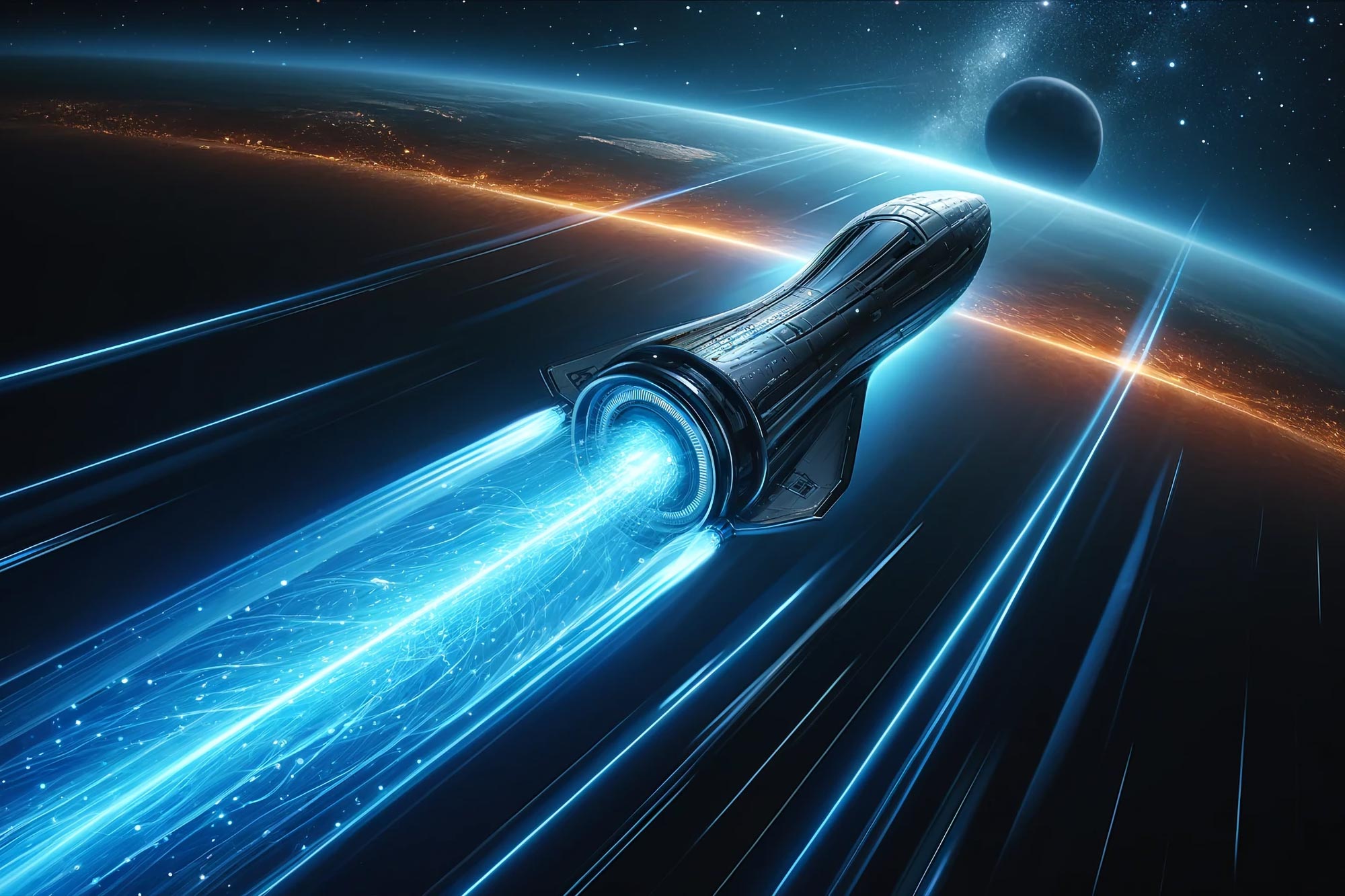
    Futuristic Rocket Propulsion Spaceship Art Concept
    Howe Industries is developing a Pulsed Plasma Rocket (PPR) capable of producing 100,000 N of thrust with a specific impulse of 5,000 seconds, promising to revolutionize space travel by enabling faster and safer manned missions to Mars and beyond. (Artist’s concept.) Credit: SciTechDaily.com

    Howe Industries’ Pulsed Plasma Rocket could transform space exploration with its high thrust and specific impulse, enabling faster Mars missions and safe transport through enhanced shielding.

    The future of a space-faring civilization will depend on the ability to move both cargo and humans efficiently and rapidly. Due to the extremely large distances that are involved in space travel, the spacecraft must reach high velocities for reasonable mission transit times. Thus, a propulsion system that produces a high thrust with a high specific impulse is essential. However, no such technologies are currently available.
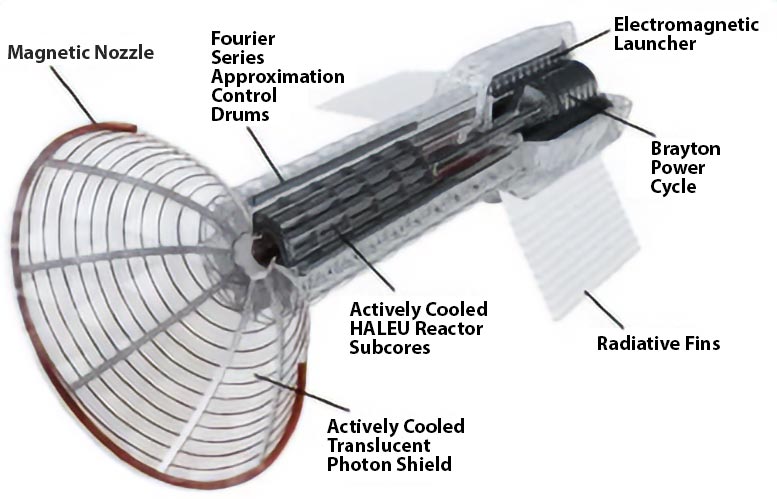
    Pulsed Plasma Rocket (PPR)

    Simplified image of the PPR system. Credit: Brianna Clements, edited

    Howe Industries is currently developing a propulsion system that may generate up to 100,000 N of thrust with a specific impulse (Isp) of 5,000 seconds. The Pulsed Plasma Rocket (PPR) is originally derived from the Pulsed Fission Fusion concept, but is smaller, simpler, and more affordable.

    The exceptional performance of the PPR, combining high Isp and high thrust, holds the potential to revolutionize space exploration. The system’s high efficiency allows for manned missions to Mars to be completed within a mere two months. Alternatively, the PPR enables the transport of much heavier spacecraft that are equipped with shielding against Galactic Cosmic Rays, thereby reducing crew exposure to negligible levels.

    The system can also be used for other far-range missions, such as those to the Asteroid Belt or even to the 550 AU location, where the Sun’s gravitational lens focuses can be considered. The PPR enables a whole new era in space exploration.

    The NIAC Phase I study focused on a large, heavily shielded ship to transport humans and cargo to Mars for the development of a Martian base. The main topics included: assessing the neutronics of the system, designing the spacecraft, power system, and necessary subsystems, analyzing the magnetic nozzle capabilities, and determining trajectories and benefits of the PPR. Phase II will build upon these assessments and further the PPR concept.

    In Phase II, we plan to:

    1. Optimize the engine design for reduced mass and higher Isp
    2. Perform proof-of-concept experiments of major components
    3. Complete a ship design for shielded human missions to Mars

    Never miss a breakthrough: Join the SciTechDaily newsletter.
    Follow us on Google and Google News.

    Mars NASA Popular Rocket
    Share. Facebook Twitter Pinterest LinkedIn Email Reddit

    Related Articles

    Could a Nuclear Thermal Rocket Engine Power a Trip to Mars? NASA and DARPA Are Testing

    Cold as (Dry) Ice on Mars

    Breathtaking NASA Photo of Martian Crater Looks Like “Alien Footprint”

    NASA’s Latest Plans for Critical Artemis I Moon Rocket Testing

    NASA’s Curiosity Mars Rover Reroutes Away From Knife-Edged “Gator-Back” Rocks

    NASA’s Mars Reconnaissance Orbiter Captures Images of China’s Rover From Space

    Standing Tall: Massive Moon Rocket Milestone for Artemis

    NASA Perseverance Rover’s Self-Driving Capabilities Put to the Test in Rush to Martian Delta

    First Rollout of NASA’s Massive Artemis I Moon Rocket

    3 Comments

    1. 0ID on May 21, 2024 9:41 am

      Massive acceleration is needed to reduce space travel time, up to half the distance, but then deceleration is needed to get into orbit of a planet.

      We’re talking about speeds of tens of thousands kilometers per hour, so it’s quite questionable whether the mandatory deceleration in the second phase of the flight will wipe out the benefits of the big acceleration of the first part of the flight…

      Reply
    2. Nob on May 22, 2024 3:33 am

      Great

      Reply
    3. Daniel Cooley on June 16, 2024 4:41 pm

      Who is the headline writer? Space travel is NOT being revolutionized. Pulse plasma rockets are in a research phase. Meantime, good ol’ expensive chemical rockets rule the roost and will for a long time.

      Reply
    Leave A Reply Cancel Reply

    • Facebook
    • Twitter
    • Pinterest
    • YouTube

    Don't Miss a Discovery

    Subscribe for the Latest in Science & Tech!

    Trending News

    New “Nanozyme Hypothesis” Could Rewrite the Story of Life’s Origins

    Anatomy Isn’t Finished: The Human Body Still Holds Secrets

    “Pretty Close to Home”: The Hidden Earthquake Threat Beneath Seattle

    The Surprising Reason You Might Want To Sleep Without a Pillow

    Scientists Say This Natural Hormone Reverses Obesity by Targeting the Brain

    35-Million-Year-Old Mystery: Strange Arachnid Discovered Preserved in Amber

    Is AI Really Just a Tool? It Could Be Altering How You See Reality

    JWST Reveals a “Forbidden” Planet With a Baffling Composition

    Follow SciTechDaily
    • Facebook
    • Twitter
    • YouTube
    • Pinterest
    • Newsletter
    • RSS
    SciTech News
    • Biology News
    • Chemistry News
    • Earth News
    • Health News
    • Physics News
    • Science News
    • Space News
    • Technology News
    Recent Posts
    • Scientists Finally Crack the 100-Million-Year Evolutionary Mystery of Squid and Cuttlefish
    • This Algae Could One Day Pull Microplastics out of Your Drinking Water
    • Scientists Can Now Read Your Body Clock From a Single Hair
    • Beyond “Safe Levels”: Study Challenges What We Know About Pesticides and Cancer
    • Researchers Have Found a Dietary Compound That Increases Longevity
    Copyright © 1998 - 2026 SciTechDaily. All Rights Reserved.
    • Science News
    • About
    • Contact
    • Editorial Board
    • Privacy Policy
    • Terms of Use

    Type above and press Enter to search. Press Esc to cancel.